Home
 ArticlesArticles
Clearer embryo choices, gentler testing, and more predictable timelines, powered by Artificial Intelligence and Genetic Innovation in IVF.




Artificial Intelligence and Genetic Innovation in IVF are redefining fertility care by transforming complexity into clarity. What once felt like an uncertain, highly technical process now becomes a steady, transparent journey marked by confidence and understanding. Patients experience fewer invasive steps, more personalized guidance, and a calmer path toward a healthy, single-embryo transfer. The real breakthrough isn’t in the technology itself, it’s in how that technology brings simplicity, assurance, and meaning to each stage of treatment.
Inside modern IVF labs, embryos develop quietly under the watch of time-lapse imaging systems. Cameras capture every moment, and advanced software, trained on thousands of developmental examples, translates subtle growth patterns into clear, data-driven scores.
This is where Artificial Intelligence and Genetic Innovation in IVF make the patient experience truly transformative. Rather than overwhelming families with complex terminology, clinics now present a simple, evidence-based recommendation for single-embryo transfer. The result is fewer transfers, reduced medication exposure, and a gentler emotional journey. By minimizing guesswork, this approach brings consistency, transparency, and confidence to an otherwise uncertain process.
Modern genetics has moved beyond invasive testing. Today, many clinics use non-invasive techniques, analyzing signals from the embryo’s environment instead of the embryo itself, to detect chromosomal normality or inherited conditions.
When an embryo's development score matches its genetic profile, it is easier and faster to make decisions. When there are differences, clinics can clearly explain the pros and cons and help patients make a choice that is best for their health, comfort, and values. Artificial Intelligence and Genetic Innovation in IVF allow genetic insight to remain informative yet compassionate, reducing unnecessary interventions while preserving the integrity of each embryo.
Every patient’s body responds differently to stimulation, and no two journeys are identical. Data-driven systems now personalize medication doses, monitoring frequency, and retrieval timing to match each individual’s unique biological rhythm and medical history.
The outcome is a smoother, more predictable plan with less trial and error and fewer surprises. Patients know what to expect, when to expect it, and why each step matters. This personalized rhythm optimizes results and brings emotional steadiness, helping patients balance work, travel, and family commitments without constant uncertainty.

Two questions often guide every patient’s decision: How long will it take? and What are my chances? Artificial Intelligence and Genetic Innovation in IVF don’t promise miracles, but they deliver meaningful efficiency.
By preventing low-potential transfers and streamlining decision-making, these technologies save time, reduce medication costs, and minimize clinic visits. Over time, that means shorter treatment cycles and quicker routes to success. Even when multiple attempts are necessary, clarity remains constant, patients see their progress, understand the reasoning, and feel informed at every turn. Confidence grows from transparency: a clear score, a clear explanation, and a clear plan forward.
These technologies serve as powerful decision-support tools, not replacements for medical expertise. Availability, equipment standards, and regulatory frameworks vary globally, and outcomes depend on each clinic’s validation and transparency.
The most reliable programs are transparent about their methodologies, data validation, and success measures, with a focus on achieving healthy singleton births as the benchmark. In this context, Artificial Intelligence and Genetic Innovation in IVF represent steady, evidence-based progress, not overhyped promises, but honest, measurable advancements that improve patient experience and outcomes alike.
Almost every IVF patient can benefit from enhanced embryo selection and gentle genetic assessment. These innovations are particularly impactful for those with previous failed transfers, male-factor infertility, or age-related challenges.
Large clinic networks gain from implementing these systems consistently across multiple centers, ensuring that patients receive uniform, high-quality care regardless of location. This is how Artificial Intelligence and Genetic Innovation in IVF expand accessibility by making expert-level decision-making available everywhere, not just in flagship facilities.
At the heart of these advancements lies communication. Patient-friendly reports convert technical data into clear, meaningful guidance: what the embryo score means, when transfer should occur, and how genetic information influences recommendations.
Top programs use simple, jargon-free language, helping patients understand and trust their path forward. Artificial Intelligence and Genetic Innovation in IVF thus become instruments of empowerment, bridging the gap between medical complexity and human comprehension. Families no longer have to interpret lab results; they can focus on hope, healing, and preparation.

The next evolution of IVF lies in integration, combining developmental and genetic data into a single, intuitive report. Non-invasive assessment methods will continue to advance, while reporting tools will grow more unified, translating science into insight patients can immediately understand.
As clinics refine these technologies and share transparent, validated outcomes, the entire experience will grow gentler, clearer, and more aligned with individual priorities. The future of Artificial Intelligence and Genetic Innovation in IVF isn’t about more technology, it’s about smarter, kinder design that simplifies the path to conception.
You shouldn’t need a degree in biology to understand your IVF journey. When Artificial Intelligence and Genetic Innovation in IVF operate quietly behind the scenes, patients experience clarity, confidence, and compassion instead of confusion.
With precise embryo selection, gentle genetic insight, and data-driven personalization, the process becomes faster, safer, and emotionally lighter, while keeping healthy singleton births at its heart. This is technology serving humanity: a scientific advancement that makes the dream of parenthood both smarter and simpler.



Advanced female age causes fertility decline through reduced egg quantity, increased chromosomal abnormalities, and mitochondrial dysfunction. Understanding these biological mechanisms helps women make informed family planning decisions. Modern fertility treatments including IVF, preimplantation genetic testing, and egg freezing offer practical solutions to overcome age-related reproductive challenges when trying to conceive.
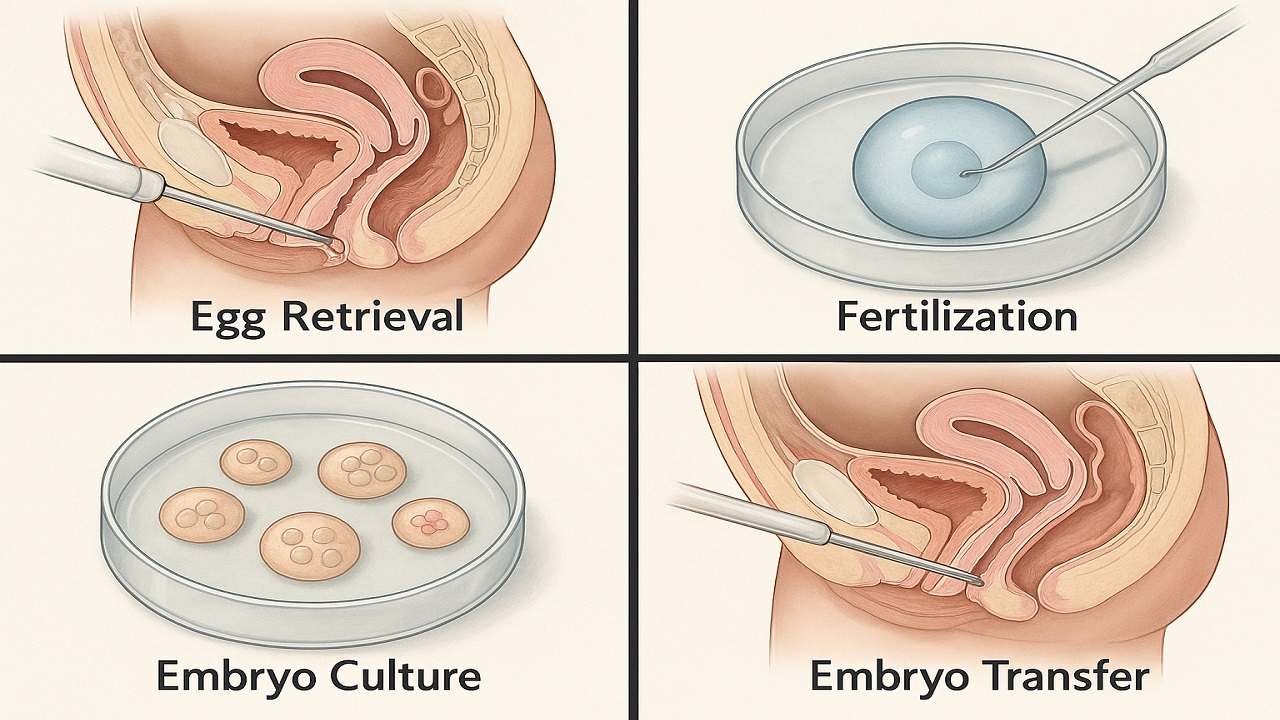
In Vitro Fertilization (IVF) process step by step, emphasising the importance of various stages such as ovarian stimulation, egg retrieval, fertilization, and embryo transfer in maximising the In Vitro Fertilization (IVF) Success Rate. It highlights how a thorough understanding of the procedure can prepare couples and individuals for their In Vitro Fertilization(IVF) journey, ultimately improving their chances of achieving a successful pregnancy.

Vitamin D Deficiency Affect IVF outcomes by influencing endometrial receptivity, embryo quality, and hormone balance. Clinical evidence, age-specific risks, and PCOS implications, while offering actionable strategies to optimize Vitamin D levels and improve IVF success rates and pregnancy outcomes in a structured, patient-focused approach.

Preimplantation Genetic Testing (PGT) revolutionizes IVF by screening embryos for chromosomal abnormalities and genetic disorders before transfer. This advanced technology increases pregnancy success rates, reduces miscarriage risk, prevents inherited diseases, and shortens time to pregnancy while providing diagnostic clarity and reducing emotional stress for couples.

Clinical evidence increasingly demonstrates that emotional stress or grief reduces the chances of IVF success through sophisticated biochemical pathways that directly influence reproductive physiology. This relationship extends far beyond simple correlations, revealing profound mechanistic connections between psychological distress and the delicate orchestration of hormonal events essential for successful conception.

IVF in 2025 is shifting from hype to evidence-based innovation. As precision, automation, AI, and genetic advances reshape fertility care, patients must distinguish proven breakthroughs from outdated add-ons. This guide examines five groundbreaking IVF technologies in 2025 to understand which advances genuinely improve outcomes

Managing Recurrent Implantation Failure (RIF) outlines evidence-based diagnostics and treatment pathways to improve IVF success rates, emphasizing clarity, cautious use of add-ons, and realistic patient expectations.