Home
 ArticlesArticles
Clinics increasingly use AI and tech In IVF to rank embryos, personalize stimulation, and predict live-birth odds. Leaders must ensure validation, transparency, and bias controls while patients ask how tools are used, monitored, and explained.




Artificial intelligence is moving from promise to practice in IVF, reshaping how labs select embryos, personalize ovarian stimulation, and anticipate live-birth outcomes with unprecedented granularity and speed. From using computer vision to evaluate embryos to advanced models that analyze patient history on a large scale, the future of reproductive medicine is focused on making informed decisions based on data, and it can be easier to understand if The center of gravity is evolving, AI and tech In IVF is Changing Lab Decisions captures the technology's momentum and highlights the operational, ethical, and regulatory questions professionals must now address.
Today, AI is being deployed in two high-impact domains: embryo selection and assessment, as well as ovarian stimulation planning; a third domain, end-to-end live-birth prediction, connects decisions throughout the cycle.
Modern computer-vision models learn temporal and morphological features from time-lapse and static imaging, translating embryologists tacit knowledge into reproducible scores and rank orders at scale. Reviews trace an arc from early handcrafted morphokinetics to deep learning classifiers that support triage, standardization across labs, and decision support for single-embryo transfer strategies. Ethical analyses underline that while accuracy can be strong, transparency and disclosure to patients about AI involvement remain essential to preserve informed consent and trust.
Machine-learning models now help determine starting FSH doses, adjust stimulation trajectories, and tighten trigger timing, using variables such as AMH, AFC, BMI, age, and prior cycle performance. Real‑world studies show AI‑guided dosing can lower starting and total FSH exposure without diminishing mature oocyte yield, suggesting potential gains in safety, cost, and experience. Conference and journal reports converge on a pragmatic conclusion: embedding decision support in the EMR and workflows, not just model accuracy drives clinical adoption and consistent outcomes.
The new frontier integrates feature optimization with deep learning to predict live-birth success before transfer, using large registries such as HFEA data. An “integrated optimization and deep learning pipeline” combining particle swarm optimization (PSO) for feature selection with TabTransformer architectures reached high accuracy/AUC, showcasing how model architecture plus feature selection can elevate performance while enabling interpretability via SHAP. These pipelines signal a maturation from point solutions to cycle-spanning, risk-aware decisions.
The cited “Integrated Optimization and Deep Learning Pipeline for Predicting Live Birth Success in IVF” is a representative blueprint for modern fertility AI. It draws on anonymized HFEA datasets, rigorously compares feature selection methods (e.g., PCA vs. PSO), and evaluates both traditional ML (RF, decision tree) and deep models (custom transformer, TabTransformer) to optimize classification of live birth. The strongest configuration combined PSO with a TabTransformer, achieving top-tier accuracy and AUC while leveraging SHAP to identify clinically meaningful predictors and support interpretability conversations with clinicians.
IVF datasets are heterogeneous, noisy, and temporally complex; PSO helps identify compact, predictive subsets that generalize across clinics and cohorts, limiting overfitting and improving downstream performance. Pairing optimized features with architectures designed for tabular learning, such as TabTransformer with attention mechanisms, increases signal extraction without requiring brittle handcrafted rules.
The inclusion of SHAP provides line‑of‑sight to which variables matter most and how they shape predictions, a prerequisite for clinical acceptance and safety case documentation. This design ethos aligns with the ethics literature that discourages opaque “black box” deployment in medical contexts and encourages explainable outputs and documented limitations.
Clinicians have long personalized stimulation through experience; AI sharpens this personalization by learning dose‑response surfaces from thousands of prior cases. Studies report reduced gonadotropin dosing with maintained oocyte yield when AI guides starting doses, implying lower medication burden and potentially fewer adverse events such as OHSS without compromising efficacy. In practice, the most successful implementations integrate AI tools into EMRs for seamless data ingestion and recommendations, minimizing cognitive load and change‑management friction.
AI tools can make embryo scoring more consistent across embryologists and centers by anchoring assessments to learned patterns rather than purely local heuristics. The aim is not to replace expert judgment but to temper subjective variability while offering “second‑reader” confidence, especially when images are ambiguous or workloads are high. Ethical analyses emphasize that clinics should disclose AI usage, align model objectives with patient values, and guard against subtle biases that might drift selection toward non‑clinical traits.
As AI permeates the lab, the constraints are as important as the capabilities—and central to AI, Machine-Learning & Fertility: How Tech is Changing Lab Decisions.
Clinics increasingly market digital sophistication; patients and employers funding benefits need specifics that reflect maturity, not hype.
Governance and validation
Transparency and consent
Safety and responsibility
Data and privacy
Executives weighing investments should pair model selection with operating changes, recognizing that AI and tech In IVF is Changing Lab Decisions is as much about processes as it is about code.
The literature signals a pivot from point AI tools to orchestrated pipelines that fuse imaging, labs, history, and prior cycle data into live‑birth‑oriented guidance, with the integrated optimization study marking a key step in that direction. In ovarian stimulation, pragmatic outcomes less medication with stable efficacy are persuading clinics to embed AI where it demonstrably improves both safety and efficiency. In embryo selection, the ethical conversation about transparency, explainability, and consent is necessarily moving in lockstep with accuracy benchmarks to ensure that technical gains translate into patient‑centered care.
Used responsibly, AI and tech In IVF, reduce treatment burden, and align choices with each patient’s goals, provided leaders treat governance and validation as first‑class features, not afterthoughts. The clinics that win the next five years will be those that combine rigorous data foundations with explainable tools and clear communications, making decisions that are not only smarter but also more justifiable and trusted.



Advanced female age causes fertility decline through reduced egg quantity, increased chromosomal abnormalities, and mitochondrial dysfunction. Understanding these biological mechanisms helps women make informed family planning decisions. Modern fertility treatments including IVF, preimplantation genetic testing, and egg freezing offer practical solutions to overcome age-related reproductive challenges when trying to conceive.
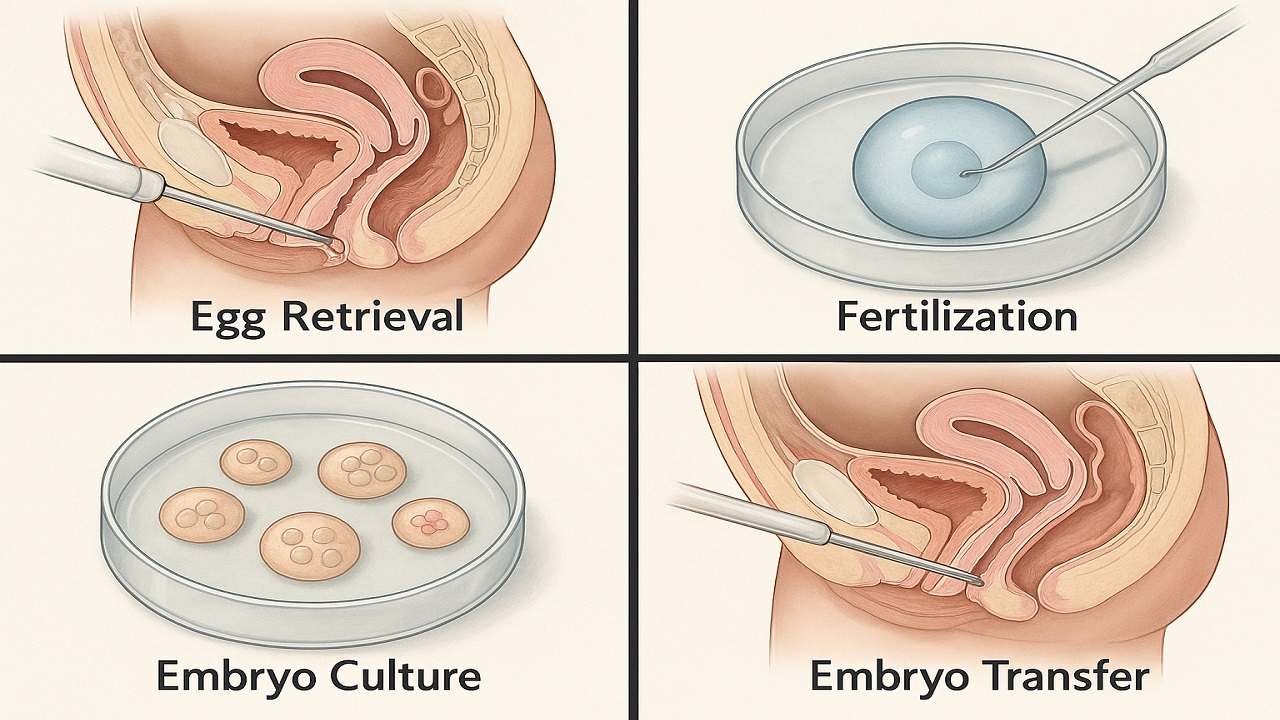
In Vitro Fertilization (IVF) process step by step, emphasising the importance of various stages such as ovarian stimulation, egg retrieval, fertilization, and embryo transfer in maximising the In Vitro Fertilization (IVF) Success Rate. It highlights how a thorough understanding of the procedure can prepare couples and individuals for their In Vitro Fertilization(IVF) journey, ultimately improving their chances of achieving a successful pregnancy.

Vitamin D Deficiency Affect IVF outcomes by influencing endometrial receptivity, embryo quality, and hormone balance. Clinical evidence, age-specific risks, and PCOS implications, while offering actionable strategies to optimize Vitamin D levels and improve IVF success rates and pregnancy outcomes in a structured, patient-focused approach.
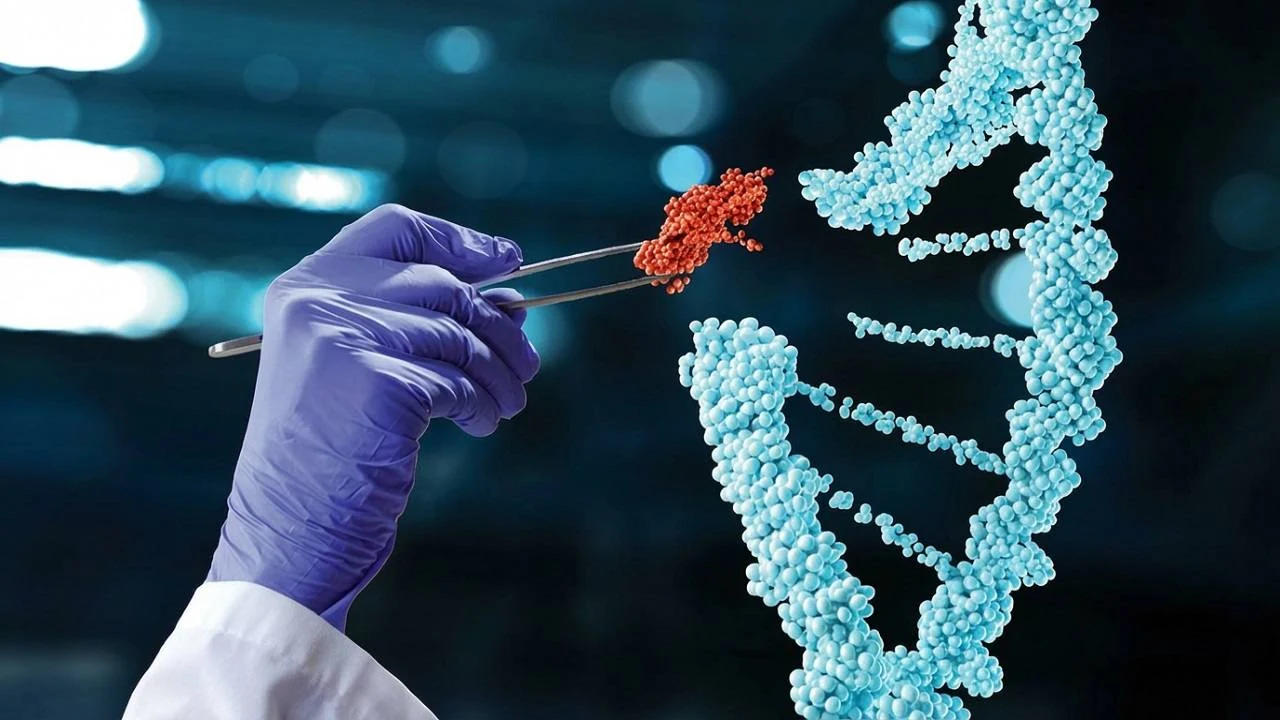
Preimplantation Genetic Testing (PGT) revolutionizes IVF by screening embryos for chromosomal abnormalities and genetic disorders before transfer. This advanced technology increases pregnancy success rates, reduces miscarriage risk, prevents inherited diseases, and shortens time to pregnancy while providing diagnostic clarity and reducing emotional stress for couples.

Clinical evidence increasingly demonstrates that emotional stress or grief reduces the chances of IVF success through sophisticated biochemical pathways that directly influence reproductive physiology. This relationship extends far beyond simple correlations, revealing profound mechanistic connections between psychological distress and the delicate orchestration of hormonal events essential for successful conception.
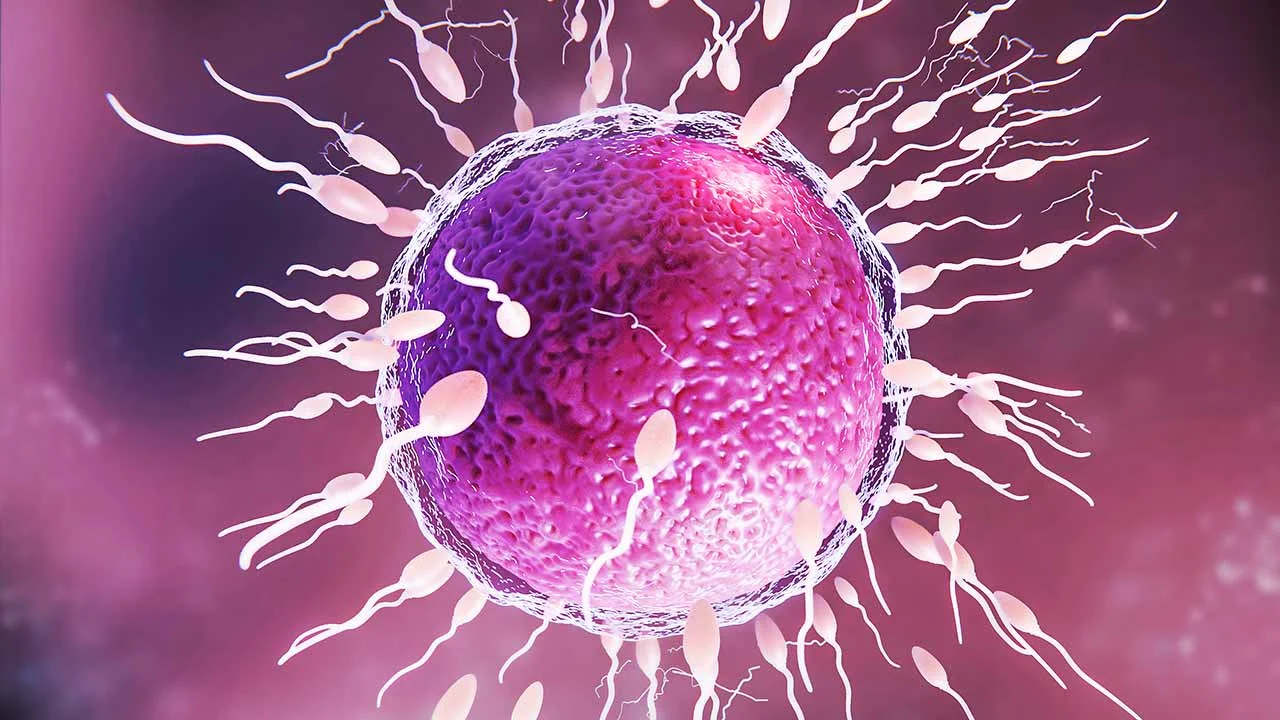
IVF in 2025 is shifting from hype to evidence-based innovation. As precision, automation, AI, and genetic advances reshape fertility care, patients must distinguish proven breakthroughs from outdated add-ons. This guide examines five groundbreaking IVF technologies in 2025 to understand which advances genuinely improve outcomes

Managing Recurrent Implantation Failure (RIF) outlines evidence-based diagnostics and treatment pathways to improve IVF success rates, emphasizing clarity, cautious use of add-ons, and realistic patient expectations.