Home
 ReportReport
Global fertility tourism is projected to reach US$13,080.0 Mn by 2032 at a 30.3% CAGR, led by IVF and a strong North America share.




The Fertility Tourism Market is set for rapid expansion, projected to reach US$2,046.4 million in 2025 and accelerate at a 30.3% CAGR through 2032 to US$13,080.0 million, reflecting strong cross-border demand for reproductive care solutions and advanced assisted reproductive technologies (ART). IVF anchors this momentum with a leading 47.6% share in 2025, supported by personalized protocols and higher success rates, particularly among older patients. Demand is further supported by rising infertility prevalence and greater awareness of cross-border options that combine clinical outcomes with cost advantages. Regional dynamics underscore surging inflows to North America, with a 26.9% market share in 2025 tied to surrogacy-friendly frameworks that streamline parental rights. Emerging destinations, including Thailand, Spain, and Colombia, are gaining traction with comprehensive, affordable packages that bundle care, logistics, and legal support.
The Fertility Tourism Market is anticipated at US$2,046.4 million in 2025, advancing to US$13,080.0 million by 2032, implying a sustained 30.3% CAGR that signals robust, compounding intake of international fertility patients and maturing provider ecosystems. Segment leadership by IVF at 47.6% in 2025 indicates clinical and commercial primacy of embryo-focused interventions that enable tailored selection and improved success, shaping pricing power and capacity planning. With North America comprising 26.9% in 2025 and the 30–39 age cohort at 41.9%, revenue visibility is underpinned by policy clarity and demographically concentrated demand. Innovations such as embryo freezing and preimplantation genetic testing (PGT) strengthen treatment efficacy, increasing destination competitiveness and widening addressable segments. The combined effect of rising domestic treatment costs and inclusive destination offerings reinforces a multi-year growth runway for international providers.

Fertility tourism market value projection from 2025 (US$2,046.4 Mn) to 2032 (US$13,080.0 Mn) at 30.3% CAGR
A set of clinical and market trends is reshaping the Fertility Tourism Market as patients prioritize value, outcomes, and legal certainty across borders. IVF remains the dominant treatment path due to its customizability and outcome optimization, aligning with a rising share of patients in the 30–39 cohort keenly focused on time-to-pregnancy. PGT and embryo freezing are becoming standard differentiators, elevating success rates and expanding eligibility for older patients and complex indications. Destination portfolios are diversifying, with Thailand, Spain, and Colombia offering integrated packages that reduce friction and broaden international uptake.
Despite the strong outlook, the Fertility Tourism Market faces regulatory variability, ethical constraints, and policy shifts that can disrupt patient flows and provider strategy. Restrictive positions on assisted reproduction or surrogacy in select countries, and uncertainty around parenthood recognition, may deter cross-border decisions. Variations in donor anonymity, compensation regimes, and clinic accreditation can complicate pathway design for international patients evaluating risk and continuity of care. Additionally, uneven domestic coverage and legal frameworks can create pockets of latent demand that are sensitive to sudden policy changes. Overall, regulatory complexity necessitates robust legal guidance within destination packages to sustain trust and conversion.
Opportunities are expanding across technology adoption, destination development, and package integration in the Fertility Tourism Market, with innovations in PGT and cryopreservation improving outcomes and widening addressable populations. Colombia is highlighted as an emerging hub with quality benchmarks, English proficiency, and accreditation pathways that resonate with discerning international patients. All-inclusive models that bundle accommodation, legal support, and treatment logistics are becoming competitive differentiators that drive satisfaction and referrals. As rising domestic costs push patients abroad, destinations that combine affordability with clinical excellence and clear legal frameworks are positioned to capture sustained share. Providers investing in multi-country networks and tailored programs for older cohorts can compound growth through 2032.
The Fertility Tourism Market is on a high-growth path to US$13,080.0 million by 2032 at a 30.3% CAGR, propelled by IVF leadership, enabling technologies, and destination ecosystems that blend affordability, quality, and legal assurance. Sustained demand from the 30–39 age segment, North America’s policy-driven share, and rising competitiveness in Spain, Thailand, and Colombia create a resilient multi-regional growth stack. Providers that integrate care pathways with legal and logistical support, while leveraging PGT and cryopreservation, will be best placed to capture international patient volumes. With these fundamentals, the market’s forward trajectory remains strong, disciplined, and operationally scalable through 2032.


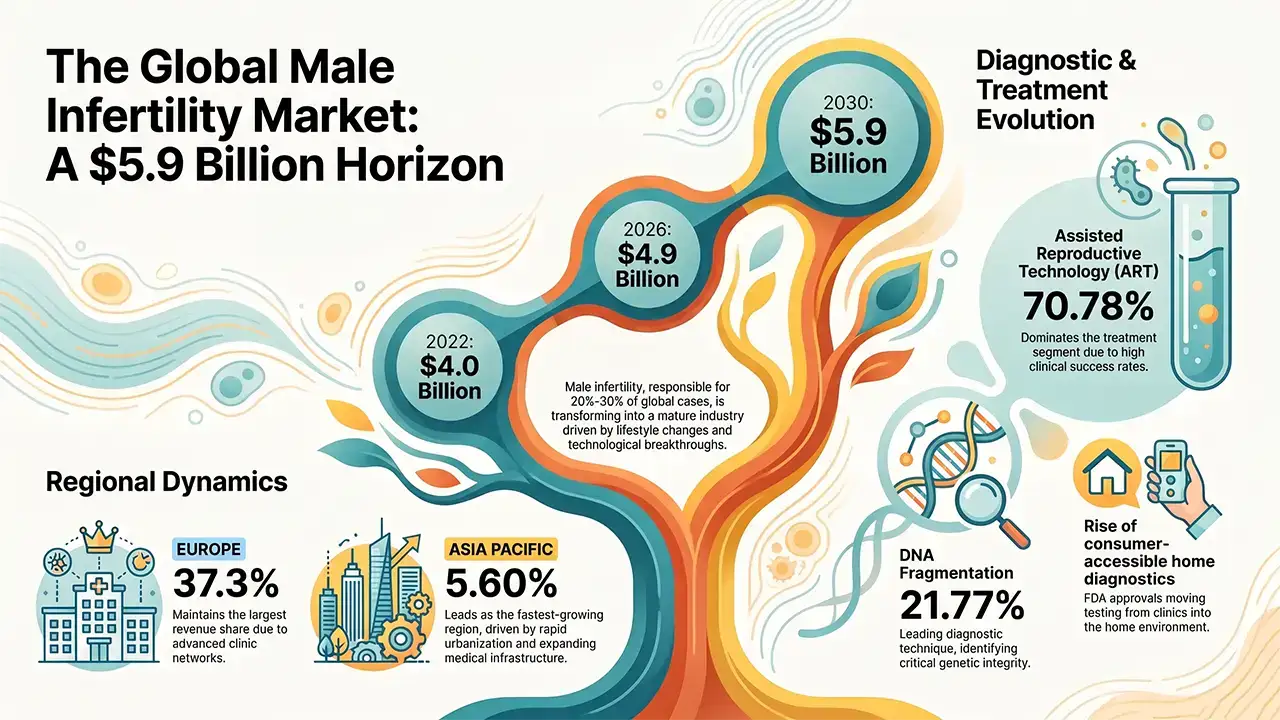
The global male infertility market, valued at USD 4.0 billion in 2022, is projected to grow from USD 4.9 billion in 2026 to USD 5.9 billion by 2030 at a CAGR of 4.9%. Rising global infertility rates, growing ART adoption, and advances in diagnostic technologies are fueling sustained market expansion.
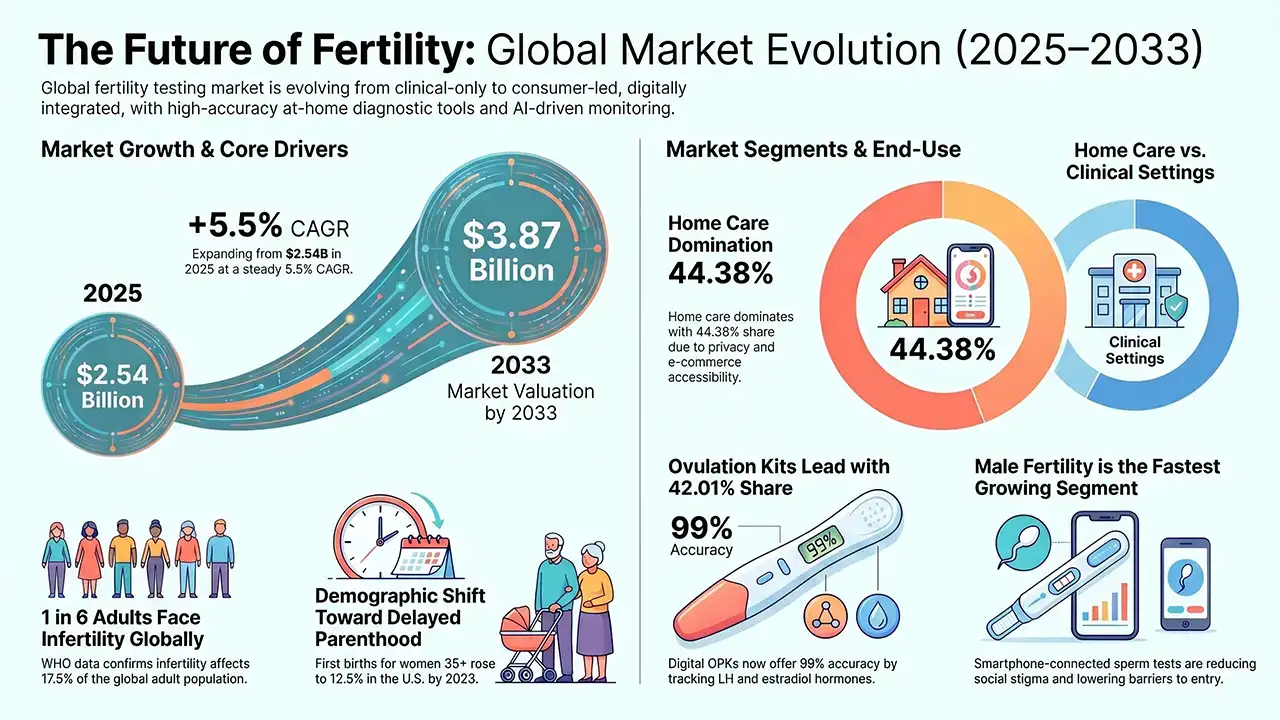
The global Fertility Testing Devices market, valued at USD 2.54 billion in 2025, is projected to reach USD 3.87 billion by 2033, growing at a CAGR of 5.5%. Rising infertility rates, delayed parenthood, and technology-driven at-home testing solutions are fueling robust worldwide demand across North America, Asia Pacific, and beyond.

Researchers at the Babraham Institute and Stanford University have engineered a 3D laboratory model of the human uterus to observe embryo implantation in unprecedented detail, up to day 14 of development. Published in Cell, this breakthrough opens new pathways for understanding IVF failure, miscarriage, and pregnancy complications.
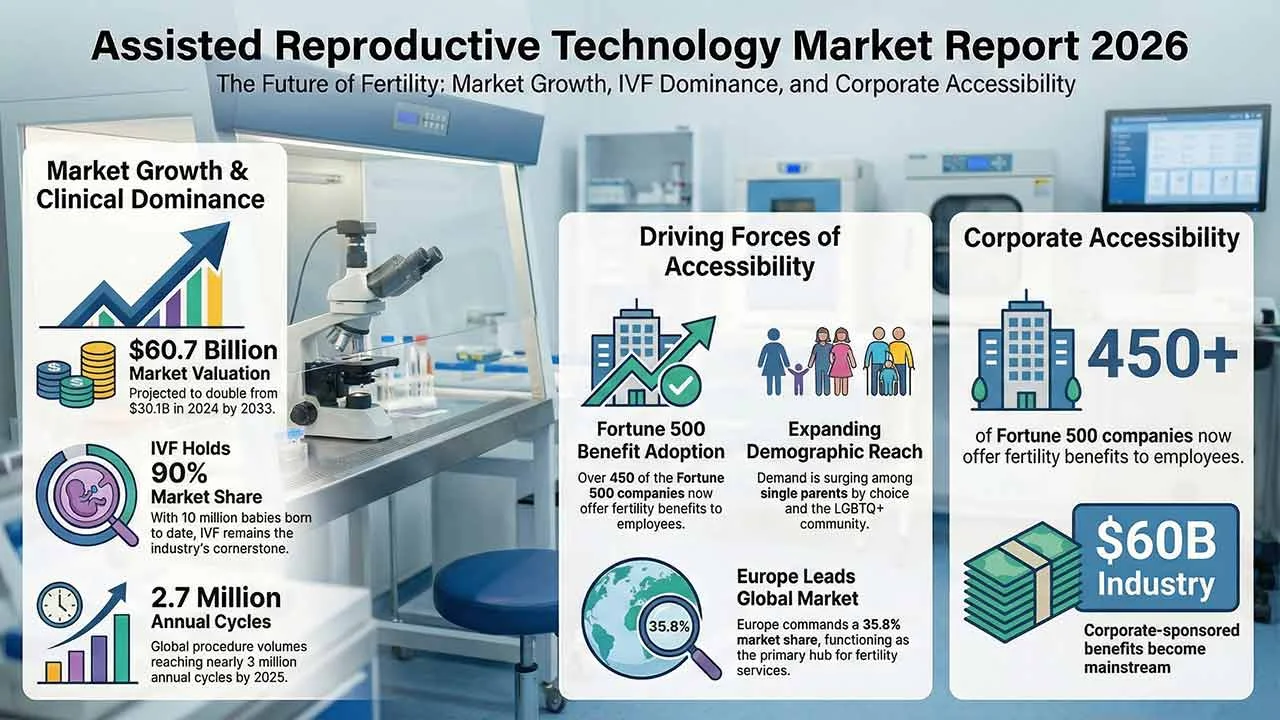
The assisted reproductive technology market continues to expand as infertility rates rise and parenthood is increasingly delayed worldwide. Valued at US$30.1 billion in 2024, the market is projected to reach US$60.7 billion by 2033, supported by IVF innovation, growing awareness, improved accessibility, and sustained investment in reproductive healthcare infrastructure globally.

The global human reproductive technology market is set to reach 45.4 USD billion by 2035, expanding from 27.7 USD billion in 2024 at a 4.6% CAGR. Growth is fueled by technological advancements in fertility treatments, rising infertility rates, delayed pregnancies, and increasing acceptance of single and LGBTQ+ parenting worldwide.
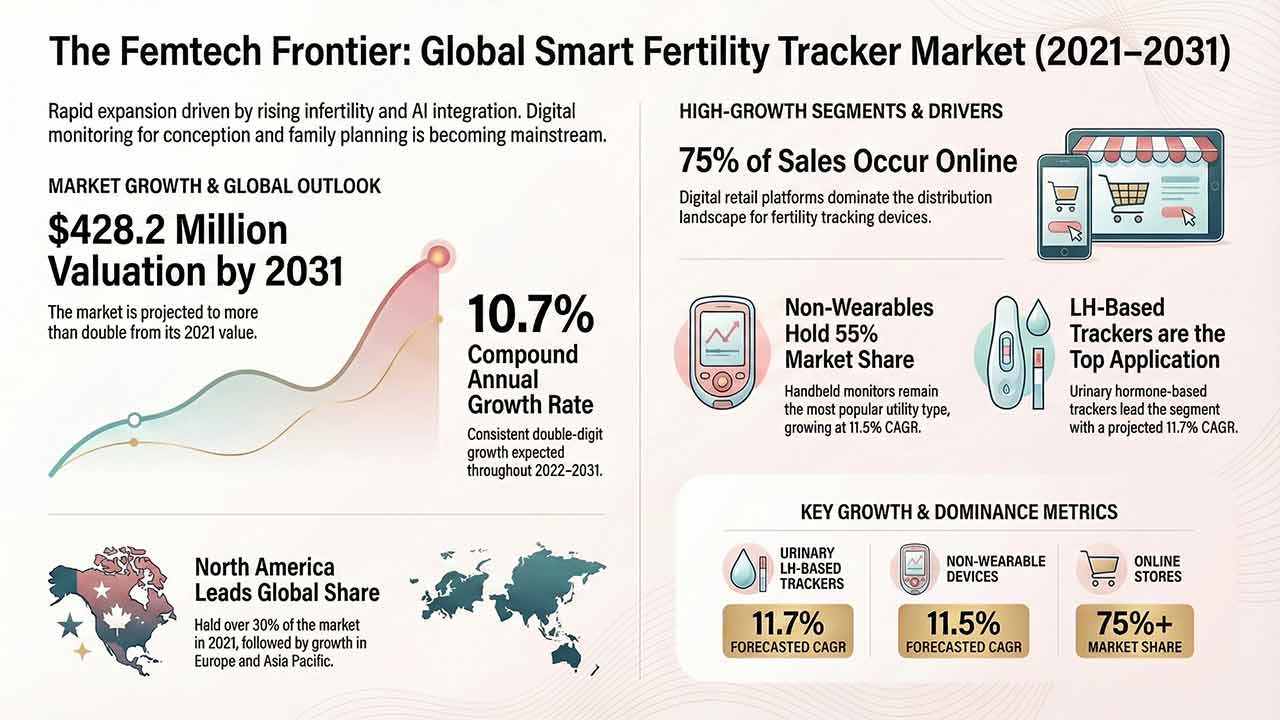
This comprehensive report analyses the Smart Fertility Tracker Market, detailing its projected growth from US$ 160.2 million in 2021 to US$ 428.2 million by 2031. It examines key drivers such as rising infertility and technological advancements in AI-integrated hormone monitoring, alongside detailed segmentation by utility, application, and region.