Home
 ReportReport
The assisted reproductive technology market continues to expand as infertility rates rise and parenthood is increasingly delayed worldwide. Valued at US$30.1 billion in 2024, the market is projected to reach US$60.7 billion by 2033, supported by IVF innovation, growing awareness, improved accessibility, and sustained investment in reproductive healthcare infrastructure globally.



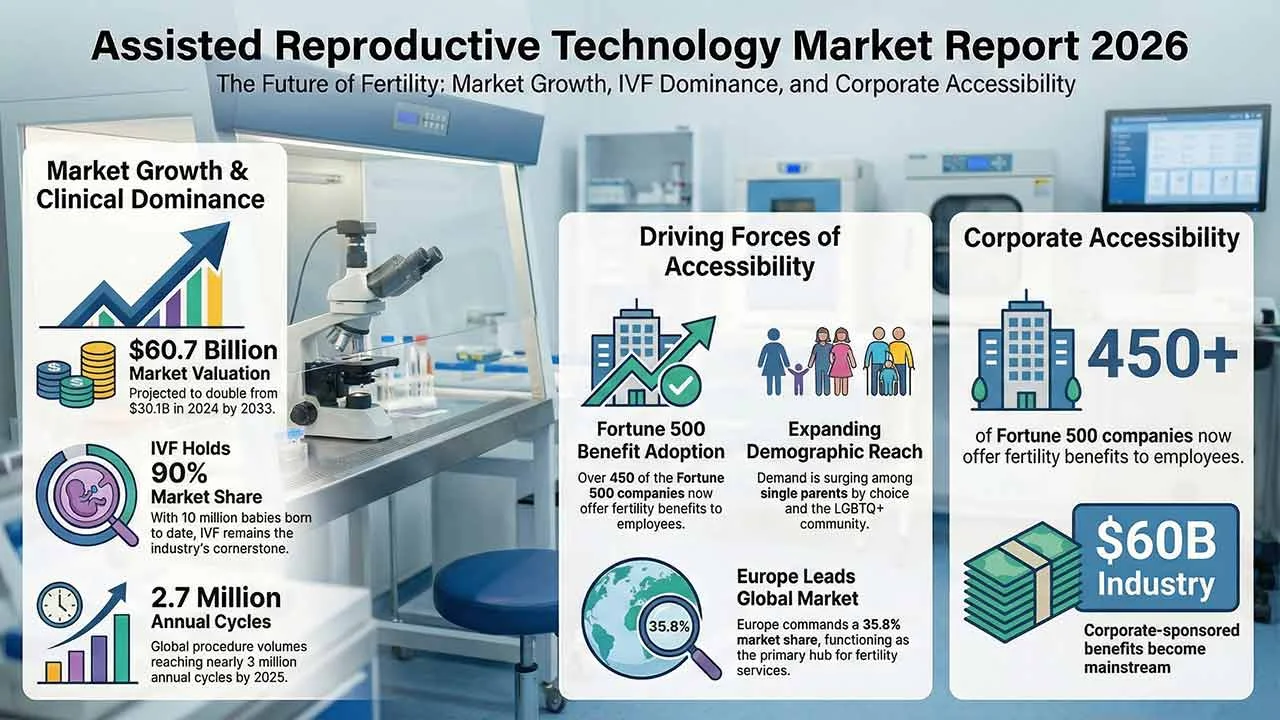
The Assisted Reproductive Technology Market continues to demonstrate remarkable resilience and growth potential amid evolving global demographics and medical advancements. As infertility rates climb and societal shifts toward later parenthood accelerate, this sector offers critical solutions for millions seeking to build families.
The global Assisted Reproductive Technology Market achieved a valuation of US$ 30.1 billion in 2024 and stands poised to reach US$ 60.7 billion by 2033. This trajectory reflects a robust compound annual growth rate (CAGR) of 8.1% from 2025 to 2033, underscoring the market's capacity to address pressing healthcare demands. Key drivers include escalating infertility prevalence, technological innovations in fertility treatments, and heightened awareness worldwide, positioning the Assisted Reproductive Technology Market as a cornerstone of modern reproductive medicine.
Astute Analytica's comprehensive analysis illuminates opportunities, competitive dynamics, emerging trends, strategic maneuvers, and forward-looking forecasts. Stakeholders in this vibrant ecosystem, from clinics and pharmaceutical firms to investors, gain actionable intelligence to navigate complexities and capitalize on expansion.
The Assisted Reproductive Technology Market encapsulates a spectrum of interventions designed to facilitate conception, including in vitro fertilization (IVF), intrauterine insemination (IUI), and intracytoplasmic sperm injection (ICSI), among others. Valued at US$ 30.1 billion in 2024, the market's ascent to US$ 60.7 billion by 2033 at an 8.1% CAGR signals sustained demand fueled by multifaceted socioeconomic factors.
Delayed parenthood trends, particularly in urbanized regions, amplify reliance on these technologies as age-related fertility declines become commonplace. Concurrently, lifestyle-induced infertility, stemming from stress, obesity, and environmental pollutants, further propels market momentum. The Assisted Reproductive Technology Market thus evolves not merely as a medical niche but as an indispensable pillar supporting global population sustainability.
Regulatory landscapes vary globally, yet harmonization efforts enhance accessibility, bolstering investor confidence. This report distills these dynamics into a narrative of opportunity, where innovation intersects with human aspiration.
Several interconnected forces underpin the expansion of the assisted reproductive technology market, each warranting detailed scrutiny.
These drivers collectively forge a resilient growth narrative, undeterred by economic fluctuations.
Dissecting the assisted reproductive technology market reveals nuanced segments, each exhibiting distinct trajectories.
North America leads, buoyed by advanced infrastructure and reimbursement policies, while Asia-Pacific surges at the fastest CAGR due to medical tourism and population pressures.
This segmentation underscores the Assisted Reproductive Technology Market's adaptability, enabling targeted strategies.

The Assisted Reproductive Technology Market thrives on intense rivalry among innovators and service providers, fostering relentless advancement. Leading entities like Vitrolife AB, CooperSurgical, and Merck KGaA dominate through portfolio breadth from consumables to equipment, while regional players carve niches via affordability.
Strategic mergers, such as clinic chain consolidations, amplify scale, and R&D investments target next-gen solutions like automated embryoscopes. Astute Analytica highlights how these dynamics sharpen competitive edges, with market leaders capturing 40% share through innovation pipelines.
Key players prioritize:
This landscape rewards agility, where differentiation via superior outcomes prevails.
Forward-looking trends reshape the assisted reproductive technology market, blending technology with ethics.
These trends signal a maturing market, attuned to patient-centric evolution.
Despite optimism, the Assisted Reproductive Technology Market confronts hurdles demanding strategic navigation. High procedural costs (IVF cycles averaging US$15,000) deter adoption in low-income brackets, while ethical debates over embryo selection persist. Regulatory variances, stringent in Europe versus lenient in select Asian hubs, complicate global scaling. Moreover, multiple gestation risks and emotional tolls necessitate holistic support frameworks. Opportunities abound in cost reduction via automation and telemedicine, mitigating these barriers.
Projections affirm the Assisted Reproductive Technology Market's ascent to US$ 60.7 billion by 2033 at 8.1% CAGR, with Asia-Pacific outpacing at 9%. Innovations like uterine transplants and stem-cell gametes loom on the horizon, potentially redefining boundaries.
Investors eye untapped emerging markets, where rising middle classes fuel demand. Strategic imperatives include R&D escalation and cross-border collaborations.
For stakeholders in the Assisted Reproductive Technology Market:
These maneuvers position leaders for outsized gains.
The Assisted Reproductive Technology Market embodies hope engineered through science, with its US$ 30.1 billion 2024 valuation set to double by 2033 at 8.1% CAGR. As drivers overpower challenges, this sector promises enduring prosperity. Professionals must harness insights from Astute Analytica to seize opportunities in this transformative arena, ensuring families flourish worldwide.



The global fertility services market, valued at $35.9 billion in 2024, is projected to reach $80.1 billion by 2033 at a 9.4% CAGR. Growth is fueled by ART advancements, fertility tourism, and rising infertility rates worldwide, positioning the sector as a cornerstone of modern reproductive healthcare.
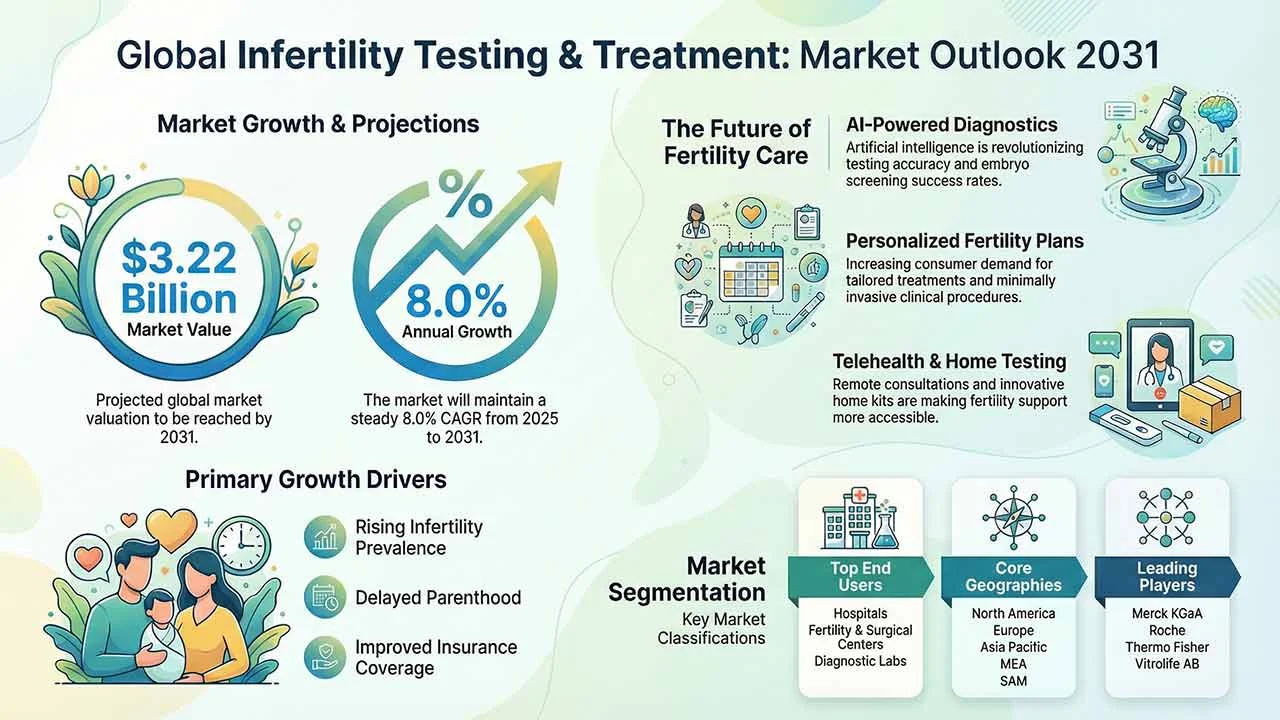
The global infertility testing and treatment market is projected to reach US$3.22 billion by 2031, expanding at an 8% CAGR. Growth is fueled by delayed parenthood, rising infertility rates, AI-driven diagnostics, advanced ART procedures, and expanding healthcare access across North America, Europe, and Asia-Pacific regions.

Gen Z women fertility awareness is marked by high anxiety but limited clinical knowledge, according to new ASRM-published research. While most young women want children, many misunderstand IVF success rates, miscarriage risks, and age-related decline, highlighting an urgent need for proactive, evidence-based reproductive education initiatives.

The Sperm Separation Systems Market is projected to exceed USD 1.5 billion by 2035, driven by automation, microfluidics, and rising male infertility awareness.
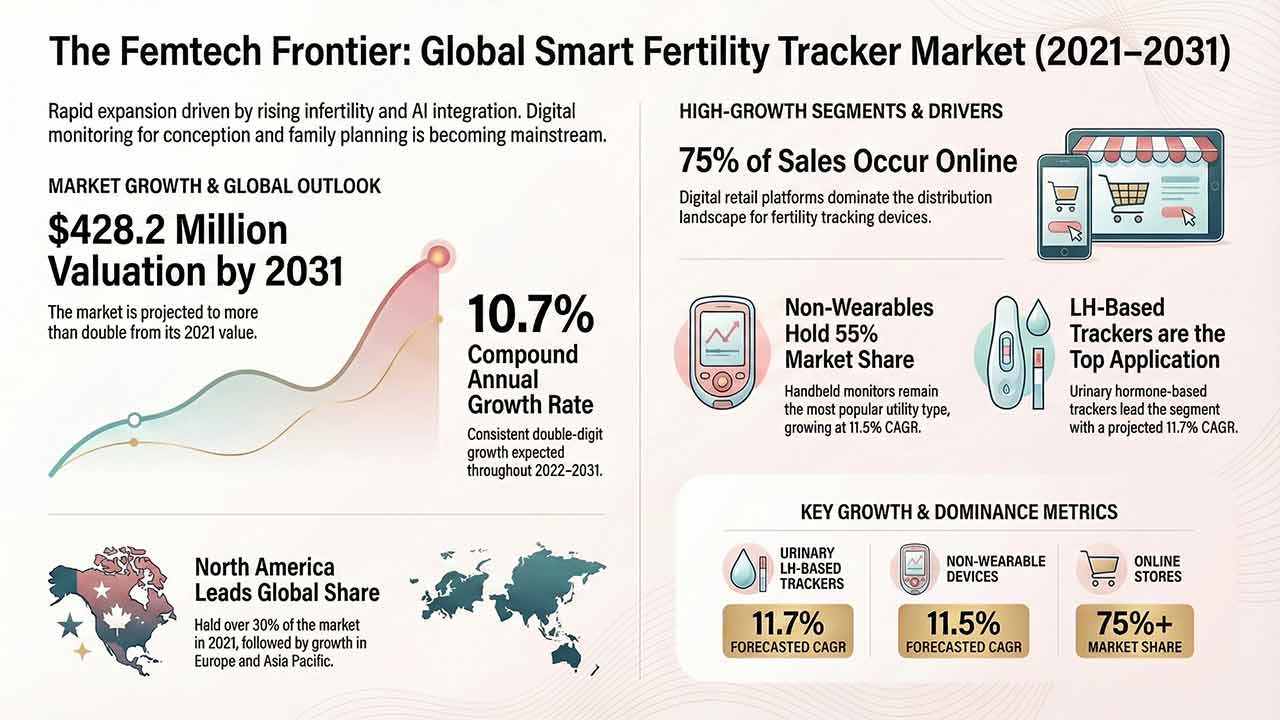
This comprehensive report analyses the Smart Fertility Tracker Market, detailing its projected growth from US$ 160.2 million in 2021 to US$ 428.2 million by 2031. It examines key drivers such as rising infertility and technological advancements in AI-integrated hormone monitoring, alongside detailed segmentation by utility, application, and region.

The global human reproductive technology market is set to reach 45.4 USD billion by 2035, expanding from 27.7 USD billion in 2024 at a 4.6% CAGR. Growth is fueled by technological advancements in fertility treatments, rising infertility rates, delayed pregnancies, and increasing acceptance of single and LGBTQ+ parenting worldwide.