Home
 ReportReport
In Vitro Fertilization (IVF) market is expanding rapidly, driven by rising infertility, delayed pregnancies, and advances in IVF technology. Valued at USD 28.12 billion in 2024, the market is projected to reach USD 63.7 billion by 2035, supported by frozen cycles, fertility tourism, and innovation-led clinic growth worldwide.



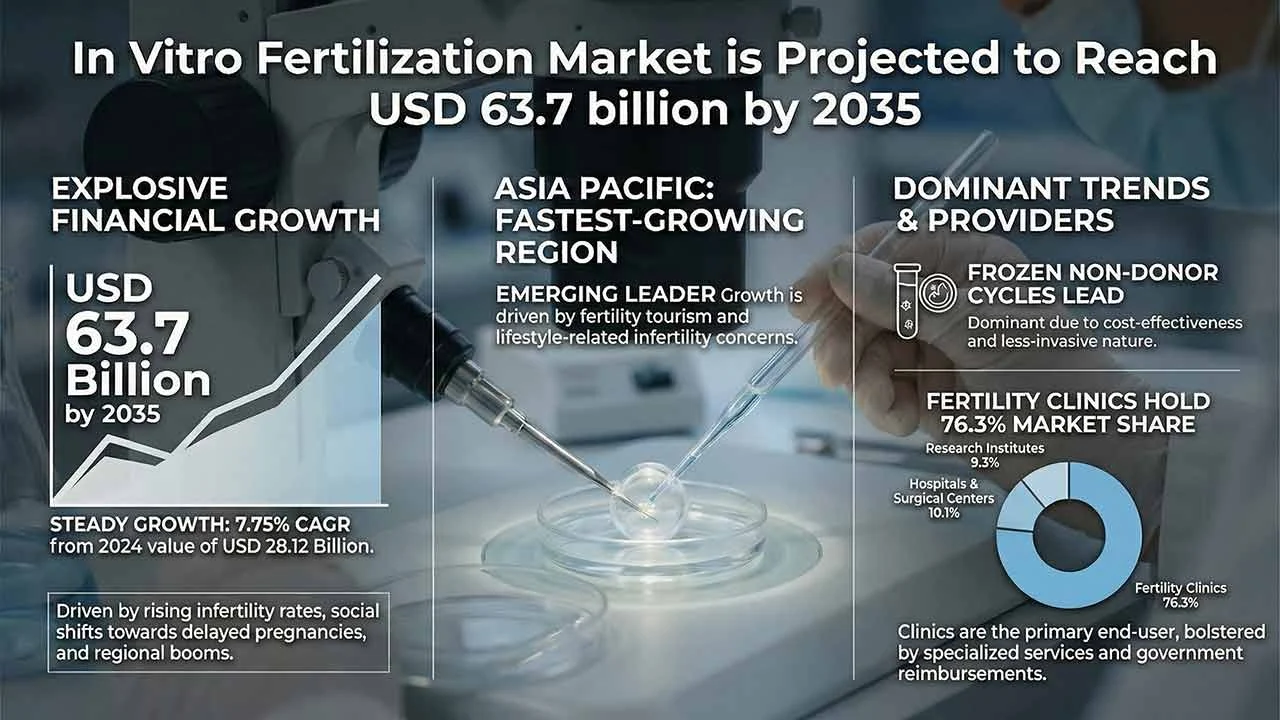
The global In Vitro Fertilization (IVF) market stands as a cornerstone of modern fertility services, addressing the rising tide of infertility challenges worldwide. Valued at USD 28.12 billion in 2024, this dynamic sector is poised for substantial expansion, projected to reach USD 63.7 billion by 2035, fueled by a compound annual growth rate (CAGR) of 7.75% from 2025 to 2035.

In Vitro Fertilization represents a pivotal assisted reproductive technology (ART), where eggs are extracted from a woman's ovaries, fertilized with sperm in a controlled laboratory environment, and subsequently implanted. This procedure has become the gold standard for couples grappling with infertility, propelled by escalating infertility rates, the growing trend of delayed pregnancies among professionals, and notable improvements in IVF success rates.
Key drivers include:
These elements collectively underscore the IVF market's resilience, intertwining medical innovation with societal evolution to expand the fertility services market footprint.
The In Vitro Fertilization market is meticulously segmented by product, cycle, type, and end-user, offering granular insights into its multifaceted structure. This segmentation reveals targeted growth pockets, essential for stakeholders navigating the fertility services market.
The frozen non-donor IVF cycles segment dominated in 2021 with 47% market share and is slated for the fastest growth due to its cost-effectiveness and less invasive profile compared to fresh cycles. Fresh non-donor cycles follow closely, reflecting patient preferences for immediacy within the fertility services market.
Fertility clinics lead due to comprehensive services and government reimbursements, while research institutes are poised for rapid expansion through fertility research and technological innovations. Hospitals & surgical centers and cryobanks complement this ecosystem, ensuring holistic fertility services market delivery.

This layered segmentation illuminates opportunities, with each category contributing uniquely to the IVF market's evolution.
Asia Pacific emerges as the fastest-growing region in the In Vitro Fertilization market, driven by fertility tourism, foreign investments in emerging economies, and evolving regulations. Lifestyle-induced infertility from urbanization, pollution, and stress further accelerates demand, positioning the region as a fertility services market powerhouse.
North America, meanwhile, anticipates robust growth through automation, regulatory reforms, government funding for gamete preservation, and innovative IVF offerings by key players. Europe and other regions trail but contribute steadily via advanced healthcare infrastructures.
These regional variances highlight strategic hotspots within the global fertility services market.
Despite promising trajectories, the IVF market faces headwinds from exorbitant treatment costs and limited awareness in underdeveloped areas, curbing accessibility. Age-related success rate declines pose additional clinical challenges, particularly for older patients seeking fertility services market interventions.
Opportunities counterbalance these:
Navigating these dynamics is crucial for sustained fertility services market growth.
Leading the In Vitro Fertilization market is The Cooper Companies Inc. (US), alongside other innovators shaping the fertility services market through product advancements and strategic expansions. These players invest heavily in R&D, ensuring competitive edges in equipment, reagents, and procedural enhancements.
Their emphasis on using automation and combining genetic testing strengthens their place in the market, indicating that the fertility services offered in the future will be more advanced.
The In Vitro Fertilization market's trajectory to USD 63.7 billion by 2035 reflects an unwavering commitment to overcoming infertility barriers. With Asia Pacific's surge and North America's innovations, the fertility services market will continue evolving, blending technology, policy, and patient-centric care.
Professionals and executives should prioritize investments in high-growth segments like frozen cycles and research institutes. As infertility persists as a global concern, the IVF sector, synonymous with the broader fertility services market, remains a model of optimism and profitability, demanding agile strategies for tomorrow's demands.



The University of Aberdeen has launched a redesigned, free IVF success calculator, the OPIS tool, powered by updated national HFEA data. Built with patients at its centre, the IVF success calculator provides tailored success estimates across up to six IVF or ICSI cycles, helping couples plan emotionally, physically, and financially.

A retrospective cross-sectional study of 276 ART patients suggests that the oestradiol-to-oocyte ratio (EOR) could serve as a meaningful prognostic marker for IVF outcomes in PMOS. The research examines EOR across four categories, incorporating subgroup analysis by luteinising hormone activity during ovarian stimulation.

AutoIVF's OvaReady device is advancing IVF egg retrieval technology by recovering "stealth oocytes" from discarded follicular fluid. With Northeastern University co-op students Tori Christianson and Jake Percival refining its prototypes, the Natick, Mass, based startup is preparing for clinical trials, aiming for FDA clearance to improve IVF success rates.
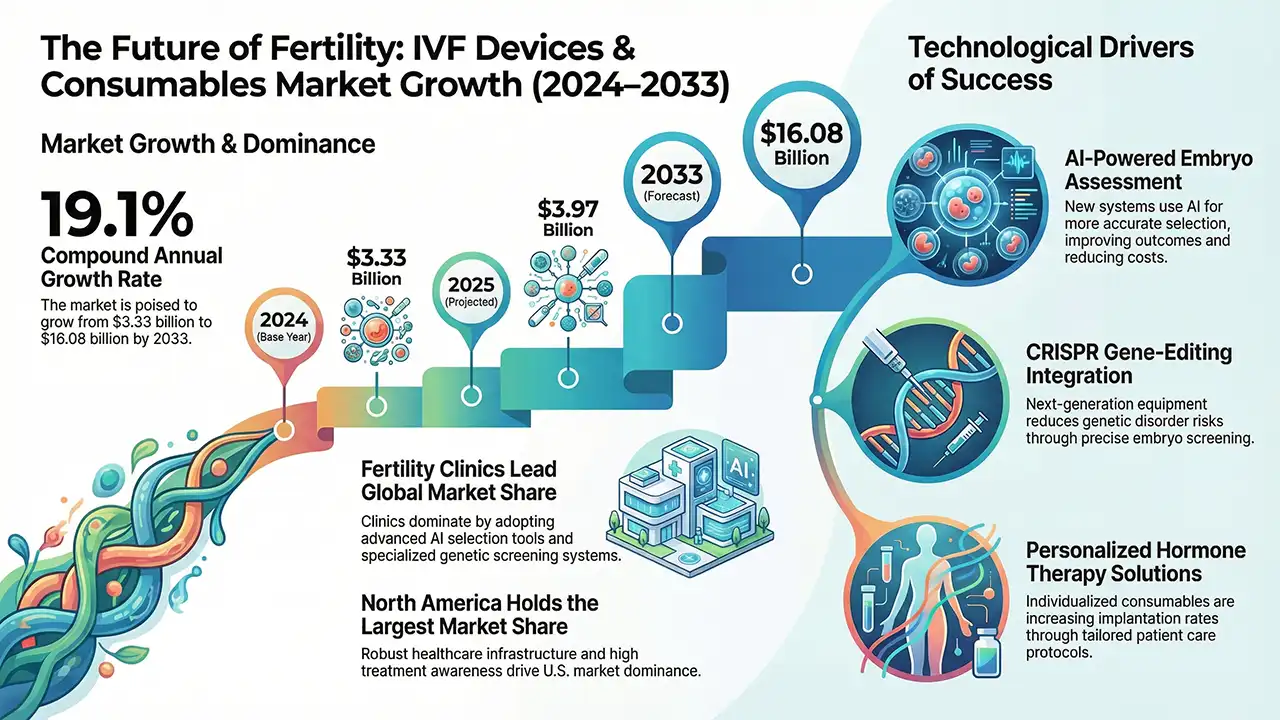
The global IVF Devices and Consumables market is projecting a significant surge to $16.08 billion by 2033. Driven by rising infertility and tech innovations, the analysis covers regional shifts, product segments, and emerging trends, highlighting the industry’s evolution alongside the growing Smart Fertility Tracker Market
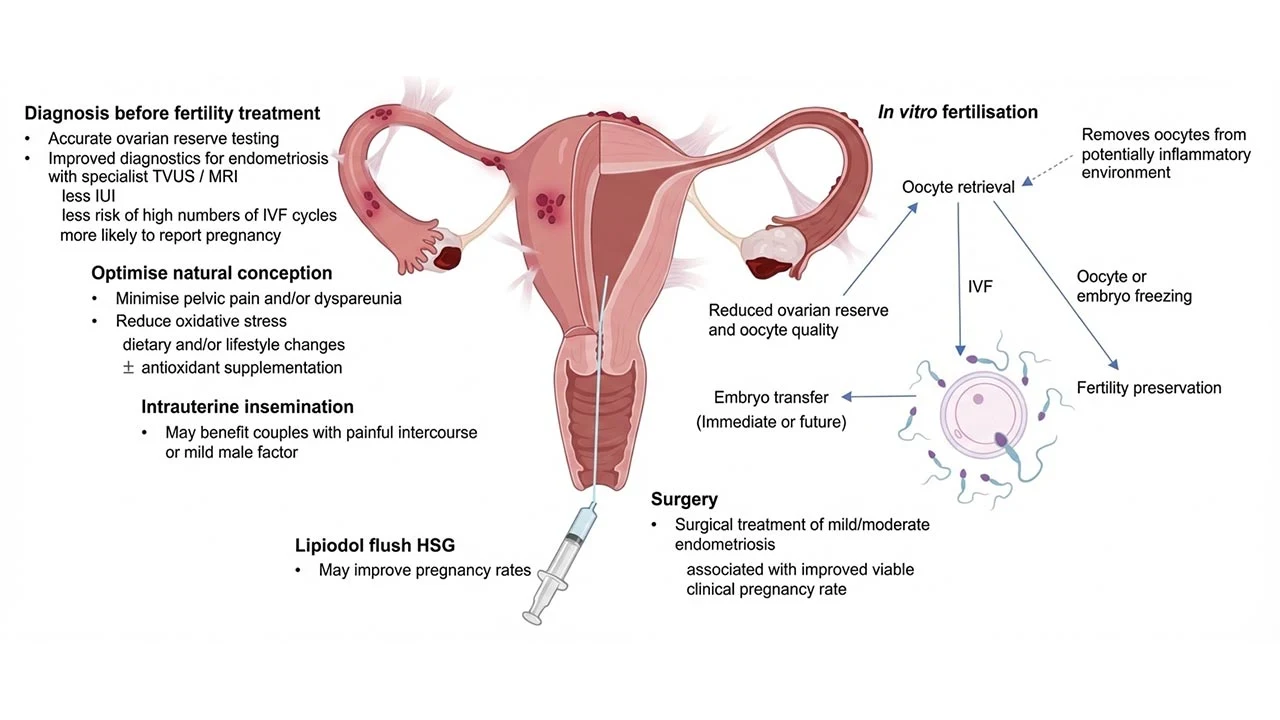
Integrating IVF and Surgical Management in Endometriosis offers a patient-centered strategy to improve fertility while managing chronic pain. By integrating laparoscopic surgery, ovarian reserve assessment, and assisted reproductive technology, clinicians can tailor treatment plans, enhance live birth rates, and optimize reproductive outcomes for women facing complex endometriosis-related infertility challenges.
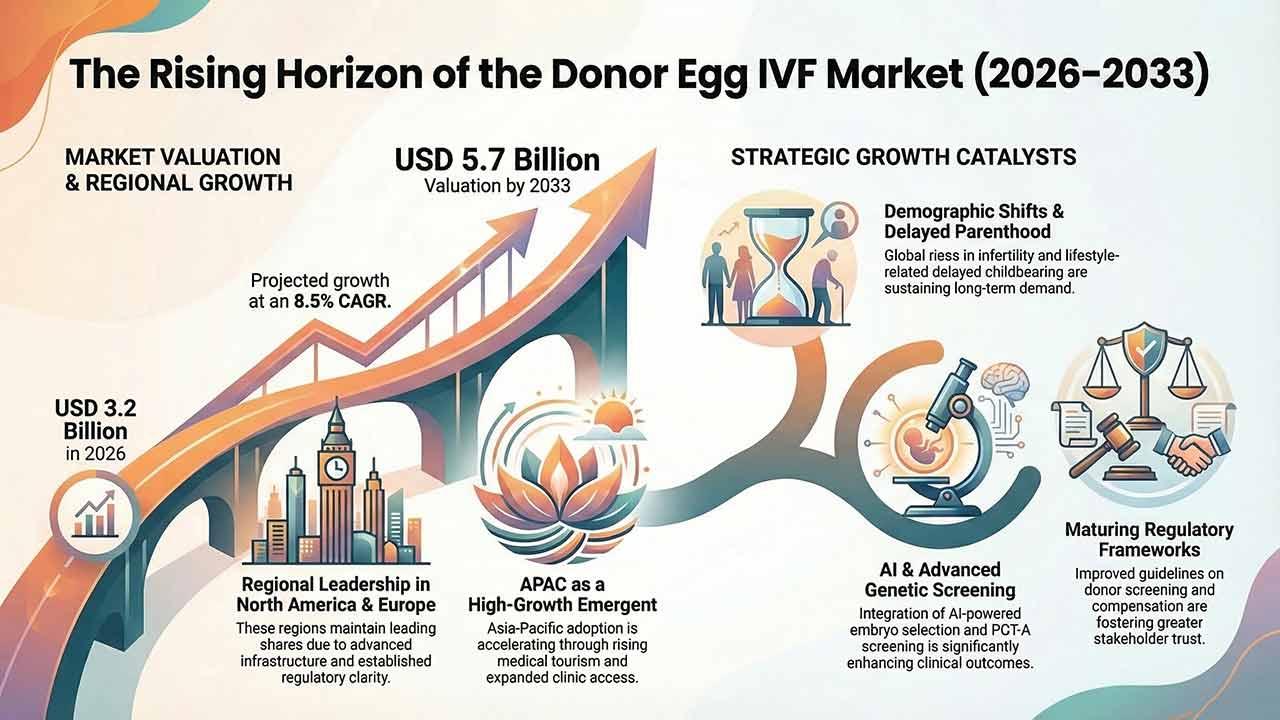
This comprehensive analysis examines the global Donor Egg IVF market, forecasting a valuation of USD 5.7 billion by 2033. The report explores critical growth drivers, including delayed parenthood, technological breakthroughs in embryo selection, and shifting regulatory landscapes, offering a detailed breakdown of market segmentation and regional growth trajectories for the next decade.

Global Preimplantation genetic testing market outlook covering growth drivers, segmentation, regional trends, key technologies, restraints, opportunities, and competitive landscape approaching $1B by 2032.