Home
 VideoVideo
TrumpRx site goes live with limited IVF drug discounts, yet experts warn the savings cover only a fraction of total treatment costs. With cycles reaching $30,000 and policy divisions deepening, critics argue the initiative falls short of expanding meaningful and equitable access to reproductive care nationwide.



The TrumpRx site goes live, the US president's flagship drug discount initiative, launched earlier in February 2026, with coupons applicable to only 43 medications - four of them essential for IVF treatments. According to experts, it is just a half-measure, thereby interpreting the move as only an attempt to show progress on the 2024 campaign promise by Trump to make sure of universal access to IVF care.
A professor of reproductive medicine at the University of Southern California, Dr. Richard Paulson, said, “We’ve been hearing about TrumpRx for a long time. TrumpRx was supposed to fix all of the problems in terms of prescription drug costs and so on, and it has not done that. The only two classes of drugs that are actually cheaper on Trump RX are the GLP-1 agonist those are the obesity medications and medications related to fertility.”
It is well to be noted that the TrumpRx site goes live to feature a search function, however, it is not at all likely to have most of the Americans typing in their prescriptions. For now, the platform tilts heavily towards medications related to fertility, weight loss as well as menopause. The fact is that patients can print coupons or save them to digital wallets much like what happens in the case of GoodRx. The White House has confirmed that more discounts in the coming months are going to be available.
However, the reality is that the fertility drug coupons only scratch the surface when it comes to the IVF costs. Sean Tipton of the American Society for Reproductive Medicine explains that while the expenses may vary by location and insurance as well as individual circumstances, pharmaceutical costs typically happen to be 10 to 20% of the overall IVF bill. The rest has in it procedures such as egg retrieval, which require sedation and also drive the majority of the expense.
According to estimates from the Centers for Medicare and Medicaid Services, TrumpRx discounts could save patients up to $2,200 per IVF cycle, but each cycle costs as much as $30,000 out of pocket. Most clinics go ahead and recommend planning for up to four cycles, as each has only about a 30% chance that it would lead to a live birth. Meanwhile, on the other hand, the Heritage Foundation, which, by the way, happens to be the conservative think tank behind Project 2025, generally goes on to oppose IVF as being part of its pro-life agenda. However, Sean Tipton from the American Society for Reproductive Medicine argues that opposing abortion does not logically mean opposing to IVF.
He happens to add that “Pregnancy termination and pregnancy creation are very, very different things; however, if you have built your opposition to pregnancy termination on the fiction that a fertilized egg is the same as a baby, then IVF is dangerous to you.” Tipton goes on to suspect that influence from The Heritage Foundation has indeed gone ahead and held Trump back from doing much more so as to expand IVF access. In a January 2026 report, the conservative think tank went on to describe the embryos as sacred human beings and also questioned the ethics of IVF, as not all the embryos that are created during the process happen to see the light of the day.
Dr. Paulson pushed back in an op-ed by way of noting that even when it comes to natural reproduction, most of the embryos never become children, and hence this sort of reasoning by the Foundation does not hold up at all.
He also went ahead and pointed out that some medications on TrumpRx could as well be made use of either for IVF or for what the Heritage Foundation calls restorative reproductive medicine – RRM which is a term Paulson says does not have any real scientific basis. “It’s deceptive,” says Paulson, because the philosophy behind RRM “is that you need to be restored."
So going ahead by this logic, “infertility is not a disease; it’s a manifestation of other problems, and you need to fix those problems, and when you do, your infertility will go away," Paulson said, linking this to other Make America Healthy Again - MAHA logic, which states the idea that diet can fix chronic illnesses.
“Eat meat, right? If you just eat red meat, everything’s going to get better,” Paulson opines, in regard to the refrain from Health Secretary Robert F. Kennedy Jr. pertaining to the benefits of protein.
It is well to be noted that alternatives to IVF, like intrauterine insemination - IUI that is paired with medications related to fertility, come with their set of challenges. IUI, in a way, increases the likelihood of multiple pregnancies, may be twins or even more, which again raises the risk of preterm births along with certain other complications.
Yet The Heritage Foundation has gone ahead and signaled the acceptance of IUI, as long as it has only a married couple's sperm as well as egg, while at the same time maintaining its opposition when it comes to IVF.
Dr. Paulson happens to believe that patients should as well be given that freedom so as to make medical decisions, which apparently are guided by their faith; however, he does draw the line at faith shaping public policy. He says that "If you start with the Bible and see that as the truth, and then you filter everything through that prism, then you're going to come up with different conclusions than those people that are just looking at the science, and that's the problem."


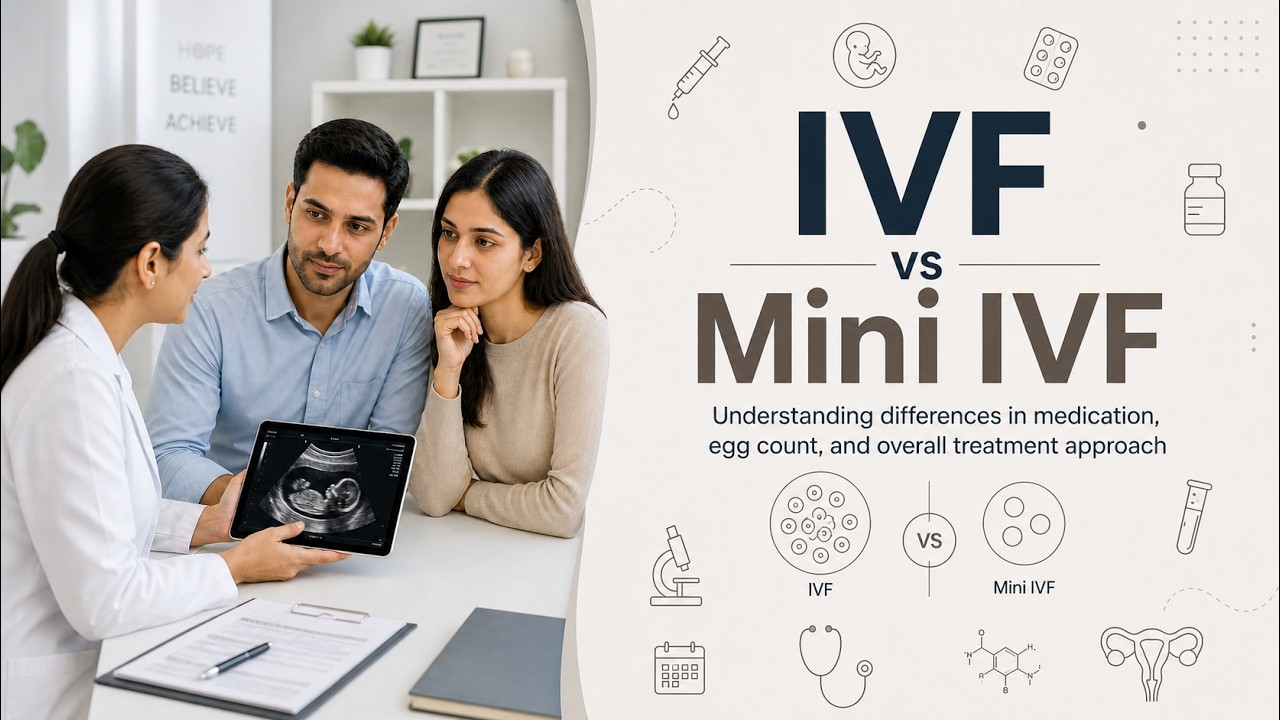
The differences between Mini IVF and traditional IVF, focusing on success rates, medication dosages, and cost-effectiveness. Learn how minimal stimulation protocols prioritize egg quality to offer a less invasive path to parenthood for specific patient profiles.