Home
 ReportReport
Gen Z women fertility awareness is marked by high anxiety but limited clinical knowledge, according to new ASRM-published research. While most young women want children, many misunderstand IVF success rates, miscarriage risks, and age-related decline, highlighting an urgent need for proactive, evidence-based reproductive education initiatives.



In a landmark publication that serves as a wake-up call for the reproductive medicine community, new research has uncovered a significant disconnect between the family-building aspirations of Generation Z and their actual understanding of the biological realities of fertility. The study, titled “What Are My Options? Fertility Awareness, Infertility Treatment Awareness, and Education Needs Among Generation Z Women,” represents the first-ever academic effort to specifically quantify how American women aged 18 to 27 navigate the complexities of reproductive ageing and assisted reproductive technology. Published in F&S Reports, an official journal of the American Society for Reproductive Medicine (ASRM), the findings suggest that while this cohort is highly motivated to achieve future parenthood, they are currently operating with a set of misconceptions that could jeopardise their long-term reproductive autonomy.
The central paradox of the study lies in the high level of concern coupled with low levels of accurate information. According to the data, 74% of Gen Z women surveyed expressed a desire to have children in the future, yet 69% reported varying levels of anxiety regarding their future fertility. Despite this concern, 59% of respondents admitted they feel fundamentally uninformed about their reproductive health. This creates a critical intervention point for healthcare providers and educators, as the "Gen Z women fertility awareness" landscape appears to be shaped more by anecdotal information and gaps in formal education than by clinical evidence.
To capture these insights, researchers Meredith L. Clements, Ph.D., Sean Sawicki, Ph.D., and Noelani Segree surveyed adult women within the 18–27 age bracket to evaluate their baseline knowledge of fertility, their primary information sources, and the specific areas where they feel their education has been insufficient. The methodology was designed to look beyond mere surface-level awareness, testing respondents on specific clinical milestones and the statistical efficacy of common infertility treatments.

The results revealed a striking "knowledge cliff" regarding age-related fertility decline. While Gen Z women are well-versed in the timing of their biological peak, with 87% correctly identifying the age range for peak fertility, their understanding of the subsequent decline is far less robust. Only 54% of participants were able to correctly identify the age range when fertility begins its significant downward trajectory. In a clinical context, this lack of awareness regarding the window of decline can lead to delayed family-building efforts, often pushing patients into age brackets where success rates for both natural and assisted conception are lower.
Perhaps even more concerning for reproductive specialists is the widespread misunderstanding of what In Vitro Fertilization (IVF) can realistically achieve. The study found that Gen Z women tend to overestimate the "rescue" potential of modern medicine. For instance, only 29% of participants correctly identified the IVF success rates for a 35-year-old woman, and only 48% were accurate regarding success rates for a 44-year-old. Furthermore, just over half of the respondents, 51%, correctly identified the statistical likelihood of achieving IVF success on the very first attempt. These figures suggest that many young women may view fertility treatments as a guaranteed safety net rather than a complex medical process with variable outcomes.
When comparing these results to previous cohorts, a troubling trend emerges regarding the understanding of pregnancy loss. The study noted a "declining awareness of miscarriage rates compared with prior generations." Only 27% of Gen Z participants correctly identified the likelihood of a miscarriage, a figure that represents a 9% decline in accuracy compared to millennial women who were surveyed in 2017. This erosion of knowledge suggests that as the conversation around "Gen Z women fertility awareness" moves into the digital age, essential biological facts may be getting lost or diluted.
The authors of the study emphasise that these gaps are not merely academic, they have real-world implications for how young women plan their lives. Dr. Clements and her colleagues noted that "delayed or inaccurate information may leave young women unprepared to make informed decisions about family building later in life". The research argues that by the time many women seek information, they are already facing the challenges of infertility, which is clinically defined as a disease of the reproductive system that impairs the body's ability to conceive after a year of unprotected intercourse.
The call to action from the research team is clear: reproductive health education must shift from a reactive model to a proactive one. The study authors state, "Results from this study support a similar overall argument for a stronger emphasis on fertility education, especially because Gen Z women share similar misconceptions about fertility and infertility treatment as millennial women who were surveyed while they were within the peak fertility age range”.
By addressing these misconceptions early, the medical community can empower this generation to take control of their reproductive futures before they reach a point of crisis. The authors further conclude: “Prioritizing comprehensive fertility education can empower Gen Z women with knowledge to make informed decisions about their bodies and their futures that are more proactive than reactive”. For the B2B healthcare sector and reproductive clinics, this data underscores a massive opportunity and responsibility to become the definitive source of evidence-based information. ASRM, which has been a leader in reproductive medicine research for nearly a century, highlights that providing such education is central to ethical practice and public health. With the legal landscape surrounding reproductive rights shifting rapidly across the United States, particularly following the Dobbs decision, the need for accurate information on everything from IVF access to insurance coverage for infertility treatments has never been more acute.
To bridge the gap in "Gen Z women fertility awareness," healthcare providers must navigate a complex array of topics that Gen Z is eager to learn about but currently misunderstands. This includes the distinction between infertility as a "disease" rather than a mere "inconvenience" and the various diagnostic tests, such as evaluating hormone levels, sperm quality, and reproductive organs, that are used to identify the root causes of conception struggles.
The study also points toward a need for better communication regarding the lifestyle factors that influence fertility. While topics like weight, stress, and diet are frequently discussed in popular media, their specific clinical impacts on ovulation and the reproductive tract require more nuanced explanation. Furthermore, the study suggests that education should extend to the realities of multiple gestations associated with fertility drugs and the surgical options available for conditions like endometriosis or fibroids, which are common barriers to natural conception.
As Gen Z enters the workforce and begins to consider their long-term family goals, the reproductive medicine industry must adapt its outreach. The high interest in "reproductive autonomy" mentioned by the researchers suggests that Gen Z women do not want to be passive recipients of care; they want to be informed architects of their lives.
While this study provides a vital first look at Gen Z, it also highlights the work that remains. The research focuses on "adult women ages 18–27," leaving room for future studies to examine how these knowledge gaps persist or evolve as the cohort ages. Additionally, as the primary sources of information for this generation shift increasingly toward social media, the medical community must find ways to combat disinformation effectively.
The American Society for Reproductive Medicine continues to advocate for a future where all patients have access to the care and information they need, regardless of their background or location. By leveraging tools like patient stories, educational videos, and expert-led podcasts, the industry can begin to fill the void identified in this research.
In conclusion, the findings from F&S Reports serve as both a warning and a roadmap. If the reproductive medicine community fails to address the significant knowledge gaps among Gen Z women, it risks a future where an entire generation is blindsided by the biological realities of ageing and the limitations of technology. However, by prioritising comprehensive, evidence-based education today, providers can ensure that the 74% of Gen Z women who want children are given the best possible chance to realise those dreams. The message is clear: the time for reactive medicine has passed; the era of proactive, education-driven reproductive health must begin.


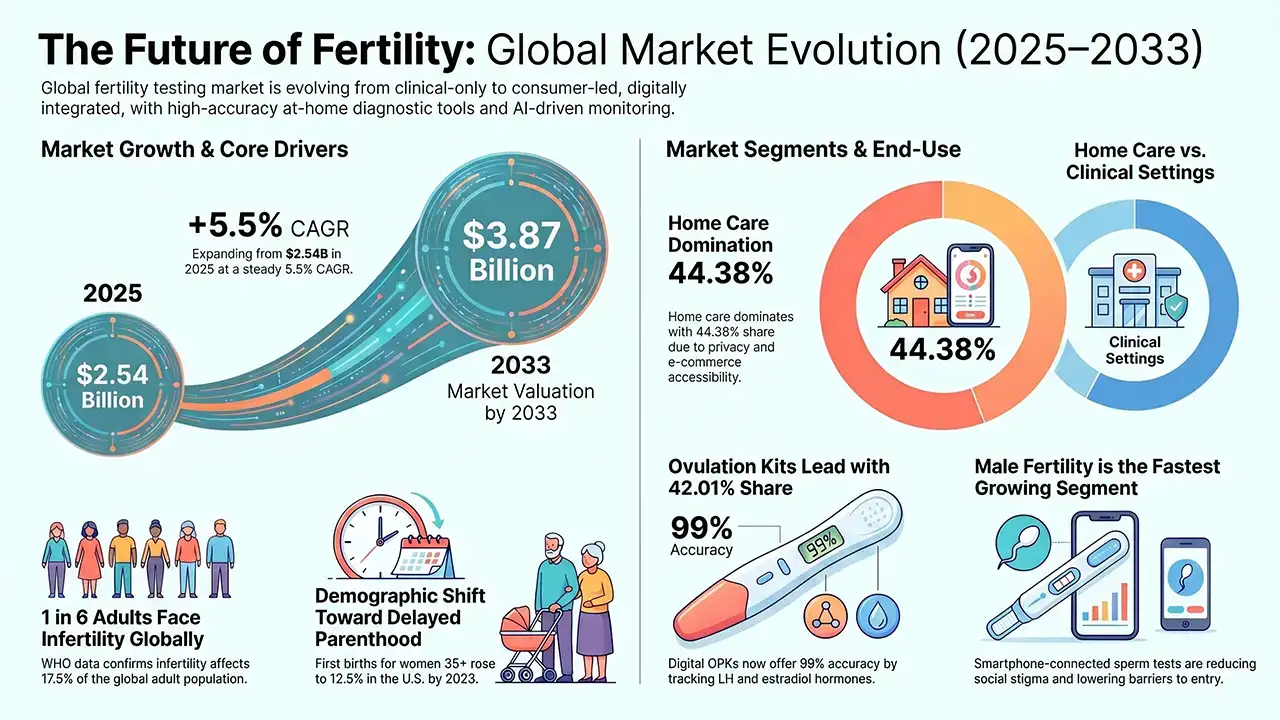
The global Fertility Testing Devices market, valued at USD 2.54 billion in 2025, is projected to reach USD 3.87 billion by 2033, growing at a CAGR of 5.5%. Rising infertility rates, delayed parenthood, and technology-driven at-home testing solutions are fueling robust worldwide demand across North America, Asia Pacific, and beyond.

Researchers at the Babraham Institute and Stanford University have engineered a 3D laboratory model of the human uterus to observe embryo implantation in unprecedented detail, up to day 14 of development. Published in Cell, this breakthrough opens new pathways for understanding IVF failure, miscarriage, and pregnancy complications.

Global fertility tourism is projected to reach US$13,080.0 Mn by 2032 at a 30.3% CAGR, led by IVF and a strong North America share.
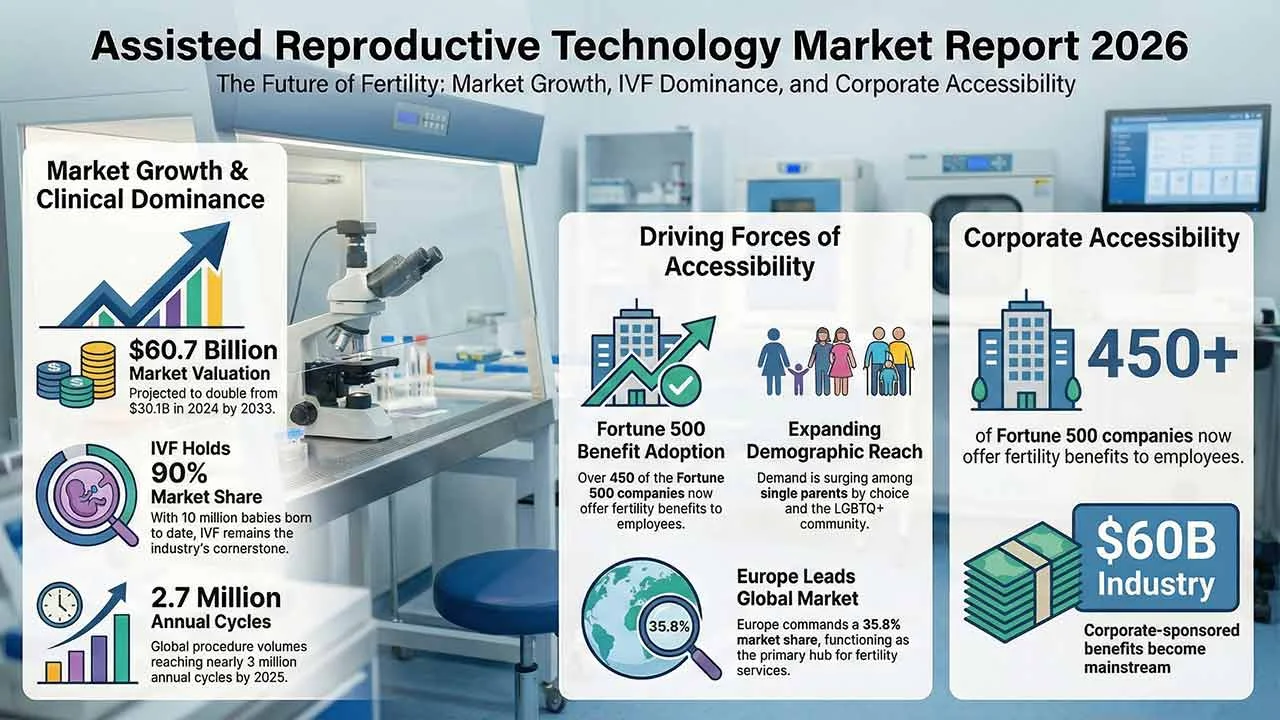
The assisted reproductive technology market continues to expand as infertility rates rise and parenthood is increasingly delayed worldwide. Valued at US$30.1 billion in 2024, the market is projected to reach US$60.7 billion by 2033, supported by IVF innovation, growing awareness, improved accessibility, and sustained investment in reproductive healthcare infrastructure globally.

The global human reproductive technology market is set to reach 45.4 USD billion by 2035, expanding from 27.7 USD billion in 2024 at a 4.6% CAGR. Growth is fueled by technological advancements in fertility treatments, rising infertility rates, delayed pregnancies, and increasing acceptance of single and LGBTQ+ parenting worldwide.
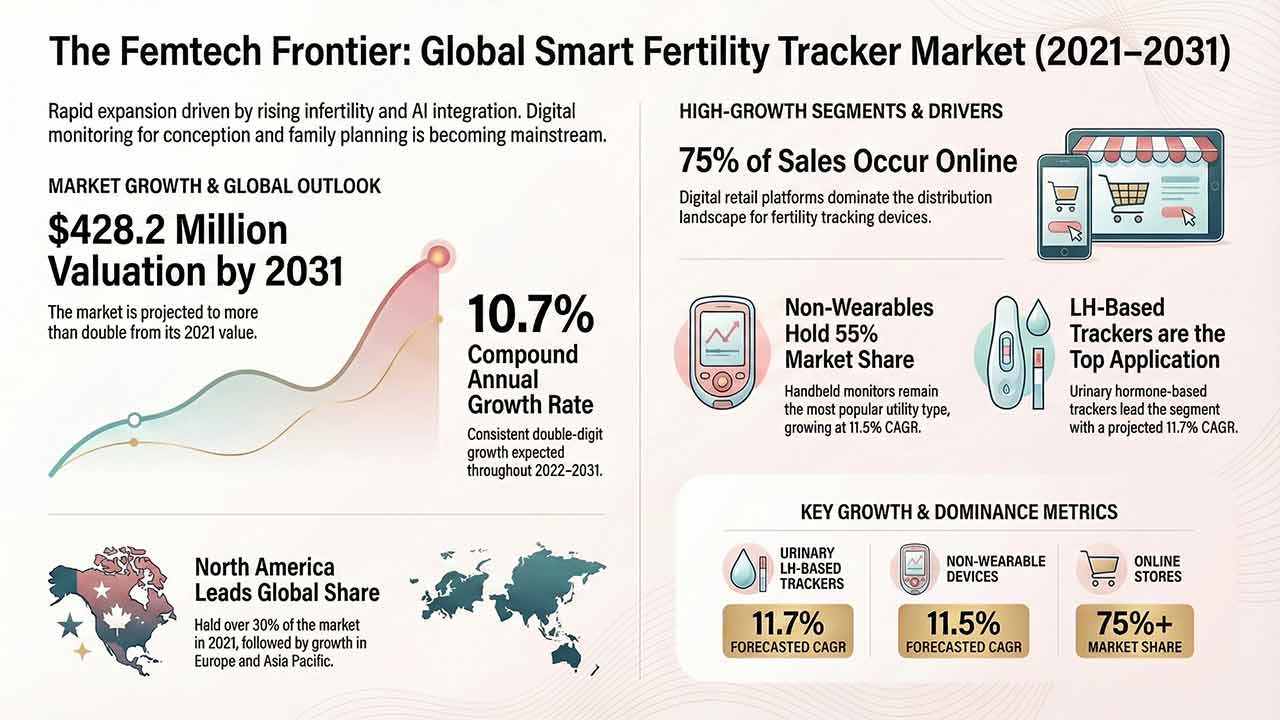
This comprehensive report analyses the Smart Fertility Tracker Market, detailing its projected growth from US$ 160.2 million in 2021 to US$ 428.2 million by 2031. It examines key drivers such as rising infertility and technological advancements in AI-integrated hormone monitoring, alongside detailed segmentation by utility, application, and region.

The Sperm Separation Systems Market is projected to exceed USD 1.5 billion by 2035, driven by automation, microfluidics, and rising male infertility awareness.