Home
 ReportReport
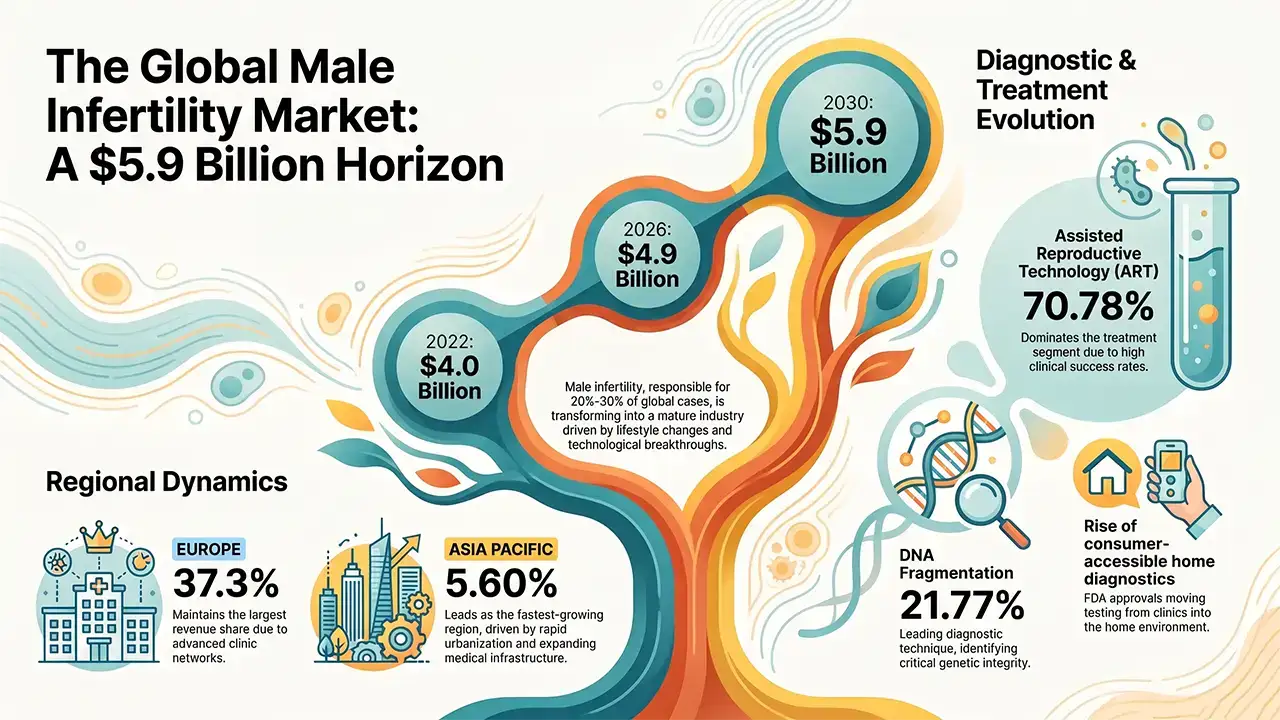
The global male infertility market, valued at USD 4.0 billion in 2022, is projected to grow from USD 4.9 billion in 2026 to USD 5.9 billion by 2030 at a CAGR of 4.9%. Rising global infertility rates, growing ART adoption, and advances in diagnostic technologies are fueling sustained market expansion.



Male infertility has emerged as one of the most clinically significant yet persistently underdiagnosed areas of reproductive healthcare, reshaping global investment in fertility diagnostics and treatment innovation. Long overshadowed by a cultural emphasis on female reproductive health, male infertility is now recognised as a pivotal contributor to the global fertility burden, responsible for approximately 20% to 30% of all infertility cases among couples worldwide. This recognition is driving the rapid maturation of a market that spans diagnostic testing, pharmacological treatments, assisted reproductive technologies (ART), and surgical interventions across an expanding global patient base.
The global male infertility market was valued at USD 4.0 billion in 2022 and is projected to grow from USD 4.9 billion in 2026 to USD 5.9 billion by 2030, advancing at a CAGR of 4.9% from 2023 to 2030, according to Grand View Research. This trajectory reflects both the scale of unaddressed clinical need and the accelerating pace of diagnostic and therapeutic innovation that is bringing this population-level challenge into increasingly sharp clinical focus. As awareness deepens, stigma recedes, and diagnostic technologies extend their reach, the market is positioned to deliver consistent, compounding growth through the decade.
The global male infertility market entered the forecast period from a confirmed base of USD 4.0 billion in 2022, with an intermediate estimate of USD 4.9 billion for 2026 marking steady structural growth along the trajectory. By 2030, the market is expected to reach USD 5.9 billion, representing approximately 48% growth over the eight-year period. This measured CAGR of 4.9% reflects a market propelled by long-term demographic and clinical trends rather than speculative or short-cycle demand, providing investors and industry stakeholders with a reliable, durable growth profile.
The forecast is anchored in two broad and reinforcing pillars of growth. The first is the escalating global prevalence of male infertility, driven by lifestyle changes, delayed family formation, and environmental factors affecting sperm quality at a population scale. The second is the expanding adoption of assisted reproductive technologies (ART), which offer significantly higher clinical success rates compared to pharmacological management for conditions including low sperm count, abnormal sperm morphology, and poor motility. Together, these pillars create a demand environment characterised by structural durability rather than cyclical volatility.
The male infertility market is propelled by a confluence of epidemiological, technological, and policy-driven forces collectively broadening both the clinical recognition and commercial addressability of the condition.
At the epidemiological core, approximately 48 million couples worldwide suffer from infertility, with male factor infertility responsible for 20% to 30% of all cases. The primary pathophysiological causes abnormal sperm morphology, lower sperm concentration, and impaired motility, create consistent, growing demand for diagnostic and therapeutic solutions. Compounding this is a documented demographic trend of particular concern: according to the National Center for Health Statistics, the fertility rate in males below 30 years decreased globally by 15% between 2006 and 2010. Lifestyle-associated risk factors, including alcohol intake, smoking, obesity, psychological stress, and environmental exposures, are major contributors to this decline and the populations most exposed to these factors are growing, not shrinking, in most global markets.
Continuous investment in research and development is advancing understanding of idiopathic infertility cases where no clear cause is identifiable through standard semen analysis and expanding the diagnostic toolkit available to clinicians. Companies are actively developing devices and biomarkers for identifying root causes that elude conventional testing methodologies. The development and commercialization of hormonal therapy represents a particularly active area of pharmaceutical investment, adding non-ART treatment pathways that expand the market's therapeutic addressability beyond surgical and ART approaches alone. ARTs cover a wide spectrum of causes and offer high clinical success rates, making them central to market revenue growth across the forecast period.
Government reimbursement reform is emerging as a meaningful demand driver across multiple markets. Several countries have taken initiatives to improve the reimbursement landscape for infertility-related treatments, reducing the out-of-pocket financial barrier for patients and increasing uptake of both diagnostic testing and treatment services. Coupled with improved regulatory standardisation, which has enhanced patient data security and increased patient confidence in seeking formal male infertility care, these policy tailwinds are expected to meaningfully accelerate market growth, particularly among middle-income patient populations in emerging markets that are underserved by current fertility infrastructure.
The test segment of the male infertility market encompasses a broad spectrum of diagnostic approaches, each targeting specific aspects of male reproductive function. Based on test type, the market is segmented into DNA fragmentation technique, oxidative stress analysis, microscopic examination, sperm agglutination, computer-assisted semen analysis (CASA), sperm penetration assay, and other methods reflecting the multi-dimensional complexity of male reproductive assessment.
The DNA fragmentation technique commanded the largest revenue share of 21.77% in 2022, anchored by its clinical superiority in providing a reliable and reproducible analysis of sperm DNA integrity. Sperm DNA fragmentation the presence of single- or double-strand breaks in the genetic material carried by sperm is now recognised as one of the primary causes of male infertility, particularly in cases of unexplained infertility, recurrent miscarriage, and repeated IVF failure where standard semen parameters appear normal. The growing clinical acceptance of DNA fragmentation as a diagnostic parameter, combined with advances in testing platforms enabling faster and more precise analysis, is expected to sustain the segment's market leadership through 2030.
Computer-assisted semen analysis (CASA) is expected to witness significant growth during the forecast period, driven by its ability to provide standardised, objective semen assessment through automated image processing technology, eliminating the inter-observer variability inherent in traditional microscopic examination. A commercial milestone for the home diagnostics sub-segment arrived in April 2018, when Sandstone Diagnostics received U.S. FDA approval for the Trak Volume Cup, a device enabling males to measure semen volume and self-diagnose hypospermia at home, foreshadowing the broader shift toward consumer-accessible male fertility diagnostics that is expected to expand throughout the forecast period. Microscopic examination remains the most widely adopted semen analysis technique in clinical settings globally owing to its low cost, simplicity, and established reliability, while oxidative stress analysis and sperm penetration assay are gaining traction in specialist andrology laboratories.
The treatment segment is bifurcated into ART and varicocele surgery on one hand and medication on the other, with the former commanding a dominant 70.78% revenue share in 2022, a proportion that reflects the clinical superiority of procedural and technological interventions over pharmacological management alone in moderate to severe cases of male factor infertility. ART's dominance reflects its clinical versatility and superior success rates. ART approaches address the full spectrum of male infertility causes, including sperm autoantibodies, viral orchitis, epididymal dysfunction, accessory gland infection, chemotherapy-related damage, heat exposure, trauma, and idiopathic factors, making them the clinical modality of choice for the majority of couples with male factor infertility. High per-cycle costs and the frequent requirement for multiple treatment cycles are acknowledged characteristics of ART-based treatment; these factors also contribute to the segment's revenue concentration by driving significant per-patient lifetime clinical spend within fertility centres. Increasing healthcare expenditure in developing countries, growing awareness about male infertility, and rising ART adoption in middle- and low-income countries are collectively expected to sustain the segment's dominant position through 2030.
The medication segment at 29.22% encompasses hormonal therapy aimed at enhancing spermatogenesis, the most preferred first-line approach for males with low sperm counts who wish to pursue natural pregnancy before committing to ART. Hormonal therapy is particularly valuable in cases where low testosterone, elevated FSH, or hypogonadism is identified as the primary infertility mechanism. The development of novel pharmacological approaches to stimulating sperm production and improving motility through targeted hormonal modulation remains an active investment area, with several companies pursuing clinical validation and regulatory clearance for next-generation hormonal therapy agents.

Europe dominated the male infertility market in 2022 with a revenue share of 37.3%, the largest of any global region. This leadership reflects a combination of factors unique to the European healthcare landscape: the availability of well-equipped and technologically advanced fertility clinics, higher per-patient adoption of premium diagnostic and treatment modalities, robust insurance and reimbursement coverage for fertility-related services, and a high public awareness of male reproductive health. Healthcare spending norms in Western Europe, particularly in Germany, France, the UK, and the Nordic countries, coupled with well-established healthcare infrastructure and long-standing cultural acceptance of reproductive health services as a legitimate area of medical care, continue to position the region as the benchmark market for male infertility diagnosis and treatment globally.
Asia Pacific is the market's most dynamic regional growth story, expected to register the fastest CAGR of 5.60% over the forecast period, outpacing global average growth by more than half a percentage point. Emerging economies including India, China, and Singapore are witnessing strong expansion of medical diagnostics and fertility care infrastructure, driven by strong economic growth, rapid urbanisation, and a growing geriatric population confronting age-related fertility challenges. Rising incidence rates of lifestyle-associated diseases, including obesity, diabetes, and hypertension, which correlate strongly with male reproductive dysfunction, are compounding the demand signal. Advancements in local medical diagnostic capabilities are simultaneously improving clinical detection rates in markets historically characterised by significant underdiagnosis of male infertility.
North America represents a significant regional market anchored by high ART utilisation rates, strong clinical infrastructure, and a growing network of employer-funded fertility benefit programmes that are increasingly incorporating male infertility testing and treatment coverage. Latin America and the Middle East & Africa, while currently smaller contributors to global market revenue, are expected to benefit from expanding private healthcare investment, improving awareness campaigns, and growing access to fertility clinics in key metropolitan centres with Brazil, Mexico, UAE, and South Africa emerging as country-level growth markets within their respective regions.
The male infertility market is entering a period of sustained, meaningful growth, underpinned by one of healthcare's most underappreciated public health challenges: the progressive global decline in male reproductive function. Growing from USD 4.0 billion in 2022 to an estimated USD 5.9 billion by 2030, the market reflects the converging impact of rising prevalence, technological advancement, and broadening clinical recognition of male factor infertility as a distinct, measurable, and addressable medical condition. The 4.9% CAGR through 2030 underscores a market with durable, structural growth characteristics that are independent of economic cycles, anchored by demographic necessity rather than discretionary demand.
For healthcare providers, diagnostic device manufacturers, and pharmaceutical innovators, the investment case is compelling. The test segment, particularly DNA fragmentation technology and computer-assisted semen analysis, offers a clear technological differentiation opportunity. The treatment segment's ART-led dominance (70.78% share) creates a large and defensible commercial base, while the medication sub-segment represents a meaningful adjacency for pharmaceutical development. Regionally, Asia Pacific's 5.60% CAGR growth story, the fastest of any region, defines the most significant geographic expansion opportunity through 2030. As awareness deepens, stigma recedes, and diagnostic technologies extend their reach into both clinical and consumer settings, the male infertility market is positioned to deliver consistent and compounding growth well beyond the current forecast horizon.


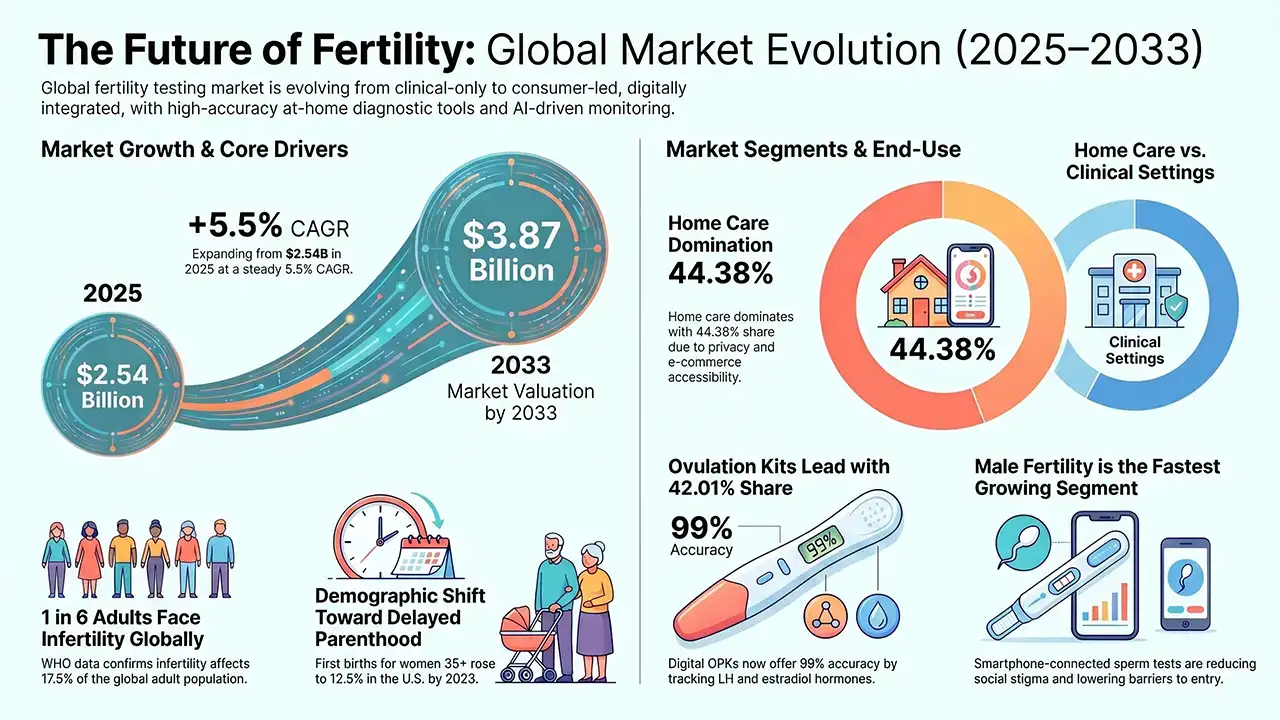
The global Fertility Testing Devices market, valued at USD 2.54 billion in 2025, is projected to reach USD 3.87 billion by 2033, growing at a CAGR of 5.5%. Rising infertility rates, delayed parenthood, and technology-driven at-home testing solutions are fueling robust worldwide demand across North America, Asia Pacific, and beyond.

Researchers at the Babraham Institute and Stanford University have engineered a 3D laboratory model of the human uterus to observe embryo implantation in unprecedented detail, up to day 14 of development. Published in Cell, this breakthrough opens new pathways for understanding IVF failure, miscarriage, and pregnancy complications.

Global fertility tourism is projected to reach US$13,080.0 Mn by 2032 at a 30.3% CAGR, led by IVF and a strong North America share.
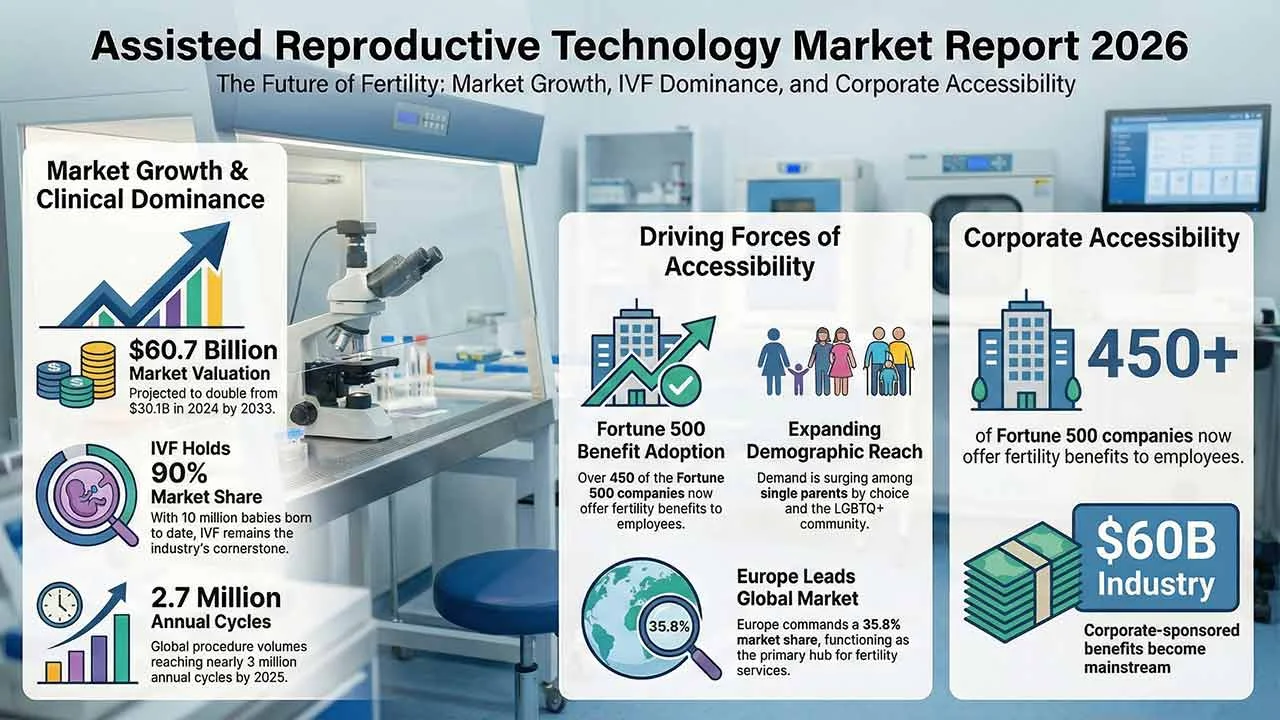
The assisted reproductive technology market continues to expand as infertility rates rise and parenthood is increasingly delayed worldwide. Valued at US$30.1 billion in 2024, the market is projected to reach US$60.7 billion by 2033, supported by IVF innovation, growing awareness, improved accessibility, and sustained investment in reproductive healthcare infrastructure globally.

The global human reproductive technology market is set to reach 45.4 USD billion by 2035, expanding from 27.7 USD billion in 2024 at a 4.6% CAGR. Growth is fueled by technological advancements in fertility treatments, rising infertility rates, delayed pregnancies, and increasing acceptance of single and LGBTQ+ parenting worldwide.
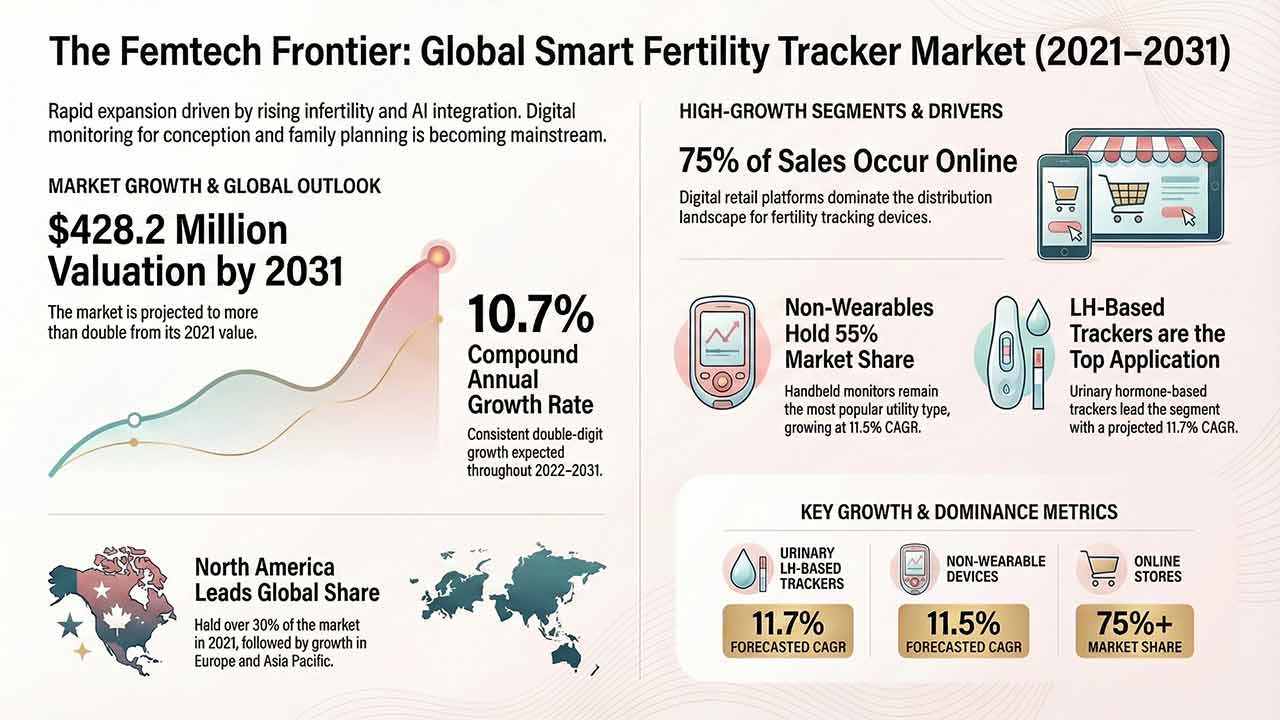
This comprehensive report analyses the Smart Fertility Tracker Market, detailing its projected growth from US$ 160.2 million in 2021 to US$ 428.2 million by 2031. It examines key drivers such as rising infertility and technological advancements in AI-integrated hormone monitoring, alongside detailed segmentation by utility, application, and region.