Home
 ReportReport
Global Preimplantation genetic testing market outlook covering growth drivers, segmentation, regional trends, key technologies, restraints, opportunities, and competitive landscape approaching $1B by 2032.




The preimplantation genetic testing (PGT) market is experiencing significant growth, projected to reach a value of approximately US$552.7 million in 2025 and expected to nearly double to US$999.2 million by 2032, registering a compound annual growth rate (CAGR) of 8.8% during this period. This growth is driven by multiple factors, including rising infertility rates, increasing maternal age, and growing awareness of genetic disorders. Advancements in next-generation sequencing (NGS) technology, improved embryo biopsy techniques, and expanding accessibility of in vitro fertilization (IVF) centers globally contribute to the heightened demand for PGT services.

Among various product categories, testing kits dominate the market due to their simplicity, reliability, and ease of integration into existing IVF laboratory workflows. These prevalidated kits contain optimized reagents that reduce human errors and testing complexity, thereby producing high-quality results consistently. Fertility clinics increasingly prefer such standardized solutions to enhance operational efficiency. Additionally, the growing availability of cost-effective kits tailored to emerging markets is broadening access and fueling market penetration across regions.
Next-Generation Sequencing leads the technology segment, primarily due to its superior resolution and accuracy. NGS allows comprehensive embryo screening for chromosomal abnormalities and genetic mutations, analyzing multiple embryos simultaneously. This enhances embryo selection accuracy and improves IVF success rates. As sequencing costs decline and computational resources expand, NGS platforms become more widely adopted globally. Integration of artificial intelligence (AI) tools within these platforms further supports precise data interpretation and prediction of embryo viability.
Within the application spectrum, aneuploidy testing accounts for the largest market share, estimated to comprise approximately 41% of total revenue as of 2024. This prevalence is attributed to the high incidence of chromosomal abnormalities, especially among older women, and the necessity to reduce implantation failure and miscarriage risks. Technological advancements such as high-throughput sequencing and automated interpretation systems are broadening the adoption and scope of aneuploidy testing in clinical practice.
The preimplantation genetic testing market serves several key end users, including fertility clinics, hospitals, and diagnostic laboratories. Fertility clinics constitute the largest segment, given their role as primary providers of assisted reproductive technology services. Hospitals are also increasing their use of PGT within comprehensive reproductive care programs, supported by favorable reimbursement policies and specialized fertility units. Diagnostic laboratories with genomic testing expertise collaborate with clinics to expand access to precision fertility care.

North America holds the largest regional share in the preimplantation genetic testing market, supported by an advanced healthcare infrastructure, extensive availability of fertility clinics, and high levels of genetic disorder awareness. The United States is the largest contributor within this region, driven by favorable reimbursement structures, continuous technological innovation in IVF, and a robust network of diagnostic laboratories. Strategic collaborations among biotechnology companies, academic institutions, and healthcare providers promote product innovation and market adoption. The rising maternal age and growing demand for safe assisted reproductive techniques further bolster regional growth.
Europe’s market is characterized by steady growth, driven by increasing IVF acceptance and a focus on genetic screening. The region benefits from regulatory frameworks that emphasize ethical and clinical safety in PGT application. Countries such as the United Kingdom, Germany, and France lead the market, leveraging advanced sequencing technologies to enhance diagnostic accuracy. The UK is anticipated to experience the fastest growth between 2025 and 2032, attributed to increasing public awareness, supportive healthcare policies, and expansion of fertility clinics. The integration of data-driven genomic analysis tools strengthens clinical outcomes and supports market competitiveness.
The Asia Pacific region represents the fastest-growing market, propelled by rising infertility rates, expanding public awareness, and improved access to fertility care. Factors such as rapid urbanization, postponed childbearing, and proactive governmental support accelerate market expansion across countries including China, India, and Japan. Investments in genomics research and local manufacturing of affordable testing kits and reagents contribute to regional growth. Social acceptance of assisted reproductive technologies is also increasing, positioning Asia Pacific as a significant center for innovation and service provision in preimplantation genetic testing.
Several interrelated factors drive market growth. Increasing maternal age corresponds with elevated infertility and chromosomal abnormalities, prompting more couples to seek assisted reproductive technology solutions supported by PGT to improve pregnancy success. The growing prevalence of genetic disorders, including cystic fibrosis, thalassemia, and Down syndrome, underscores the need for early genetic screening.
Technological progressions in next-generation sequencing and AI-assisted embryo selection improve the precision and efficiency of testing procedures, enabling extensive embryo profiling with higher accuracy and quicker results. Additionally, rising awareness of reproductive health, escalating healthcare expenditures, and supportive governmental policies in developed economies underpin market expansion. Collectively, these forces cultivate an environment where PGT becomes an integral component of fertility treatment protocols.
Despite strong prospects, the preimplantation genetic testing market faces challenges that limit broader adoption. Embryo biopsy, required for sampling cells, carries risks, including potential embryo damage, which may affect implantation success. Although advances have enhanced biopsy safety, complications such as preeclampsia and preterm birth remain concerns. Diagnostic limitations, including false positives, can result in discarding viable embryos. Mosaicism, when embryos contain a mixture of normal and abnormal cells poses significant challenges to diagnostic accuracy. Ethical and legal constraints also restrict PGT application in certain jurisdictions, due to concerns about embryo selection and potential misuse. Notable legal disputes have highlighted the necessity for improved test accuracy and regulatory oversight. Addressing these issues demands stringent clinical standards, transparent patient counseling, and ongoing technological refinement to foster safety and trust.
Emerging opportunities hinge on technological advancements and expanded clinical applications. Progress in genetic analysis technology, especially next-generation sequencing and AI models such as convolutional neural networks, enables highly accurate embryo viability predictions.
Non-invasive PGT (niPGT) techniques, which analyze cell-free DNA from embryo culture media without the need for biopsy, present a promising growth area by reducing clinical risks and costs while maintaining diagnostic reliability. Integration of PGT with personalized medicine and precision reproductive healthcare opens new possibilities for targeted genetic interventions. The expansion of fertility tourism, especially in emerging markets, alongside increased genomic research investment, is expected to accelerate innovation and market growth over coming years.
The preimplantation genetic testing market is marked by intense competition, with leading industry participants focusing on innovation, strategic collaborations, and expansion into high-growth regions. Companies are increasingly investing in research and development to improve testing accuracy, incorporate AI, and develop cost-effective solutions to broaden market reach.
The PGT market is undergoing transformative growth characterized by technological innovation, increased awareness of reproductive health, and expanded access to fertility care. Advances in genetic analysis technologies and supportive ethical frameworks contribute to its becoming a mainstream component of assisted reproduction worldwide. While challenges related to clinical risks and diagnostic complexities remain, the continued synergy of next-generation sequencing, AI, and non-invasive techniques promises to redefine fertility treatment landscapes. North America maintains leadership in the sector, with Asia Pacific emerging as a dynamic growth frontier. Collaborations across biotechnology, clinical, and research sectors will be instrumental in shaping the future of preimplantation genetic testing, aiming to enhance fertility outcomes and genetic health globally.
This comprehensive outlook underscores an optimistic trajectory for the global preimplantation genetic testing market, poised to approach a value close to US$1 billion by 2032.


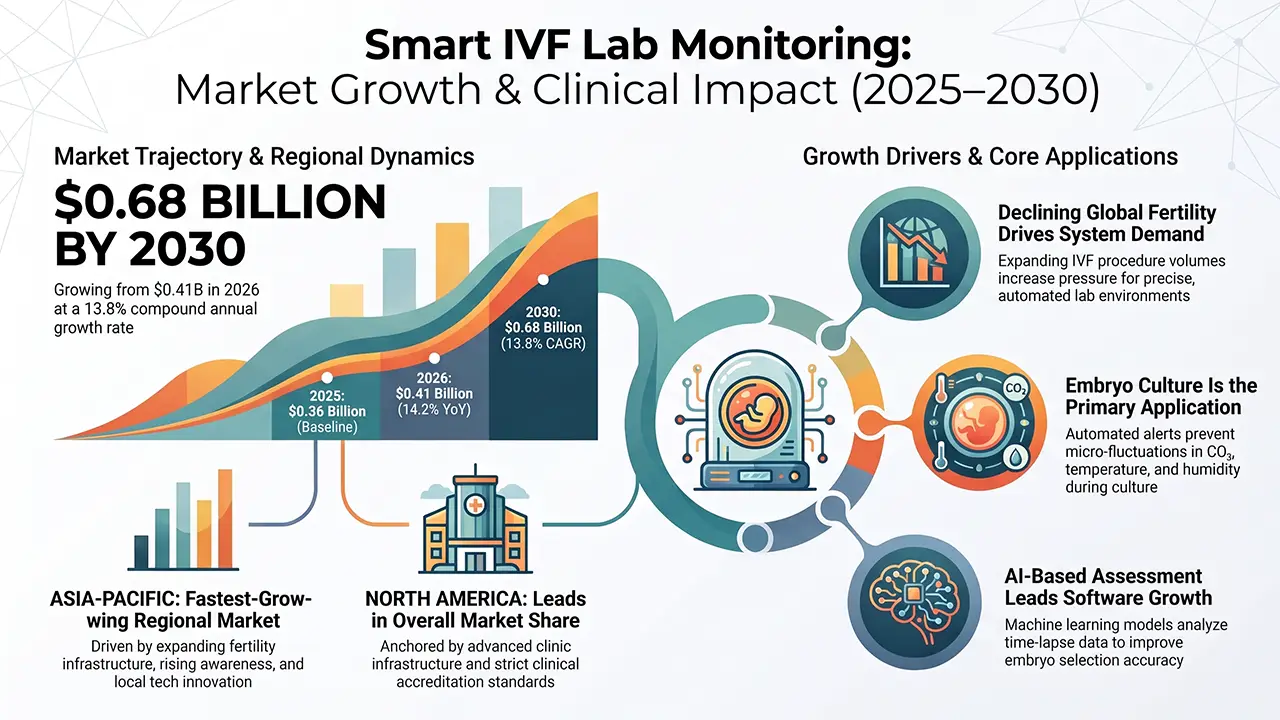
The global smart IVF lab monitoring market, valued at USD 0.41 billion in 2026, is projected to reach USD 0.68 billion by 2030 at a 13.8% CAGR. Rising infertility rates, growing adoption of real-time lab automation, and AI-driven monitoring platforms are fueling strong global demand across North America and Asia-Pacific.

The University of Aberdeen has launched a redesigned, free IVF success calculator, the OPIS tool, powered by updated national HFEA data. Built with patients at its centre, the IVF success calculator provides tailored success estimates across up to six IVF or ICSI cycles, helping couples plan emotionally, physically, and financially.

A retrospective cross-sectional study of 276 ART patients suggests that the oestradiol-to-oocyte ratio (EOR) could serve as a meaningful prognostic marker for IVF outcomes in PMOS. The research examines EOR across four categories, incorporating subgroup analysis by luteinising hormone activity during ovarian stimulation.

AutoIVF's OvaReady device is advancing IVF egg retrieval technology by recovering "stealth oocytes" from discarded follicular fluid. With Northeastern University co-op students Tori Christianson and Jake Percival refining its prototypes, the Natick, Mass, based startup is preparing for clinical trials, aiming for FDA clearance to improve IVF success rates.
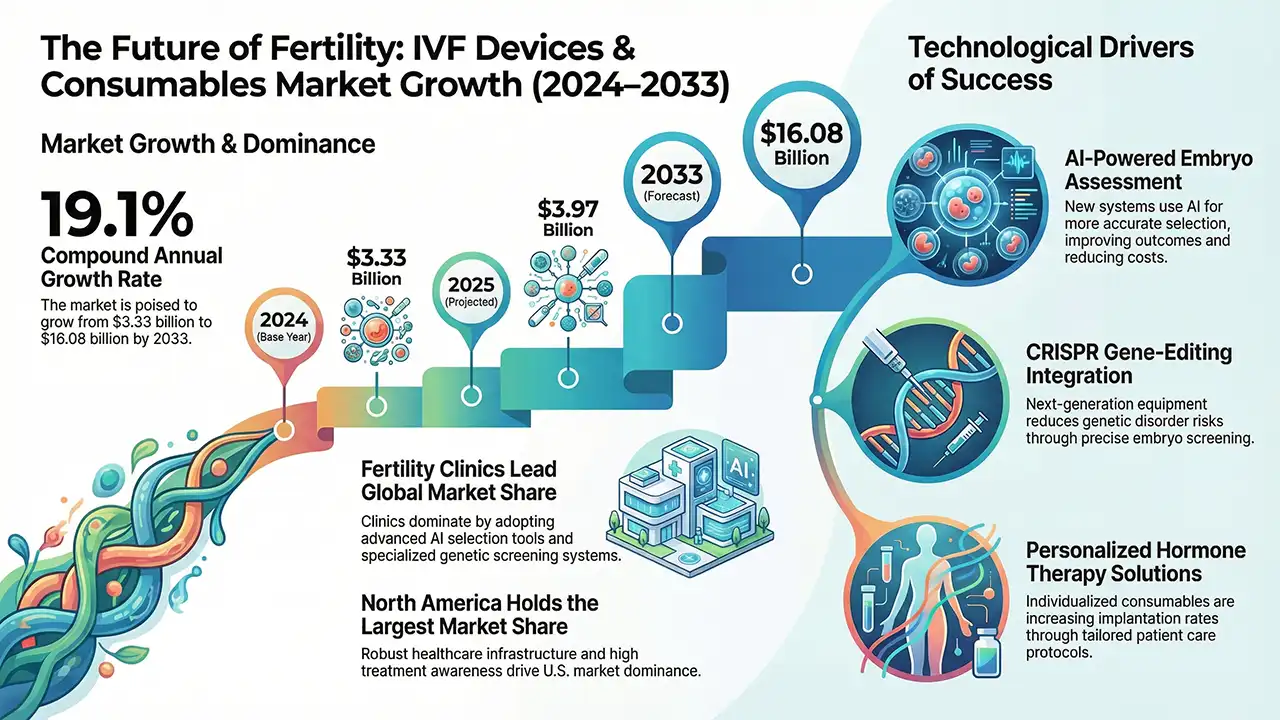
The global IVF Devices and Consumables market is projecting a significant surge to $16.08 billion by 2033. Driven by rising infertility and tech innovations, the analysis covers regional shifts, product segments, and emerging trends, highlighting the industry’s evolution alongside the growing Smart Fertility Tracker Market
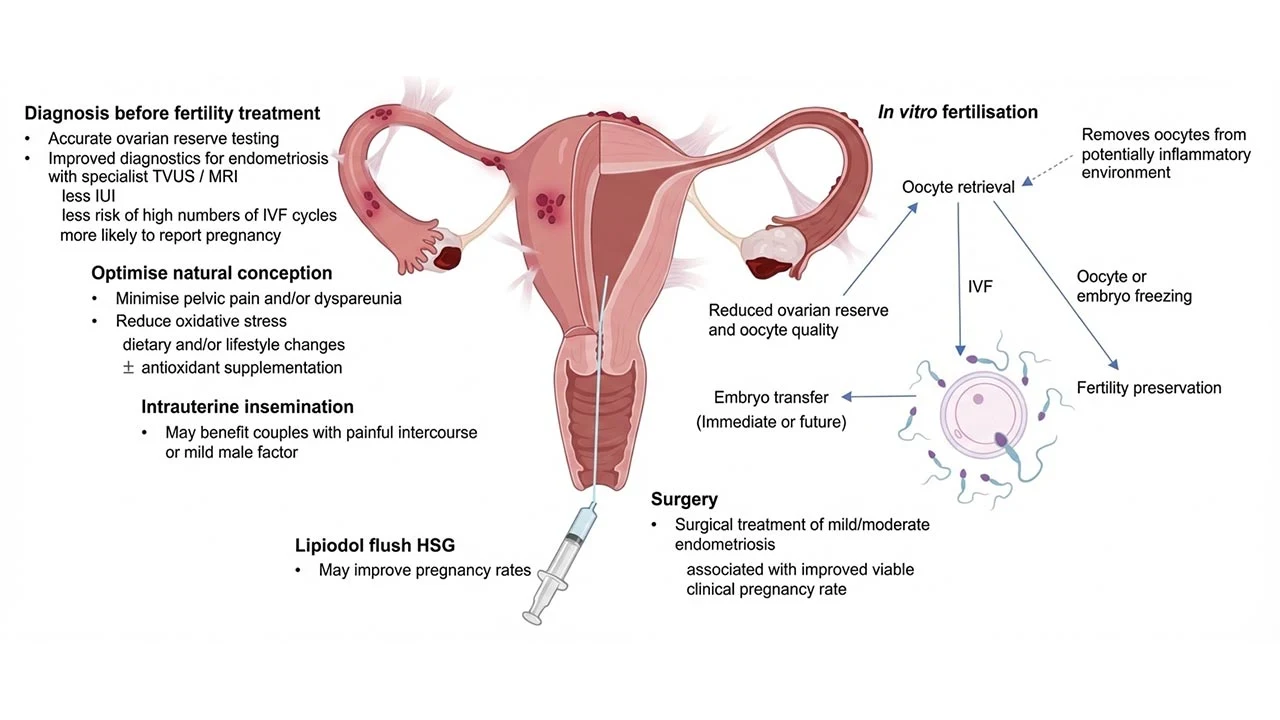
Integrating IVF and Surgical Management in Endometriosis offers a patient-centered strategy to improve fertility while managing chronic pain. By integrating laparoscopic surgery, ovarian reserve assessment, and assisted reproductive technology, clinicians can tailor treatment plans, enhance live birth rates, and optimize reproductive outcomes for women facing complex endometriosis-related infertility challenges.
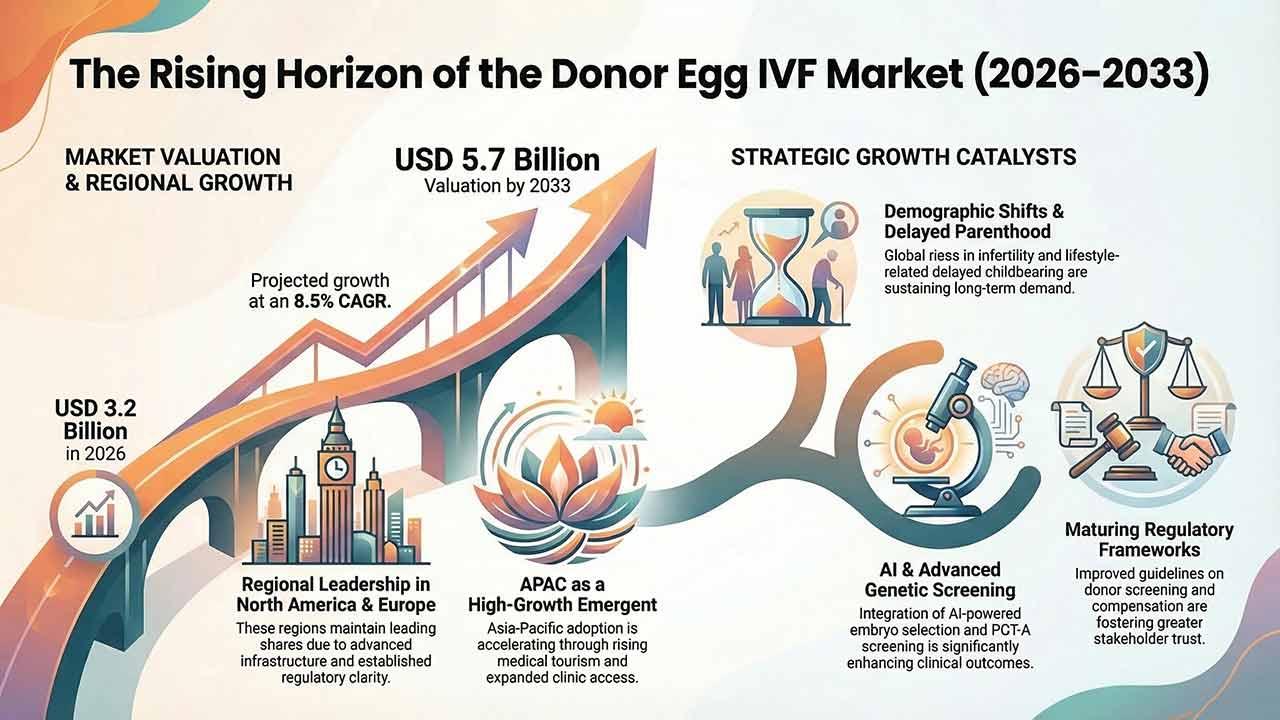
This comprehensive analysis examines the global Donor Egg IVF market, forecasting a valuation of USD 5.7 billion by 2033. The report explores critical growth drivers, including delayed parenthood, technological breakthroughs in embryo selection, and shifting regulatory landscapes, offering a detailed breakdown of market segmentation and regional growth trajectories for the next decade.