Home
 ReportReport
The global infertility testing and treatment market is projected to reach US$3.22 billion by 2031, expanding at an 8% CAGR. Growth is fueled by delayed parenthood, rising infertility rates, AI-driven diagnostics, advanced ART procedures, and expanding healthcare access across North America, Europe, and Asia-Pacific regions.



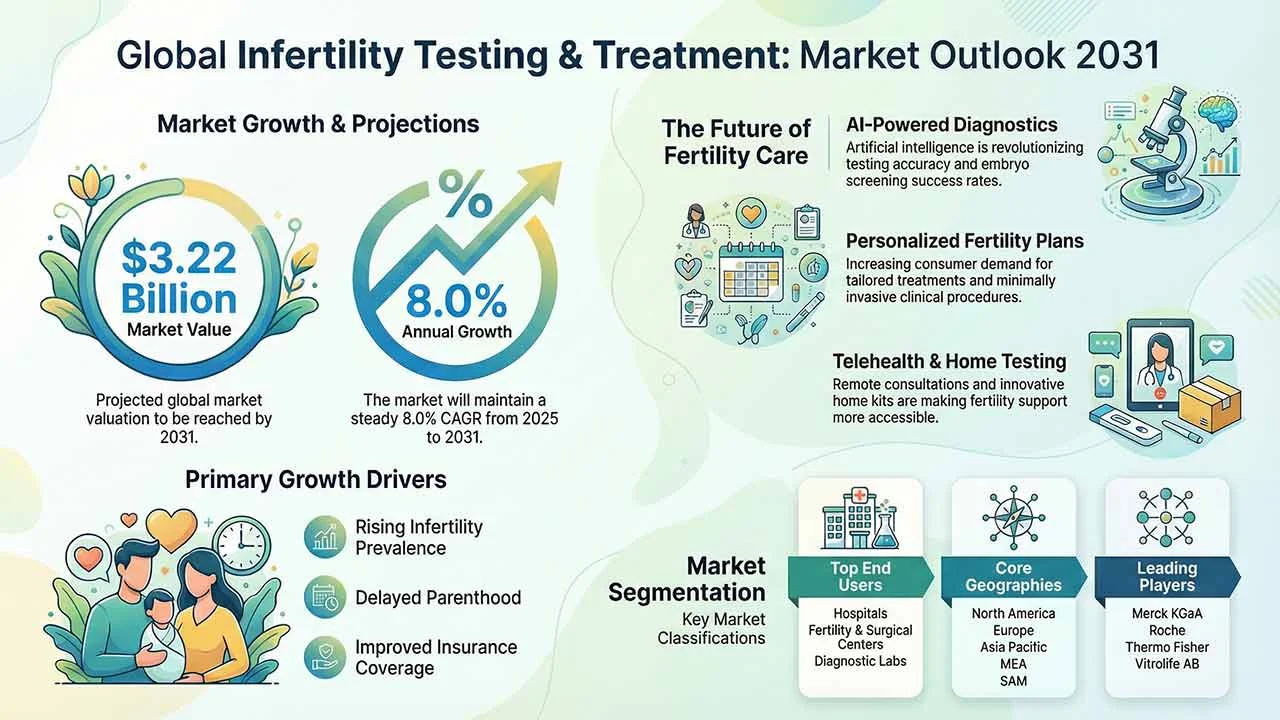
The global landscape for reproductive healthcare is undergoing a significant transformation, with the infertility testing and treatment market experiencing notable growth and evolution. A complex interplay of socioeconomic factors, lifestyle changes, and rapid technological breakthroughs is driving this sector, positioning it for substantial expansion over the next decade. According to recent industry analysis, the market is estimated to reach a valuation of US$ 3.22 billion by 2031. This growth represents a steady Compound Annual Growth Rate (CAGR) of 8.0% during the forecast period spanning from 2025 to 2031. The historical data from 2021 to 2023 established a foundation for this projection, with 2024 serving as the base year for the current market assessment.
The increasing prevalence of infertility among both men and women globally primarily fuels the robust trajectory of the infertility testing and treatment market. Several underlying factors contribute to this rise, including changing lifestyles, increased stress levels, and various underlying health conditions. A significant trend observed across both developed and emerging economies is the trend toward delayed parenthood, which often necessitates medical intervention to achieve successful conception.
Beyond demographic shifts, technological innovation remains a cornerstone of market expansion. The integration of Artificial Intelligence (AI) in diagnostics, automation in laboratory procedures, and enhanced embryo screening techniques have significantly improved success rates for various treatments. Furthermore, supportive government initiatives and expanding insurance coverage in select regions are making these specialized services more accessible to a broader demographic. Growing social acceptance of fertility treatments has also empowered families to seek proactive early assessments rather than waiting for traditional diagnostic benchmarks.
To provide a holistic landscape of the industry, the market is categorized by gender, testing type, treatment type, and end-user facilities.
The market distinguishes between male and female diagnostic requirements. Female infertility testing often involves a combination of ovulation testing, hormone testing, genetic testing, and imaging diagnostics. On the male side, diagnostic procedures focus on identifying underlying physiological or genetic factors affecting fertility.
Treatment pathways are diverse and tailored to the unique biological needs of the patient. These include:
The services are delivered through several key healthcare settings. Hospitals remain a primary provider, particularly for complex surgical interventions. Fertility and Surgical Centers offer specialized, often outpatient, care focused exclusively on reproductive health. Additionally, Diagnostic Centers and Laboratories play a critical role in the early assessment and monitoring phases of the fertility journey.
The infertility testing and treatment market analysis encompasses a wide geographic scope, identifying regional growth engines and local market dynamics.
As the market moves toward the 2031 milestone, several emerging trends are expected to redefine the patient experience. Personalized fertility solutions are gaining prominence, providing customised treatments for each couple's distinct biological journey. The "Telehealth Revolution" is another significant trend, allowing for remote consultations and support, which is particularly vital for patients in remote regions.
There is also a growing market for innovative home infertility testing kits, which empower individuals with early data and private testing options. Furthermore, a shift toward holistic approaches is integrating general wellness and nutrition into traditional medical fertility treatments. From a demographic standpoint, the rising acceptance of fertility treatments among single parents and same-sex couples is significantly widening the potential patient base.
The future growth of the industry is not just dependent on technology but also on the regulatory and investment environment. Investors utilize comprehensive trend analysis and financial projections to identify opportunities across the value chain. For technology providers to make wise strategic choices about innovation and manufacturing, they must comprehend changing dynamics. Meanwhile, regulatory bodies are increasingly focused on establishing policies that preserve investor trust, uphold market integrity, and ensure patient safety standards. Supportive frameworks in several countries are already promoting ethical practices and offering financial assistance for treatments.
The current research on the infertility testing and treatment market serves as a vital tool for strategic planning and risk mitigation. By providing a detailed historical analysis alongside a seven-year forecast, these insights allow businesses to understand the competitive landscape and identify emerging markets. Expert analysis helps stakeholders translate complex quantitative datasets into actionable business intelligence, which is instrumental in shaping go-to-market strategies.
The future of the market appears highly promising through 2031. Continuous innovation in reproductive technologies, combined with expanding healthcare infrastructure and evolving patient expectations, will remain the primary drivers of long-term success. As personalized medicine and AI-driven assessment tools become more prevalent, the industry is expected to offer higher success rates and more transparent pricing structures, meeting the demands of today's more informed and proactive consumers. With a projected value of US$ 3.22 billion, the sector remains a critical component of the global life sciences industry, offering significant opportunities for growth, investment, and the improvement of reproductive health outcomes worldwide.


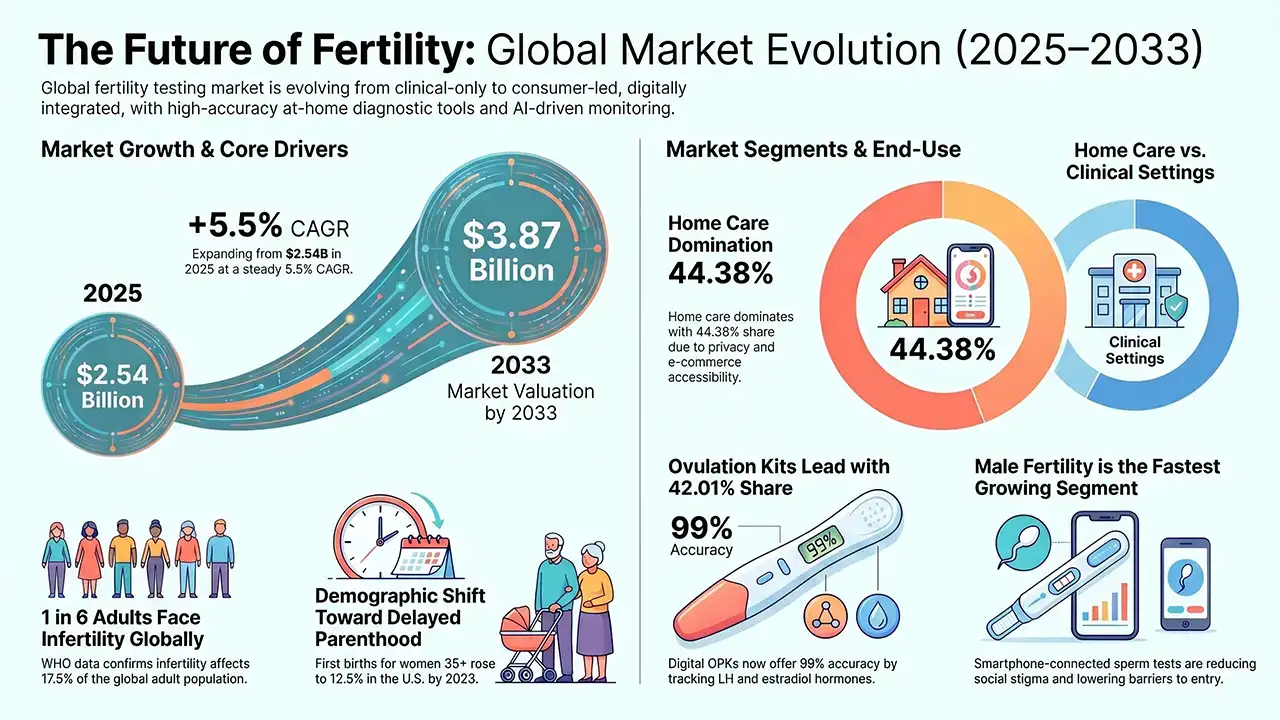
The global Fertility Testing Devices market, valued at USD 2.54 billion in 2025, is projected to reach USD 3.87 billion by 2033, growing at a CAGR of 5.5%. Rising infertility rates, delayed parenthood, and technology-driven at-home testing solutions are fueling robust worldwide demand across North America, Asia Pacific, and beyond.

Researchers at the Babraham Institute and Stanford University have engineered a 3D laboratory model of the human uterus to observe embryo implantation in unprecedented detail, up to day 14 of development. Published in Cell, this breakthrough opens new pathways for understanding IVF failure, miscarriage, and pregnancy complications.

Global fertility tourism is projected to reach US$13,080.0 Mn by 2032 at a 30.3% CAGR, led by IVF and a strong North America share.
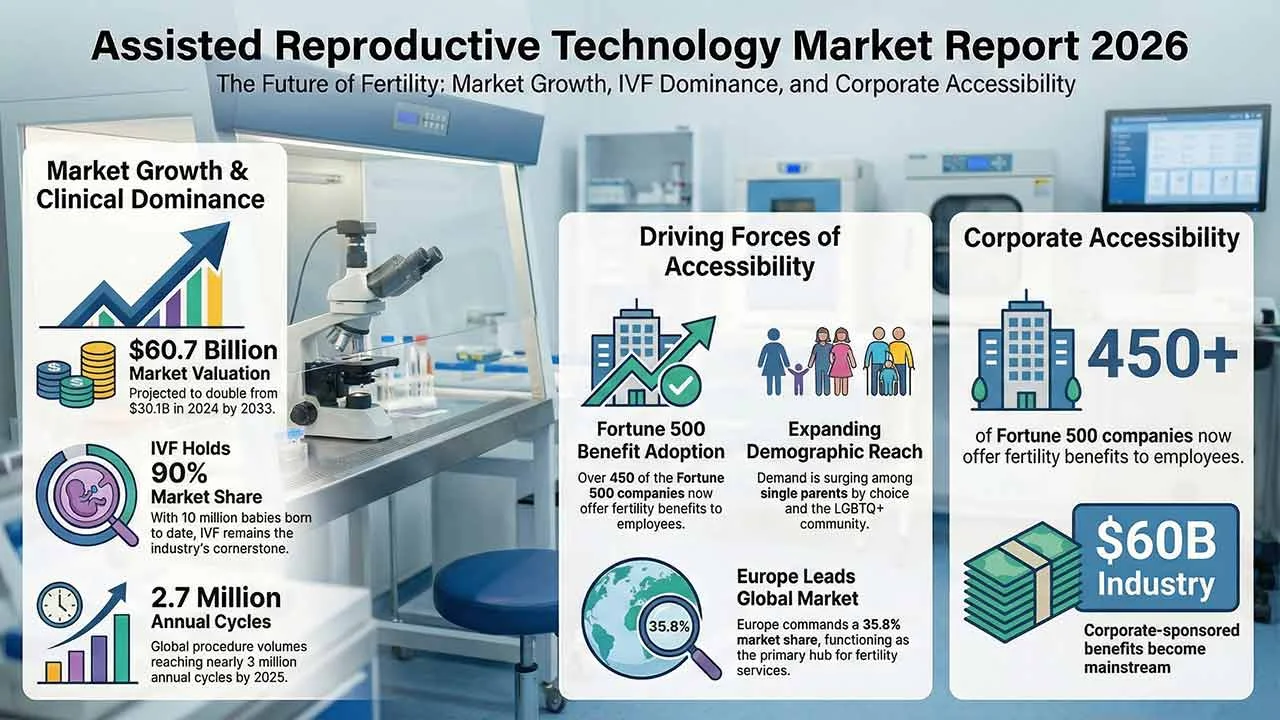
The assisted reproductive technology market continues to expand as infertility rates rise and parenthood is increasingly delayed worldwide. Valued at US$30.1 billion in 2024, the market is projected to reach US$60.7 billion by 2033, supported by IVF innovation, growing awareness, improved accessibility, and sustained investment in reproductive healthcare infrastructure globally.

The global human reproductive technology market is set to reach 45.4 USD billion by 2035, expanding from 27.7 USD billion in 2024 at a 4.6% CAGR. Growth is fueled by technological advancements in fertility treatments, rising infertility rates, delayed pregnancies, and increasing acceptance of single and LGBTQ+ parenting worldwide.
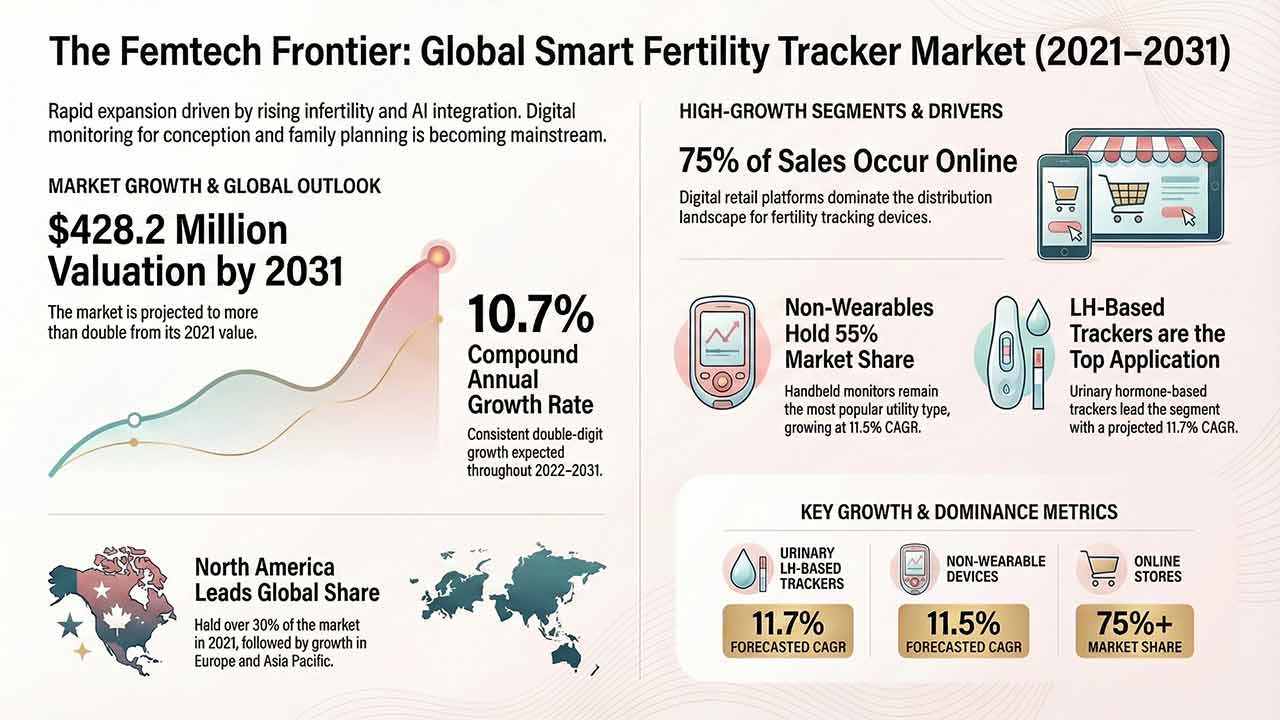
This comprehensive report analyses the Smart Fertility Tracker Market, detailing its projected growth from US$ 160.2 million in 2021 to US$ 428.2 million by 2031. It examines key drivers such as rising infertility and technological advancements in AI-integrated hormone monitoring, alongside detailed segmentation by utility, application, and region.

The Sperm Separation Systems Market is projected to exceed USD 1.5 billion by 2035, driven by automation, microfluidics, and rising male infertility awareness.