Home
 ReportReport
The global Fertility Testing Devices market, valued at USD 2.54 billion in 2025, is projected to reach USD 3.87 billion by 2033, growing at a CAGR of 5.5%. Rising infertility rates, delayed parenthood, and technology-driven at-home testing solutions are fueling robust worldwide demand across North America, Asia Pacific, and beyond.



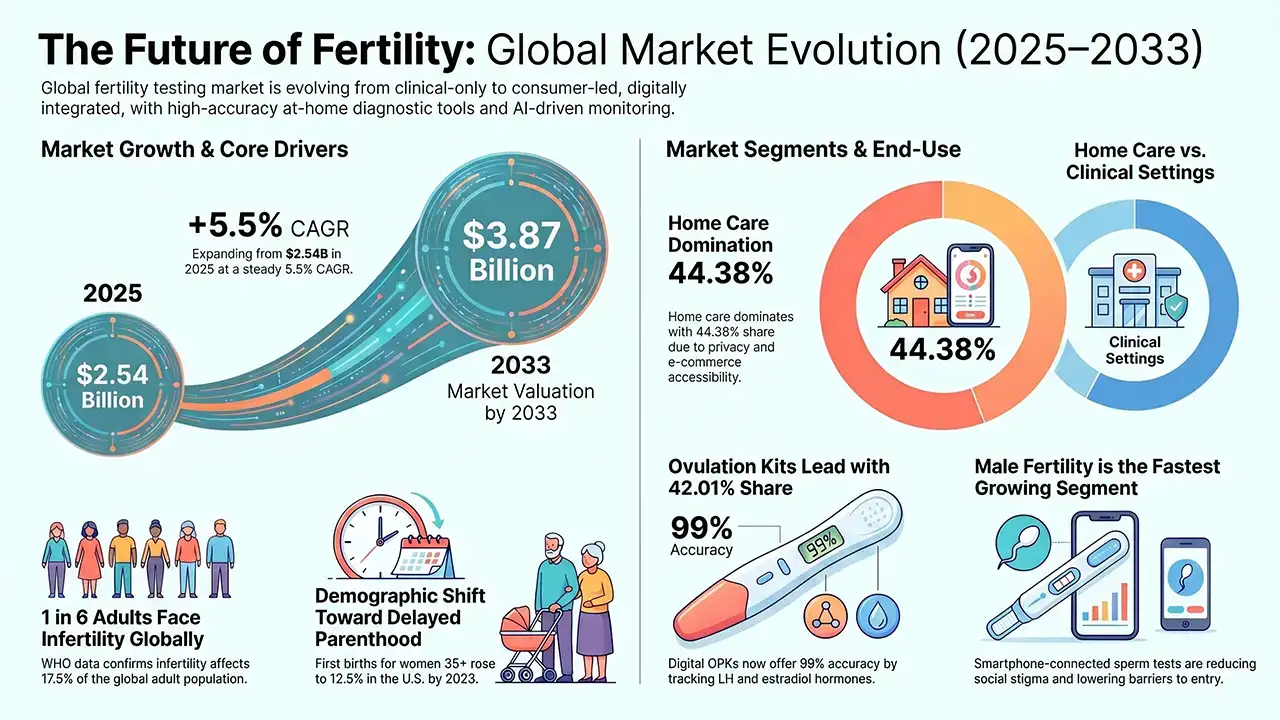
Reproductive health has emerged as one of the most consequential frontiers in global healthcare, and the tools that serve this space are evolving at a remarkable pace. The global Fertility Testing Devices market stands at a pivotal moment, shaped by converging forces of rising infertility awareness, rapid technological innovation, and a fundamental shift in how individuals and couples approach reproductive planning. From hormone-detecting ovulation kits and fertility monitors to sophisticated at-home sperm analysis tools, the category has expanded well beyond its clinical origins into an increasingly consumer-led, digitally integrated space.
Valued at USD 2.54 billion in 2025, the market is forecast to reach USD 3.87 billion by 2033, expanding at a compound annual growth rate (CAGR) of 5.5% from 2026 to 2033, according to Grand View Research. This growth trajectory reflects more than market momentum, it mirrors deep demographic and cultural shifts in which reproductive health is no longer a private concern addressed solely in clinical settings but an ongoing, personalised, and data-driven pursuit. The demand for accurate, accessible, and consumer-friendly fertility testing solutions has never been greater, and the industry is responding with a surge of innovation, strategic expansion, and digital integration.
The Fertility Testing Devices market entered 2026 with a base value of USD 2.66 billion, setting the stage for sustained and robust expansion across the forecast horizon. The 2026-to-2033 period is projected to deliver consistent incremental gains, driven by a broadening consumer base, rising clinical adoption across emerging markets, and an accelerating pace of product innovation that is making fertility monitoring more accurate, affordable, and convenient than ever before.

Central to this growth is the expanding role of assisted reproductive technologies (ART), including in vitro fertilization (IVF) and intrauterine insemination (IUI), which are encouraging more couples to engage in pre-conception monitoring. As ART volumes grow globally, the demand for pre-clinical at-home testing has grown alongside it, positioning fertility testing not merely as a standalone product category but as an integral first step in the broader reproductive healthcare journey.

Several powerful forces converge to underpin the upward trajectory of the Fertility Testing Devices market, each reinforcing the others in a cycle of heightened awareness, growing demand, and accelerating innovation. Understanding these macro and micro-drivers is essential to contextualizing both the pace and durability of market growth.
Delayed parenthood represents one of the most consequential demographic shifts of the modern era, with direct implications for the fertility testing industry. In the United States, data from the National Center for Health Statistics reveals a clear and consistent shift toward older maternal ages at first birth. Between 2018 and 2023, the proportion of first births among women aged 30–34 climbed from 23.2% to 25.1%, while women aged 35 and older accounted for a growing 12.5% of first births in 2023, up from 10.8% in 2018. Younger age cohorts, by contrast, are declining in their share of first births. This demographic reality has a direct bearing on fertility health: age-related declines in both egg quality and ovarian reserve are well-documented, and the growing awareness of these realities is driving individuals to monitor their reproductive health proactively and early.
Lifestyle factors compound this challenge for both sexes. High stress, poor dietary habits, sedentary behavior, alcohol consumption, and most notably tobacco use have been shown to impair reproductive function significantly. Smoking in men is closely linked to reduced sperm count, motility, and semen quality, while in women it compromises ovarian reserve and conception rates. According to data from the Global Action to End Smoking, approximately 253 million individuals aged 15 and above in India alone were tobacco users in 2022 – a striking figure that illustrates the scale of lifestyle-related fertility risk at a population level and one that signals enormous latent demand for accessible, at-home reproductive health diagnostics across emerging markets.
Rising global infertility rates offer perhaps the most compelling macro-level driver of market demand. The World Health Organization (WHO), in a landmark 2023 report, found that approximately 17.5% of the adult population – roughly 1 in 6 individuals worldwide – experiences infertility at some point in their lives. Contributing conditions include polycystic ovary syndrome (PCOS) and hormonal imbalances in women and declining sperm quality in men. A 2022 National Institutes of Health (NIH) report found that global human sperm counts have fallen by more than 50% over the last five decades. Against this backdrop, a 2025 study published in the Journal of Clinical Medicine confirmed that male infertility affects approximately 15% of couples globally, a statistic that has catalyzed significant investment in male fertility diagnostics and awareness campaigns worldwide.
The Fertility Testing Devices market is segmented into three primary product categories, each addressing a distinct dimension of reproductive health monitoring: Ovulation Prediction Kits (OPKs), Fertility Monitors, and Male Fertility Testing Devices. Together, these product lines reflect the market's evolution from basic test strips to sophisticated, connected, clinically accurate diagnostic ecosystems.

The application segment of the Fertility Testing Devices market is bifurcated into female fertility testing and male fertility testing, with the female segment holding the dominant position as of 2025. Female fertility testing benefits from a wider range of established diagnostic parameters, including FSH, AMH, oestradiol, and LH hormone assays and has been supported by significant innovation in self-collected blood microsampling and digital result interpretation. The segment's growth is also propelled by the scale of female infertility as a public health issue: a 2023 study found that among infertile women, 57.33% experienced primary infertility and 42.66% had secondary infertility, with the 26–30 age group most acutely affected. As the prevalence of PCOS, endometriosis, and age-related reproductive decline continues to gain public attention, demand for accessible female-focused fertility diagnostics is expected to remain robust through 2033.
The male fertility testing segment, though currently smaller in revenue share, is forecast to grow at the fastest CAGR over the 2026–2033 period. Microfluidic semen analysis, smartphone-connected sperm testing kits, and improvements in at-home morphology assessment are collectively lowering the barriers to male reproductive health monitoring. As social attitudes continue to evolve and male fertility health gains cultural traction, the appetite for discreet, convenient, and clinically reliable at-home diagnostic solutions is set to expand considerably, marking the male fertility segment as one of the most strategically significant areas of investment and innovation in the broader market.
Home care settings emerged as the dominant end-use segment in 2025, accounting for a confirmed 44.38% of total market revenue. This commanding share reflects a broader and accelerating consumer preference for privacy, convenience, and autonomy in managing reproductive health. The rise of e-commerce and expanding internet penetration have made at-home fertility testing more accessible than ever before, while significant advances in device accuracy have bolstered consumer confidence in the reliability of home-based diagnostic results. Integration with digital health platforms and teleconsultation services has further closed the gap between home testing and clinical care, making the home setting not merely a point of convenience but an increasingly credible healthcare environment.
 Fertility clinics, while representing a smaller portion of the current end-use landscape, are forecast to be the fastest-growing end-use segment over the forecast period. The expansion of insurance coverage and reimbursement policies for ART procedures in several key markets, coupled with rising patient volumes driven by delayed parenthood and lifestyle-related infertility, is positioning fertility clinics as critical growth engines for market expansion. These settings not only deploy advanced diagnostic devices for pre-treatment assessment but also create demand for high-throughput, precision-grade fertility testing platforms that go beyond what is available to consumers at home.
The Fertility Testing Devices market exhibits distinct regional growth dynamics, shaped by varying levels of healthcare infrastructure, cultural attitudes toward reproductive health, regulatory environments, and the maturity of ART services. While North America currently holds the dominant position, the competitive regional landscape is rapidly evolving as emerging markets invest in reproductive healthcare infrastructure and awareness.

North America led the global Fertility Testing Devices market in 2025 with a revenue share of 36.69%, underpinned by high consumer awareness, robust insurance coverage in select U.S. states, and widespread ART adoption. The United States represents the fastest-growing market within North America, driven by the surge in personalized fertility care, demand for home-based diagnostic tools among millennials seeking privacy and convenience, and the proliferation of telehealth platforms reshaping how reproductive health consultations are delivered and followed up. Partnerships between device manufacturers and digital health platforms are proving particularly effective in expanding both access and engagement.
Asia Pacific presents one of the most compelling regional growth stories for the forecast period. Urbanisation, delayed marriage, and rising lifestyle-related infertility across India, China, Japan, and Southeast Asia are driving growing demand for both male and female Fertility Testing Devices. India dominated the Asia Pacific market, grappling with an infertility prevalence ranging from 3.9% to 16.8%, according to a 2024 article in the Indian Journal of Community Medicine — a wide range that underscores both the scale of the challenge and the significant variability in access to diagnosis and care. China, meanwhile, is expected to see accelerating adoption as government reproductive health initiatives gain traction and the expansion of ART services creates a larger patient pool requiring diagnostic support.
Europe holds a substantial revenue share of the global market, supported by rising investment in reproductive healthcare infrastructure, broad public awareness campaigns about fertility preservation, and expanding government support. Germany dominates the European segment, benefiting from comprehensive health insurance coverage for fertility testing and advanced clinical infrastructure. The scale of the challenge is clear: a 2024 article in Deutsche Welle noted that infertility affects 1 in 6 women in Germany. The United Kingdom is also a significant market, driven by rising age-related infertility among professional women over 30 and growing awareness of male reproductive health diagnostics, with ovarian reserve testing and non-invasive hormone monitoring gaining particular traction.
Latin America and the Middle East & Africa (MEA) are emerging as meaningful growth markets as cultural stigmas around fertility gradually diminish and governments invest in reproductive healthcare. Brazil leads the Latin American expansion, particularly within the private fertility clinic segment, while in MEA, government initiatives in countries such as the UAE and Saudi Arabia to improve maternal and reproductive health are driving device adoption among urban, high-income populations seeking personalized healthcare solutions.
The global Fertility Testing Devices market stands at the intersection of some of the most significant megatrends shaping modern healthcare: the digitalization of diagnostics, the empowerment of consumer-led health management, and the urgent public health imperative of addressing rising infertility rates on a global scale. From USD 2.54 billion in 2025 to a projected USD 3.87 billion by 2033, the market's steady CAGR of 5.5% reflects not only commercial opportunity but also a profound and durable shift in how reproductive health is understood, monitored, and managed.
For industry participants, the roadmap ahead is defined by several strategic imperatives — deepening digital integration, expanding into underserved regional markets, addressing male fertility with equal urgency as female fertility, and navigating a regulatory landscape that is still catching up with the pace of home-based diagnostic innovation. The North American market provides a maturity blueprint, while Asia Pacific and Europe offer the most compelling near-term growth opportunities. For investors and healthcare strategists, the fertility testing space represents a rare convergence of demographic necessity, technological readiness, and rising consumer sophistication.
The next decade promises to be transformative for the Fertility Testing Devices market. Those who invest decisively – in innovation, consumer education, digital-health ecosystems, and market access strategies – will be best positioned to lead a category that is, by every measure, only at the beginning of its growth story.



Researchers at the Babraham Institute and Stanford University have engineered a 3D laboratory model of the human uterus to observe embryo implantation in unprecedented detail, up to day 14 of development. Published in Cell, this breakthrough opens new pathways for understanding IVF failure, miscarriage, and pregnancy complications.

Global fertility tourism is projected to reach US$13,080.0 Mn by 2032 at a 30.3% CAGR, led by IVF and a strong North America share.
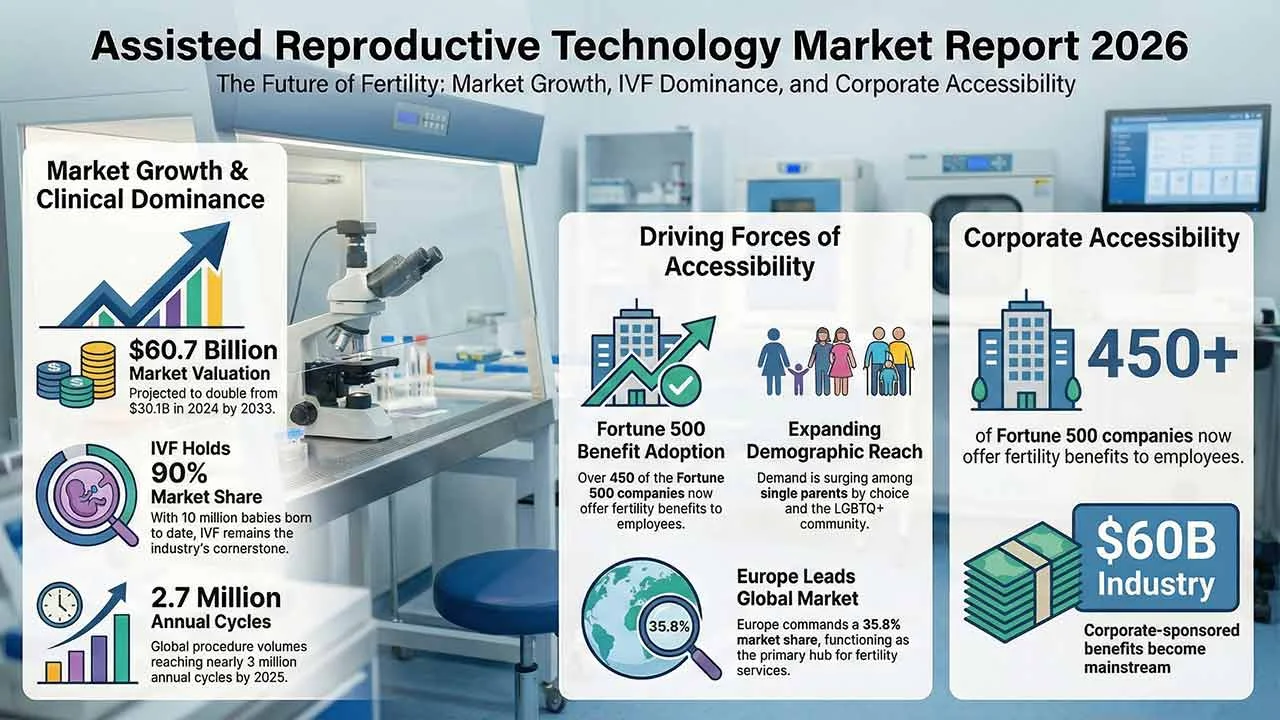
The assisted reproductive technology market continues to expand as infertility rates rise and parenthood is increasingly delayed worldwide. Valued at US$30.1 billion in 2024, the market is projected to reach US$60.7 billion by 2033, supported by IVF innovation, growing awareness, improved accessibility, and sustained investment in reproductive healthcare infrastructure globally.

The global human reproductive technology market is set to reach 45.4 USD billion by 2035, expanding from 27.7 USD billion in 2024 at a 4.6% CAGR. Growth is fueled by technological advancements in fertility treatments, rising infertility rates, delayed pregnancies, and increasing acceptance of single and LGBTQ+ parenting worldwide.
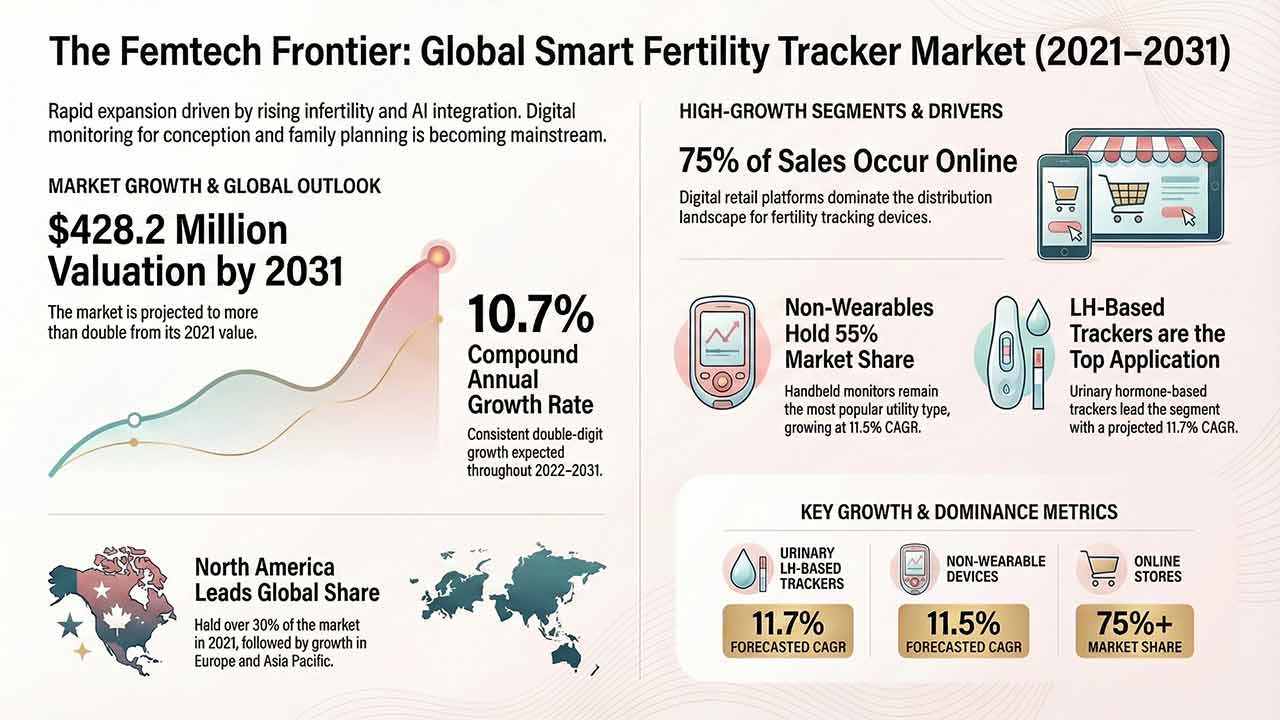
This comprehensive report analyses the Smart Fertility Tracker Market, detailing its projected growth from US$ 160.2 million in 2021 to US$ 428.2 million by 2031. It examines key drivers such as rising infertility and technological advancements in AI-integrated hormone monitoring, alongside detailed segmentation by utility, application, and region.

The Sperm Separation Systems Market is projected to exceed USD 1.5 billion by 2035, driven by automation, microfluidics, and rising male infertility awareness.