Home
 ReportReport
Cell cryopreservation equipment market is witnessing strong growth, supported by rising adoption in regenerative medicine, stem cell banking, and biobanking. Valued at USD 2.20 billion in 2024, the market is projected to reach USD 5.65 billion by 2033, driven by automation, consumables demand, and expanding cell-based therapy pipelines worldwide.



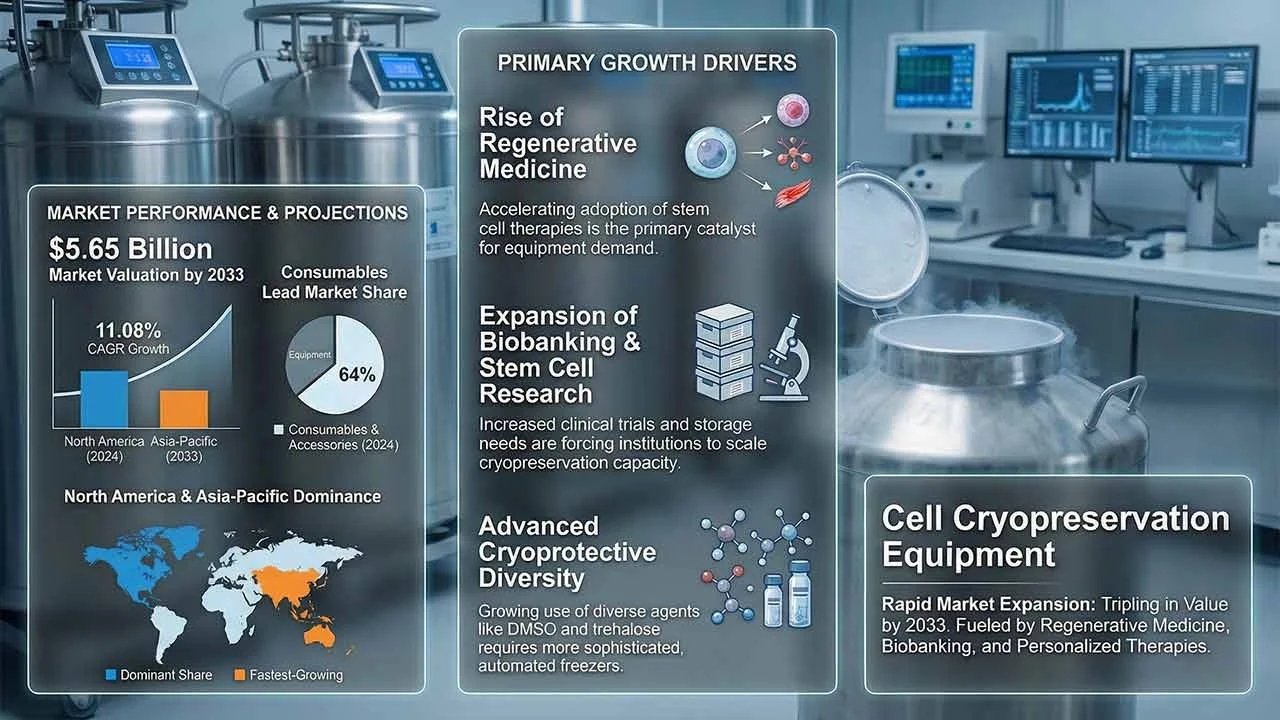
The global cell cryopreservation equipment market is poised for substantial expansion, valued at USD 2.20 billion in 2024 and projected to reach USD 5.65 billion by 2033, reflecting a robust CAGR of 11.08% from 2025 to 2033. This growth is propelled by surging demand in regenerative medicine, stem cell banking, and biobanking, where precise preservation of biological samples is paramount. As advancements in cell-based therapies accelerate, stakeholders in biotechnology and healthcare must navigate this dynamic landscape with informed strategies.
Cell cryopreservation equipment encompasses sophisticated systems designed to maintain cell viability at ultra-low temperatures, including freezers, liquid nitrogen tanks, incubators, and consumables like cryogenic vials and tubes. The market's evolution is underscored by the need for reliable storage solutions amid rising clinical trials and personalized medicine initiatives.
Key market dynamics include:
These trends highlight a market increasingly oriented toward scalability and precision, essential for biopharmaceutical pipelines and research scalability.
The proliferation of regenerative medicine and cell-based therapies stands as a cornerstone driver, necessitating cryopreservation to ensure cell integrity from lab to clinic. With expanding pipelines of cellular therapeutics, demand surges for controlled-rate freezers and ultra-low-temperature systems that support global distribution.
Innovative cryoprotective agents further amplify this momentum:
Regulatory emphasis on quality assurance and traceability by bodies like FDA and EMA compels adoption of automated, IoT-enabled equipment. Meanwhile, mergers and acquisitions reflect strategic consolidation, as firms acquire cryoprotectant technologies to dominate cell and gene therapy segments.
This segment dominated with 64.29% revenue share in 2024 and anticipates the fastest growth through 2033, owing to recurring demand and technological enhancements in cryogenic vials, tubes, and cooler boxes. High replacement cycles across biobanks and IVF clinics underscore their indispensability, with material advancements boosting performance and efficiency.
Equipment, including freezers and liquid nitrogen supply tanks, is set for significant CAGR expansion, propelled by automation investments and high-performance demands in emerging markets. These systems offer precise temperature control vital for sensitive samples, aligning with industrial bioprocessing needs.
Stem cells captured 31.01% market share in 2024, driven by regenerative medicine research and therapeutic potential. Supportive funding accelerates their use in clinical trials, positioning cryopreservation as a linchpin for scalability.
Reproductive cells are projected for the fastest CAGR, spurred by fertility treatments and assisted reproductive technology advancements. Rising awareness and investments in oocyte and embryo preservation amplify equipment demand in IVF settings. Other applications like bioproduction cell lines and primary cells contribute steadily, reflecting broad utility in biopharma R&D.
Biopharmaceutical and pharmaceutical companies led with a 36.58% share in 2024, fueled by R&D escalation, personalized medicine focus, and therapy pipelines. Partnerships enhance innovation, embedding cryopreservation in commercial workflows.
Biobanks are forecasted for the highest CAGR, driven by genomics demand, sample storage for trials, and tech integrations. Collaborations with pharma firms bolster their role in long-term preservation.
IVF clinics and research institutes also fuel growth, particularly in fertility and academic pursuits.

North America’s 40.46% dominance in 2024 stems from superior healthcare infrastructure, biobanking networks, and U.S.-led stem cell therapy adoption. The U.S. market thrives on R&D investments and fertility services expansion.
Europe benefits from regenerative medicine hubs, with the UK and Germany excelling via government support and biopharma strength. Robust biobanks and clinical trials sustain momentum.
Asia Pacific eyes the fastest CAGR at 11.83%, propelled by bioapplication booms in China, India, and Japan. Initiatives like India’s 2025 egg freezing program highlight fertility-driven demand.
MEA witnesses robust growth through healthcare modernization and IVF localization, as seen in Iran’s 2025 embryo equipment advancements. Kuwait’s personalized medicine push adds potential.
Projections affirm a USD 5.65 billion market by 2033, with a CAGR of 11.08% from a 2025 base of USD 2.44 billion. Stakeholders should prioritize automation, regulatory compliance, and emerging market penetration to harness regenerative medicine’s tailwinds. Investments in IoT monitoring and cryoprotectant compatibility will define leaders in this high-stakes arena.
This trajectory signals not just growth but a transformative era where cell cryopreservation underpins therapeutic breakthroughs, demanding proactive adaptation from industry executives.


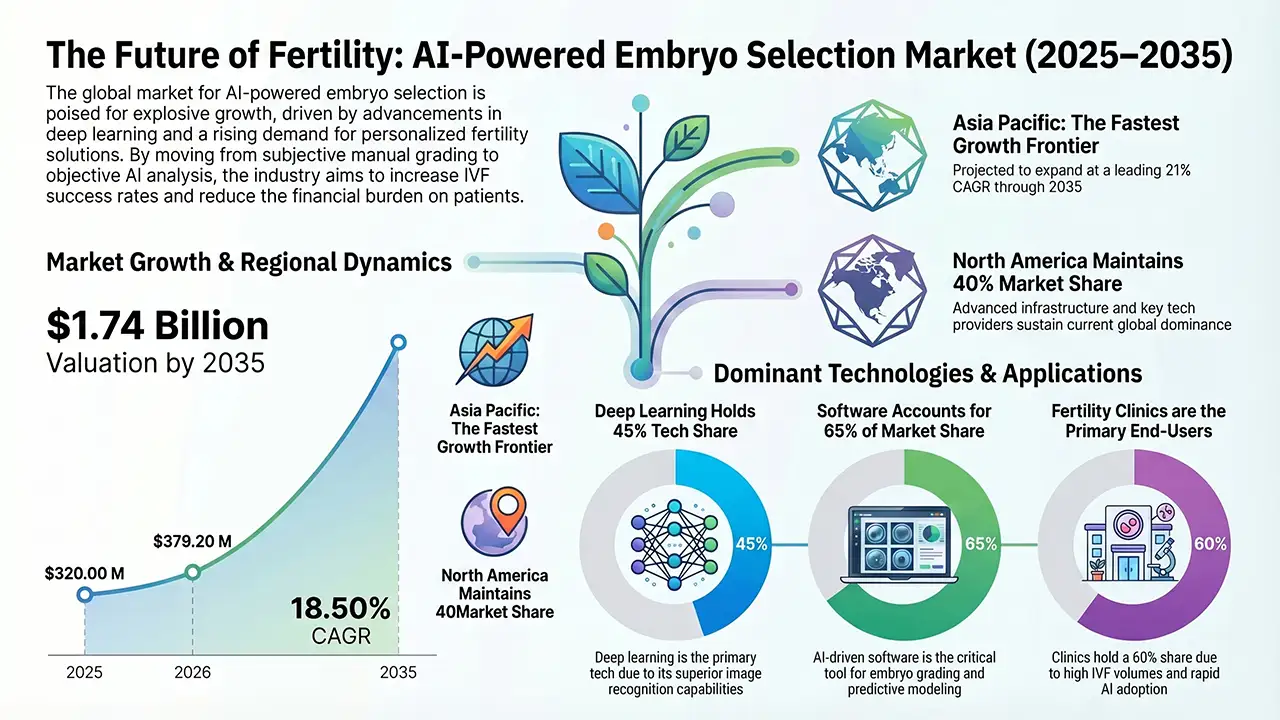
The global AI-Powered Embryo Selection industry, forecasting substantial growth from 2026 to 2035. It details technological shifts in deep learning, regional market dominance in North America, and the accelerating demand for personalized fertility solutions, providing a data-driven outlook on the future of reproductive medicine.
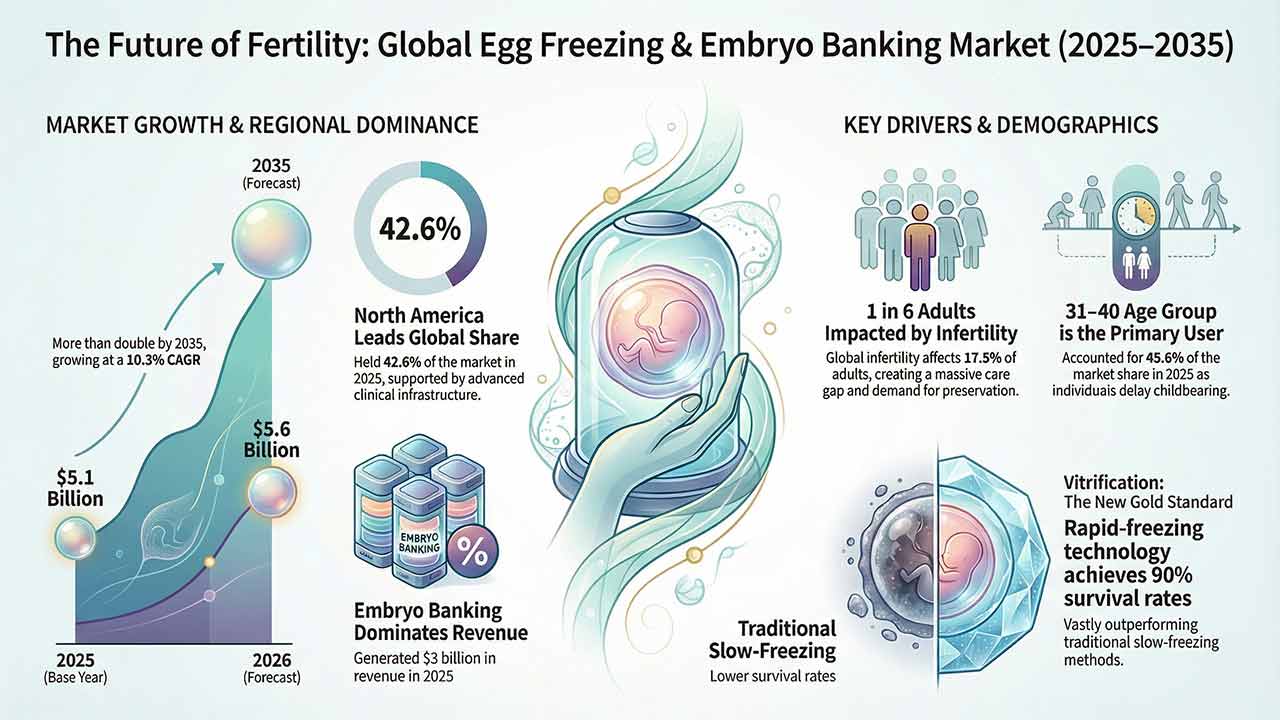
The global egg freezing and embryo banking industry is expanding rapidly, projected to reach USD 13.6 billion by 2035. Rising infertility rates, vitrification breakthroughs, automation in cryopreservation, and increasing acceptance of delayed parenthood are reshaping global reproductive healthcare markets, with North America leading and Asia-Pacific emerging strongly.