Home
 ReportReport
The Human Reproductive Technologies market is poised for steady growth through 2032, driven by strategic moves from leading players, segmentation expansion, and region-specific demand shifts.




The Future Scope of Human Reproductive Technologies Market Set to Witness Strategic Opportunities by 2025-2032 centers on a global sector that spans IVF technologies, genetic testing, fertility preservation, and ART services under a cohesive market framework. The market is advancing at a steady rate in 2025, with expectations of continued rise as key players intensify strategic adoption to unlock scale and efficiency across offerings.
The analysis includes global markets, trends in development, competition, trade flows, and financial data like revenue and profit margins, showing why this sector matters to those involved. With new analytics and visuals focused on 2032, the scope shows both factors that can boost growth and challenges that impact demand and supply in clinical and consumer pathways. The framing underscores decision-ready insights for executives seeking to position competitively within evolving reproductive care ecosystems.
The updated analysis indicates a steady 2025 baseline and a projected upward trajectory through 2032 as strategy-led execution by leading manufacturers and service providers supports expansion across types and applications. Forecasts span global, regional, and country-level views from 2025 to 2032, with segmentation by type, offering, technology, system, and end-use industry to reflect diversified revenue streams. Emphasis on supply and demand, cost, price, revenue, and gross margins suggests disciplined growth management amid competitive intensity and pricing alternatives. The report’s structure provides historical, current, and projected market sizing in both value and volume, enabling objective valuation of trajectory and reinforcement strategies for market foothold. Collectively, these dynamics support an analytical outlook of measured growth with selective acceleration where strategic execution aligns with unmet needs.
A prominent theme is the rising adoption of strategies by key players such as IVF Technologies, CooperSurgical, Merck KGaA, Ferring, Vitrolife, and others aimed at scaling access, optimizing portfolios, and strengthening revenue resilience. The market tracks developments that help companies craft more successful tactics, with updated lists of tables and figures supporting visualization of size, share, and trend patterns into 2032. Trends incorporate diversified applications IVF, ICSI, PGT, egg freezing, sperm banking, surrogacy, and LGBTQ+ family ART indicating broader clinical and demographic penetration. Narrative cues in the report highlight how strategy, segmentation depth, and competitive benchmarking translate into practical execution advantages for leadership teams. These developments matter because they map investments, go-to-market models, and innovation cycles to specific growth pockets with clearer ROI logic.
Competitive accessibility intensifies price pressure as alternatives remain relatively low-cost, creating a constraint on premium offerings unless differentiated by technology or outcomes. Easy availability of rivals elevates substitution risks and compels firms to manage prices alongside innovation, a dual track necessary to sustain product demand. Researchers underscore hurdles that require risk prevention, plan adjustments, and operational continuity to preserve quality and on-time delivery. These conditions imply that margin defense will depend on sharper cost management, targeted segmentation, and agile response to regional pricing climates. The report frames these restraints not as deterrents but as parameters that shape prudent, phased growth.
Strategic opportunities emerge from aligning investments to segments and regions identified as high-potential within the 2025–2032 window, supported by refined segmentation and country-level granularity. The report’s recommendations guide companies to reform business strategies, prioritize progressive industry trends, and leverage substantial growth offerings in developed and emerging markets. With chapter-wise guidance and presentation-ready insights, stakeholders can time product launches, tailor pricing, and optimize channel reach for durable expansion. The Future Scope of Human Reproductive Technologies Market Set to Witness Strategic Opportunities by 2025-2032 underscores that disciplined strategy adoption is a decisive driver of revenue capture and share stability. Actionable planning built on these opportunities enhances decision confidence and ROI visibility.
North America, Europe, Asia-Pacific, the Middle East and Africa, and South America are analyzed for consumption, revenue, market share, and growth rate to 2032, enabling targeted geographic strategies. North America’s mature infrastructure and payer dynamics position it as a critical revenue base, while Europe’s diversified markets add resilience across major economies. Asia-Pacific reflects growing demand across China, Japan, India, South Korea, and Southeast Asia, aligning with access expansion and ecosystem development. The Middle East, Africa, and South America show selective opportunities where healthcare modernization and policy support can catalyze ART adoption paths. This regional lens allows companies to allocate resources based on measurable consumption and share trends.
The Future Scope of Human Reproductive Technologies Market Set to Witness Strategic Opportunities by 2025-2032 points to a disciplined, steady growth arc underpinned by strategic adoption, robust segmentation, and regionally nuanced demand. Competitive benchmarking, cost management, and innovation-led differentiation appear central to defending margins and expanding share within key applications. With clear guidance, updated visuals, and regional breakdowns through 2032, stakeholders can reinforce their foothold and engineer resilient, long-term strategies. The market’s forward path rewards execution precision as firms align offerings to measurable opportunities across geographies and clinical segments.


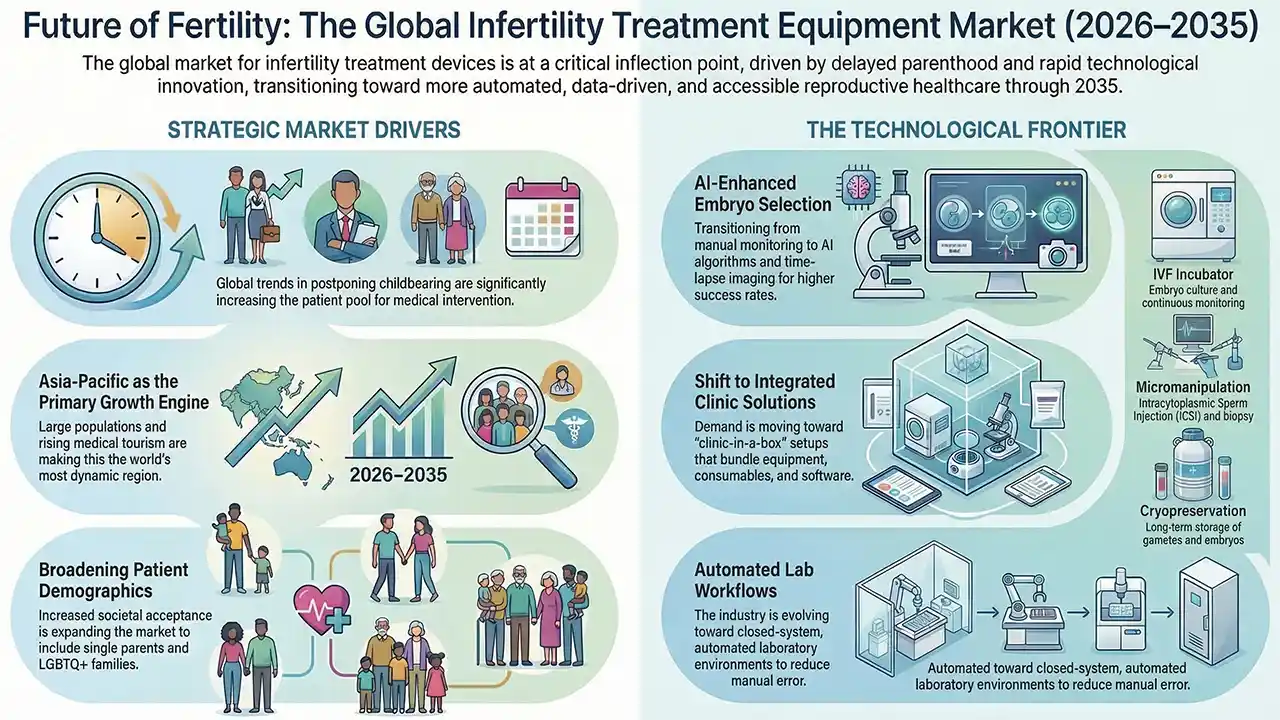
An analysis of the global infertility treatment devices and equipment industry through 2035. It examines critical market drivers such as delayed childbearing, technological innovations in AI and automation, and regional growth patterns, offering strategic insights into the evolving landscape of assisted reproductive technology worldwide.

Human preimplantation embryo arrest in ART remains a major challenge in IVF, affecting early embryo development and success rates. Driven by genetic mutations, epigenetic disruptions, and metabolic failures, this condition halts growth before implantation, prompting advances in AI-based embryo selection and precision medicine to improve reproductive outcomes.
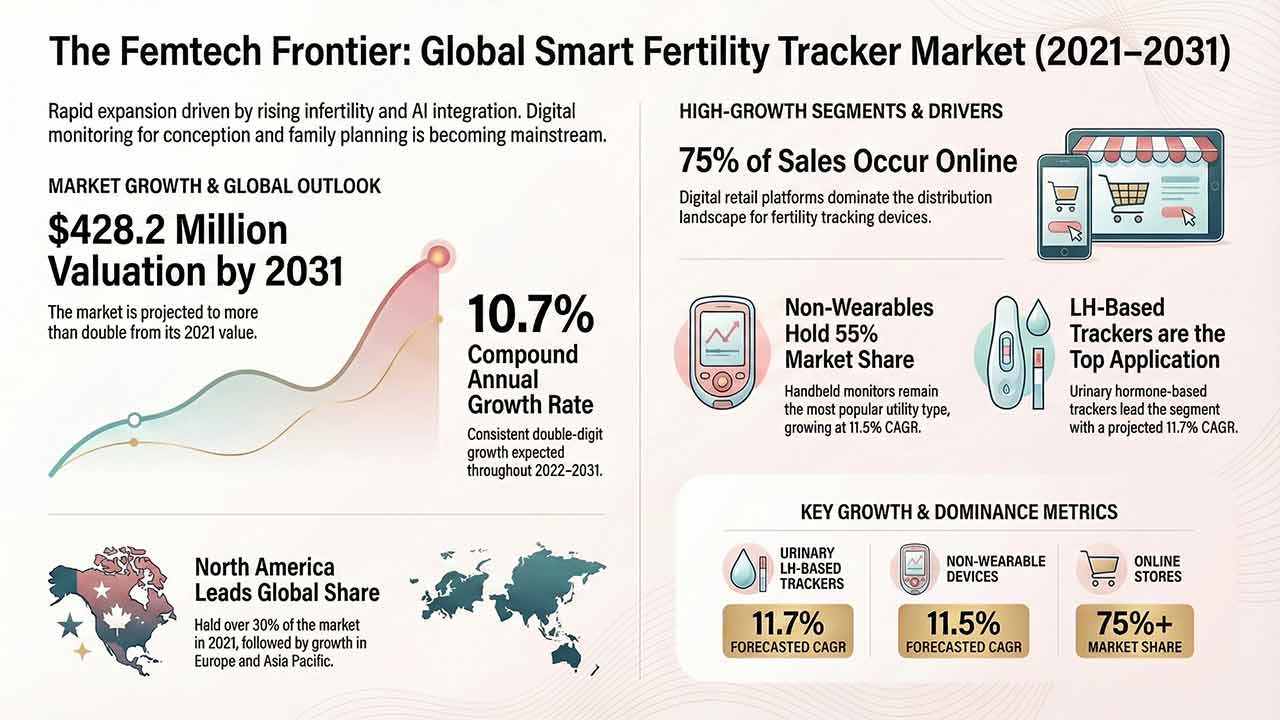
This comprehensive report analyses the Smart Fertility Tracker Market, detailing its projected growth from US$ 160.2 million in 2021 to US$ 428.2 million by 2031. It examines key drivers such as rising infertility and technological advancements in AI-integrated hormone monitoring, alongside detailed segmentation by utility, application, and region.

Gen Z women fertility awareness is marked by high anxiety but limited clinical knowledge, according to new ASRM-published research. While most young women want children, many misunderstand IVF success rates, miscarriage risks, and age-related decline, highlighting an urgent need for proactive, evidence-based reproductive education initiatives.
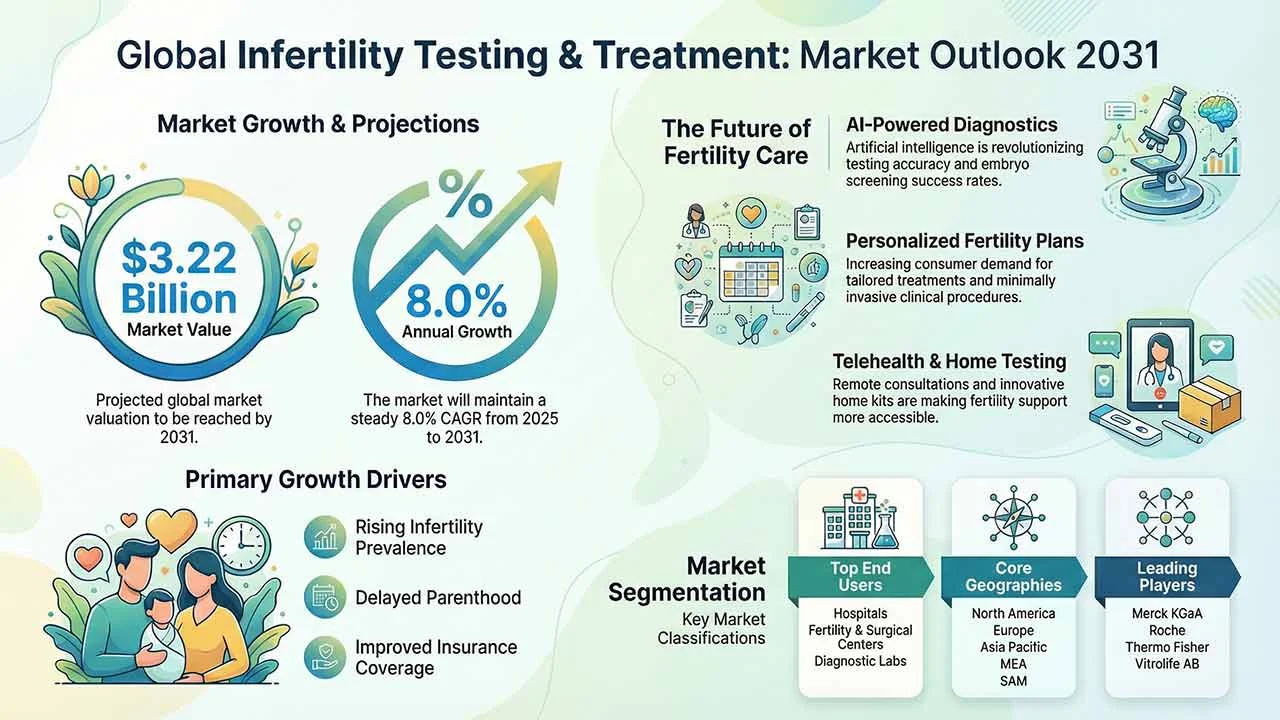
The global infertility testing and treatment market is projected to reach US$3.22 billion by 2031, expanding at an 8% CAGR. Growth is fueled by delayed parenthood, rising infertility rates, AI-driven diagnostics, advanced ART procedures, and expanding healthcare access across North America, Europe, and Asia-Pacific regions.

Market analysis of the infertility drugs market, highlighting the dominance of gonadotropins, online pharmacies as key channels, the competitive landscape, and regional trends, with insights and infographics for 2025-2032.