Home
 NewsNews
Baroness Ruth Lynn Deech has cautioned that surrogacy and reproductive law reform may require separate legislative treatment, not a single statute. Speaking in the House of Lords, she called for a Parliamentary Select Committee to examine both the HFEA's 2023 modernisation proposals and the Law Commission's 2023 surrogacy framework independently.




A prominent voice in British reproductive policy has raised serious doubts about whether the UK's long-overdue legislative overhaul of surrogacy and reproductive law can be delivered through a single piece of legislation. Baroness Ruth Lynn Deech, the former chairwoman of the Human Fertilisation and Embryology Authority (HFEA), addressed the House of Lords last week with a clear message: Parliament must take the lead, and it must do so with care and scrutiny rather than convenience.
At the core of Baroness Deech's argument is a distinction that has sometimes been obscured in the broader policy conversation. Two separate reform proposals are currently on the table. The first comes from the HFEA itself, its 2023 proposals to modernise the law governing fertility treatment. The second is the Law Commission's 2023 recommendations for a new surrogacy framework. Both are significant. Both are overdue. But Baroness Deech is emphatic that they are not the same thing.
On the HFEA's case for change, she offered a frank assessment of where the current regime falls short. "The HFEA itself acknowledges that, while much of the 1990 [Human Fertilisation and Embryology] Act remains fit for purpose, it has been updated by statute only once, in 2008, and now contains significant technical gaps, outdated consent rules and insufficient regulatory powers. The HFEA has made proposals for modernisation."
The framework governing surrogacy, meanwhile, has an even longer history of neglect. "The law governing surrogacy, the Surrogacy Arrangements Act 1985, was drafted for a world in which surrogacy was rare, poorly understood and feared."
Baroness Deech described the HFEA's modernisation proposals as "an innovative, ethical, patient-centred system of reproductive law." The Law Commission's surrogacy recommendations, however, are a different matter in her view – "different" being the word she chose deliberately.
Her overall position has shifted over time, and she acknowledged as much. "As I have looked into this recently, I am less certain than I was that surrogacy and reproductive law can be resolved, certainly not in one statute. Parliament needs to take the lead in scrutiny." The implication is pointed. Combining two legally and ethically complex reform agendas into a single statute risks doing justice to neither. Surrogacy and reproductive law each carry their own histories, their own stakeholder communities, and their own unresolved ethical questions. Treating them as a single legislative bundle may create more problems than it solves.
Beyond the existing gaps in legislation, Baroness Deech pointed to a cluster of emerging scientific and clinical developments that lawmakers will need to address proactively, rather than retrospectively. Her remarks in this area were among the most forward-looking of her address.
One issue is the 14-day rule, the longstanding limit on how long human embryos may be cultured outside the womb for research purposes. That limit is currently under review by the Nuffield Council on Bioethics, which is consulting with the public on whether it remains appropriate given advances in research capability.
A second development is in vitro-derived gametes, reproductive cells created not from eggs or sperm in the conventional sense, but by reprogramming other cell types, such as skin cells. Baroness Deech explained the parameters of the current legal position and its inadequacy. "In vitro-derived gametes are created by reprogramming other cells — for example, skin. Under current law, they could be used for research but not reproduction. The advantages are that they would eliminate the need for gamete donation, but they will need separate definition in the HFE Act, fresh consideration of the definition of parenthood and, of course, much more research."
The third area concerns stem cell-based embryo models, a field that sits at the intersection of biotechnology, ethics, and regulation. Baroness Deech described these as "lab-grown models made from human stem cells that mimic early stages of human embryonic development," and warned that they may be approaching the threshold where they could be considered real human embryos. She noted that a voluntary code of practice has been developed in Cambridge but argued that such an arrangement is insufficient for the long term. That code, she said, "needs to be embedded, with a view to developing a distinct method of regulating them."
The message running through each of these examples is consistent: regulation must anticipate scientific development, not chase it.
Baroness Deech concluded with a concrete set of recommendations. She called on Parliament to modernise the Human Fertilisation and Embryology Act and to establish a Select Committee with a mandate to examine the HFEA's proposals in detail, covering the expansion of regulatory powers, simplification of consent rules, modernisation of donor information provisions, and the creation of a flexible framework capable of accommodating future scientific developments.
On the surrogacy side, the same Select Committee should treat the Law Commission's recommendations as a distinct and separate matter. "A Select Committee also needs to look at the Law Commission's surrogacy reforms as a second-order issue. As I said, I am not at all sure about integrating fertility and surrogacy law into a whole."
The speech adds a significant and experienced voice to what is becoming an increasingly urgent legislative conversation. The frameworks currently governing both surrogacy and reproductive law in the United Kingdom were written for eras that bear little resemblance to the clinical realities of 2026. Baroness Deech's intervention makes clear that the response to that outdatedness should be precise and deliberate, not rushed, not combined for administrative convenience, and not left to drift any further.



Miracle Surrogacy, Mexico's largest and longest-established surrogacy agency, has announced a new partnership with Travel Gay, one of the world's most recognised LGBTQ+ travel and lifestyle platforms. The collaboration launches with a comprehensive educational guide to LGBTQ+ surrogacy in Mexico, covering the legal, medical, and practical dimensions of building a family there.

A Bari court of appeal has ruled that Italy Recognises Three Parents, two fathers and one mother, for a 4-year-old child born in Germany, in a landmark January decision publicised in May 2026. The ruling, contested by conservative groups, marks a significant shift in Italian family law.

The Philippines Surrogacy Regulation Act aims to establish the country’s first legal framework for assisted reproductive technology. The bill seeks to protect surrogate mothers, combat exploitation, and ensure legal recognition and rights for children born through surrogacy while regulating IVF and other ART procedures nationwide.

The Supreme Court of India has ruled that couples can bypass surrogacy age limits, safeguarding reproductive autonomy. The decision challenges inconsistent restrictions on intended parents, highlights constitutional rights, and provides relief to those affected by the Surrogacy (Regulation) Act, 2021, while prompting broader debates on reproductive equality in India.

The Chinese surrogacy boom in America is intensifying legal and policy debates around birthright citizenship. As foreign nationals increasingly use U.S. surrogacy services, lawmakers face complex questions on immigration, national security, and reproductive rights, with potential regulatory changes looming amid ongoing Supreme Court scrutiny and federal policy discussions.
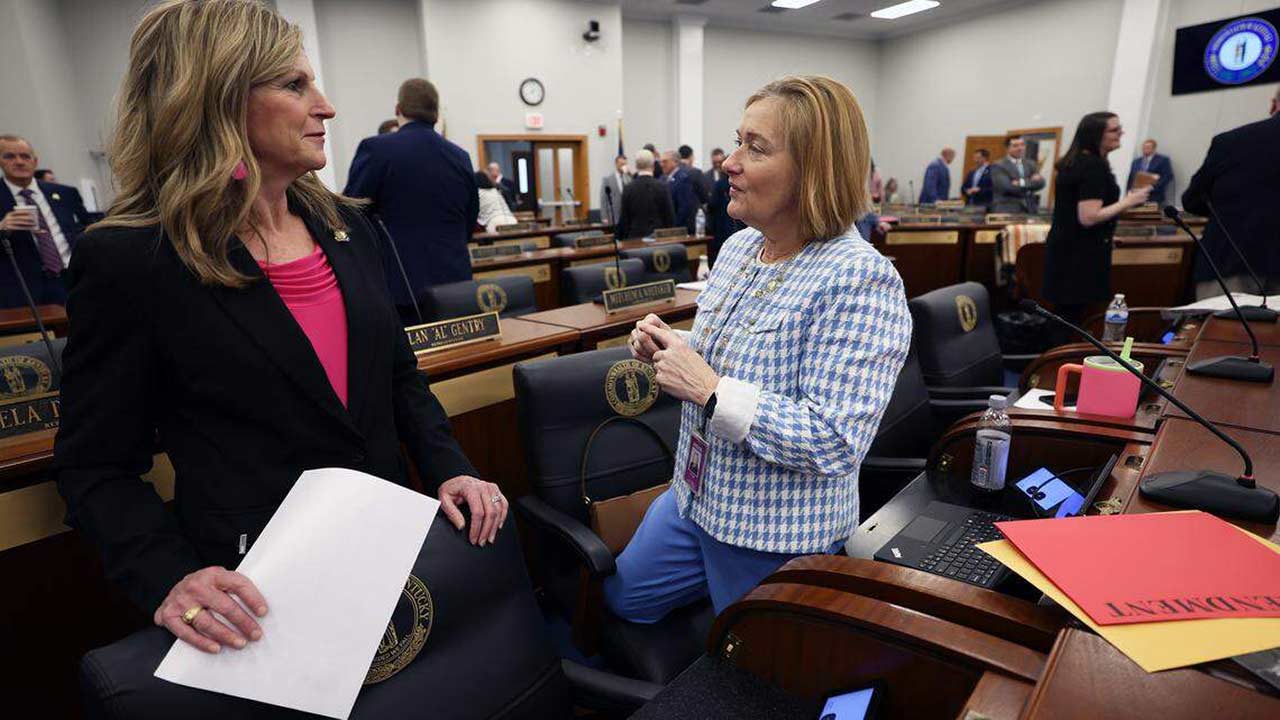
Kentucky bans commercial surrogacy under proposed House Bill 697, classifying compensated arrangements as felony offenses. The legislation targets agencies and organizers while permitting altruistic surrogacy limited to medical expense reimbursement. The move positions Kentucky among restrictive states amid a broader national divide over reproductive law policy.