Home
 NewsNews
South Korea's infertility treatment support budget at the local government level has risen 149.6%, from 67 billion won in 2021 to 167.2 billion won in 2025. As the central government continues expanding eligibility and benefits, municipalities are calling for the programme to return to national funding, warning of growing regional disparities.



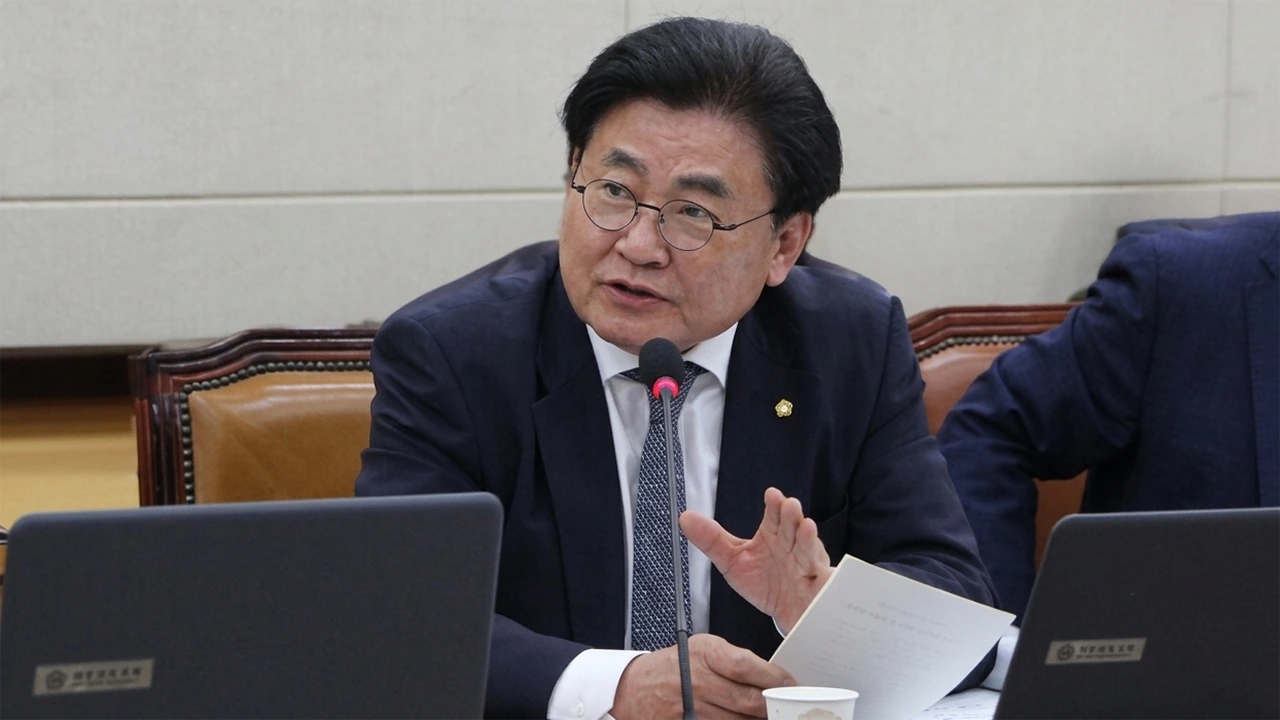
South Korea's local governments are facing rapidly escalating financial and administrative pressure as the central government continues to expand infertility treatment support under its broader campaign to address the country's persistently low birth rate without providing matching funding to the municipalities now responsible for delivery.
Data submitted by the Ministry of Health and Welfare to Rep. So Byeong-hoon of the Democratic Party of Korea reveal the scale of the shift. Local government budgets for infertility treatment subsidies rose 149.6% from 67 billion won ($49 million) in 2021 to 167.2 billion won in 2025, an increase of 100.2 billion won over four years, bringing the total to approximately 2.5 times its 2021 level.

National health insurance has covered infertility treatment in South Korea since October 2017. Separately, a subsidy programme designed to help patients cover out-of-pocket costs and expenses not covered by insurance was transferred from the central government to local governments in 2022.
The transfer, however, did not come with a freeze on policy expansion. The central government continued to broaden the scope of the programme even as municipalities took on the administrative and financial responsibility for running it.
The expansions came in quick succession. In January 2024, income eligibility requirements were abolished across all 17 provinces and metropolitan cities, a move that broadened the pool of eligible recipients significantly. The following month, February 2024, local government support was extended to cover up to 25 treatment cycles per patient, comprising up to 20 IVF cycles and five artificial insemination cycles. Then in November 2024, the National Health Insurance coverage framework was revised: rather than capping support at 25 cycles per infertile couple, coverage was changed to allow up to 25 cycles for each successful pregnancy resulting in childbirth, materially increasing the total number of cycles that could be funded. The same revision lowered the health insurance copayment rate for women aged 45 or older from 50% to 30%.
Each of these changes increased demand and cost. The municipalities were responsible for funding the difference.
When asked to account for the financial impact of these expansions on local governments, the Ministry of Health and Welfare acknowledged that the policy changes could impose additional burdens. But it said it does not separately track the actual increase in local government spending attributable to its policy decisions, nor does it monitor which municipalities have had to allocate supplementary budgets to cover funding shortfalls.
The ministry said such matters are left to individual local governments to manage.
The mismatch between central policy-setting and local funding responsibility has prompted a growing chorus of concern from municipalities across the country.
The Busan Metropolitan Government described infertility treatment subsidies in a written opinion submitted to Rep. So's office as a programme serving a national policy objective, not a local one.
"The expansion of national policies and growing demand are increasing not only local governments' financial burden but also their administrative workload and staffing needs for applications, management and settlement."
Busan called for the programme to receive central government subsidies and urged the government to establish a cost-sharing system that would automatically link future policy expansions to additional central government funding.
The Daejeon Metropolitan Government similarly called for additional financial support, citing the sharp budget increases driven by guideline revisions and rising demand. It urged the government to either return responsibility for the programme to the central level or extend financial support for transferred programmes.
Gyeonggi Province and South Chungcheong Province sought additional budget support as early as 2022, the first year after the transfer. Sejong and Incheon formally called for the programme to return to central government funding in 2025.
In September 2025, five provincial and metropolitan governments, Incheon, Daejeon, Gyeonggi, South Jeolla, and South Gyeongsang, jointly requested that the infertility treatment subsidy programme and the maternal and newborn health care programme both receive central government subsidies.
The National Assembly Budget Office identified the infertility treatment subsidy programme as a key concern in its 2023 report evaluating fiscal decentralisation policies and programmes transferred to local governments.
"Since the transfer to local governments, differences in their financial conditions have resulted in regional disparities in support benefits. Infertility is a national issue rather than a regional one, and national-level management should be strengthened to ensure balanced services for the public."
That assessment cuts to the centre of the problem: when access to infertility treatment support depends on where a patient happens to live, and where that location determines how generously funded the local subsidy is, the result is a system that delivers unequal outcomes for a condition that knows no regional boundaries.
Rep. So Byeong-hoon put the accountability question plainly:
"It is not reasonable for the central government to take credit for the results of expanded policies while local governments shoulder the resulting financial and administrative burdens."
"What matters most is ensuring that infertile couples can reliably receive the support they need regardless of where they live. The central government should take responsibility so that people desperately hoping to have children do not face disparities in support depending on the financial conditions of their place of residence."
The policy challenge South Korea now faces is structural. A programme designed to address a national demographic crisis, the country's low birth rate, has been expanded at the national level while its costs have been devolved to localities with varying fiscal capacity. The result is an infertility treatment support system that is both growing in ambition and increasingly uneven in delivery.
Whether the central government moves to reclaim funding responsibility or establishes a formal cost-sharing mechanism tied to future policy changes will determine whether the expansion of support for infertile couples in South Korea translates into genuinely equitable access, or into a widening gap between what the system promises and what patients in different cities and provinces actually receive.



Flora Fertility and Clue have announced the Flora Clue fertility partnership, connecting the first individually owned fertility insurance platform with the world's leading women-led cycle tracking app. FLORA policyholders receive complimentary Clue Plus access, while Clue's community of over 100 million members gains early exposure to proactive fertility financial planning.
Legacy, North America's leading digital male fertility clinic, has secured New York State CLEP approval for both its semen analysis and DNA fragmentation test – the only mandatory pre-market laboratory review programme in the United States. The approvals confirm clinical-grade validity for at-home samples, extending access to New York patients without a clinic visit.

From 1 July 2026, South Australia's Fertility Treatment Rebate Scheme provides eligible residents with a $250 rebate for pre-treatment testing and a $2,000 rebate for up to two fertility treatment cycles. Backed by an $18.5 million, four-year government commitment, the scheme directly addresses the financial barriers preventing South Australians from accessing fertility care.

apyen, a global leader in male fertility diagnostics, has entered a strategic partnership with My Surrogacy Journey to broaden fertility testing and reproductive health support for intended parents across the United States. The collaboration covers semen analysis, DNA fragmentation testing, and infectious disease screening, with plans for international expansion.
Nucleus Genomics has announced that the Fertility Institute of Hawaii Joins Nucleus IVF+ network, bringing advanced carrier and embryo screening to Hawaii's largest IVF practice. The partnership expands genetic optimization access across the Pacific, with risk reduction data covering endometriosis, heart disease, breast cancer, type 1 diabetes, and Alzheimer's disease.
TFC Taipei Fertility Center has introduced an AI-Powered Embryo Selection model that improves chromosomally normal embryo identification by up to 24%. Presented at ASPIRE 2026, the iDAScore v2.0 system brings precision and objectivity to IVF treatment, reducing implantation failure risk and shortening time to conception for infertile patients.