Home
 NewsNews
Sapyen and Avenues launch at-home fertility diagnostics, introducing a couple-first testing model in the UK. By integrating semen analysis and AMH testing into early care, this approach reduces clinic visits, accelerates diagnosis, and ensures balanced fertility evaluation, transforming how patients begin their reproductive health journey.



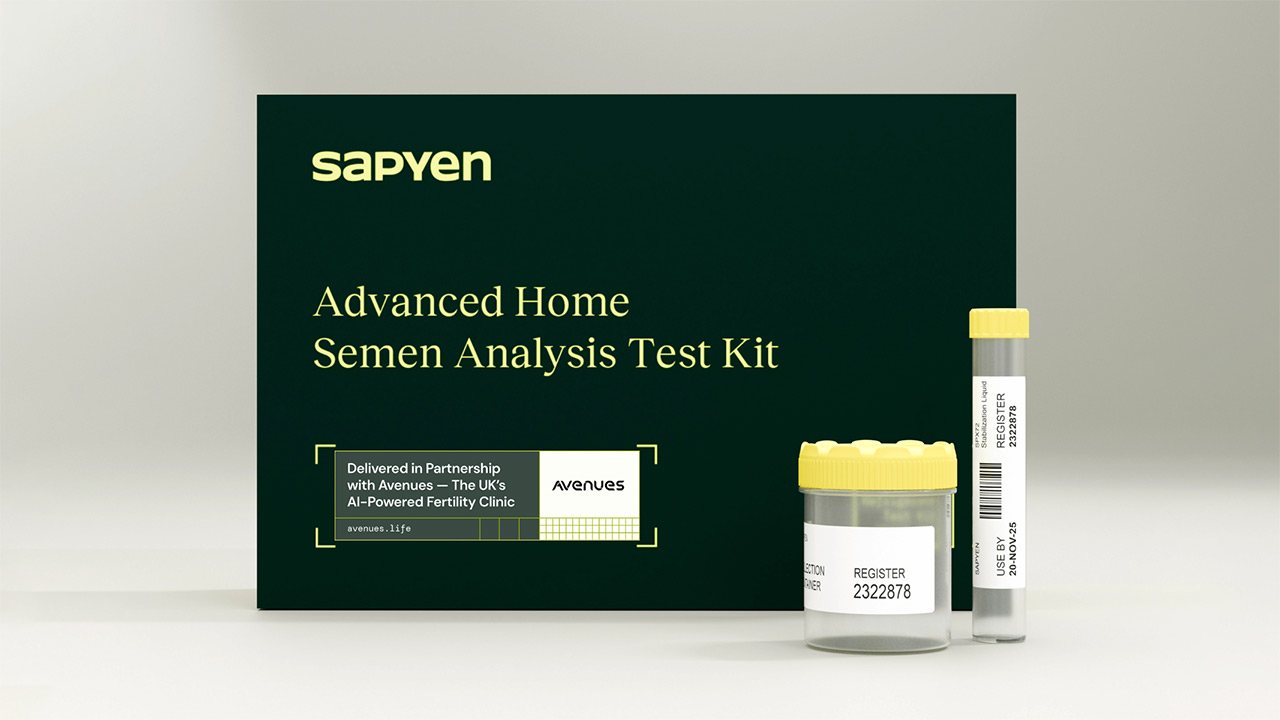
A significant structural shift is occurring at the entry point of fertility care in the United Kingdom. In a move to modernize and streamline the patient journey, Sapyen and Avenues Launch at-home fertility diagnostics, marking the first time a leading fertility clinic has redesigned its treatment protocol to prioritise a "couple-first" testing model. Under this new approach, both partners in a couple are now able to complete essential clinical fertility screenings from the comfort of their own homes before ever attending a first consultation.
Avenues Clinic has entered into an exclusive partnership with Sapyen to integrate at-home semen analysis for men and at-home Anti-Müllerian Hormone (AMH) testing for women into its standard care pathway. This initiative, known as the Reproductive Intelligence Review, ensures that couples arrive at their first clinical appointment with critical baseline diagnostics already established. This is particularly beneficial for patients travelling from across the UK to access Avenues' specialised care, such as Fair IVF or treatments for those in clinics with strict BMI thresholds, as it significantly reduces the number of required in-person visits.
The traditional model of fertility medicine has often been criticised for a persistent failure: although male factor infertility contributes to approximately half of all cases, testing has historically been fragmented and focused disproportionately on women. Men are frequently tested much later in the process, often under narrow time constraints that require rapid sample delivery to a clinic. As Sapyen and Avenues Launch at-home fertility diagnostics, this logistical friction is removed, compressing the time to clinical insight and ensuring that decision-making is based on full information from the start.
Dr. Cristina Hickman, CEO of Avenues Clinic, highlighted the philosophy behind the change: "The fertility journey shouldn't start with waiting rooms and logistics. It should start with understanding. Our Reproductive Intelligence Review allows couples to complete essential diagnostics from home so that when they arrive, the conversation focuses on decisions rather than discovery."
This innovation is made possible by Sapyen’s patent-pending sperm stabilisation technology, SPX72. This medium extends the viability of semen samples from just one hour to up to 72 hours after collection. This advancement allows for accurate laboratory analysis without the need for immediate clinic delivery, removing one of the most entrenched barriers to routine male fertility testing. Sapyen’s test kits, which start at £149, provide comprehensive insights ranging from standard semen analysis to advanced assays like DNA fragmentation.
Ash Ramachandran, CEO of Sapyen, noted the systemic benefits of early data collection: "Fertility outcomes suffer when the system delays information. The question should never be why couples waited months to understand half the equation. Start with data. Reduce uncertainty early. Everything downstream improves."
Clinicians at Avenues anticipate that this shift will fundamentally change the nature of patient consultations. By arriving earlier in the pathway with baseline results already in hand, patients can engage in clearer planning and fewer exploratory appointments. Ultimately, this model reframes fertility as a shared clinical problem from day one, ensuring male fertility is no longer treated as a secondary investigation. For the healthcare system, this transition represents a vital reallocation of clinical time away from logistics and toward direct patient care. Through this partnership, Sapyen and Avenues Launch at-home fertility diagnostics to ensure the fertility journey begins with evidence rather than iteration.



Legacy, North America's leading digital male fertility clinic, has secured New York State CLEP approval for both its semen analysis and DNA fragmentation test – the only mandatory pre-market laboratory review programme in the United States. The approvals confirm clinical-grade validity for at-home samples, extending access to New York patients without a clinic visit.

From 1 July 2026, South Australia's Fertility Treatment Rebate Scheme provides eligible residents with a $250 rebate for pre-treatment testing and a $2,000 rebate for up to two fertility treatment cycles. Backed by an $18.5 million, four-year government commitment, the scheme directly addresses the financial barriers preventing South Australians from accessing fertility care.

apyen, a global leader in male fertility diagnostics, has entered a strategic partnership with My Surrogacy Journey to broaden fertility testing and reproductive health support for intended parents across the United States. The collaboration covers semen analysis, DNA fragmentation testing, and infectious disease screening, with plans for international expansion.

Nucleus Genomics has announced that the Fertility Institute of Hawaii Joins Nucleus IVF+ network, bringing advanced carrier and embryo screening to Hawaii's largest IVF practice. The partnership expands genetic optimization access across the Pacific, with risk reduction data covering endometriosis, heart disease, breast cancer, type 1 diabetes, and Alzheimer's disease.

TFC Taipei Fertility Center has introduced an AI-Powered Embryo Selection model that improves chromosomally normal embryo identification by up to 24%. Presented at ASPIRE 2026, the iDAScore v2.0 system brings precision and objectivity to IVF treatment, reducing implantation failure risk and shortening time to conception for infertile patients.

CDT Equity Inc. (Nasdaq: CDT) has announced the Canadian patent grant for AZD5904 in male infertility, completing approval across all key pharmaceutical target markets. The milestone strengthens CDT's IP position for the AstraZeneca-licensed Myeloperoxidase inhibitor as the company advances active out-licensing and strategic partnering discussions for the asset.

Nucleus Genomics has announced that Nucleus IVF+ joins SCRC, the Southern California Reproductive Center, as part of its rapidly expanding global network. The partnership integrates advanced carrier screening and embryo analysis across SCRC's four California locations, serving thousands of patients annually across Beverly Hills, Santa Barbara, Pasadena, and Ventura.