Home
 NewsNews
Researchers have developed breakthrough microfluidic technology that can accurately predict how an embryo is going to implant, directly addressing long-standing IVF challenges and offering new hope for improved success rates.



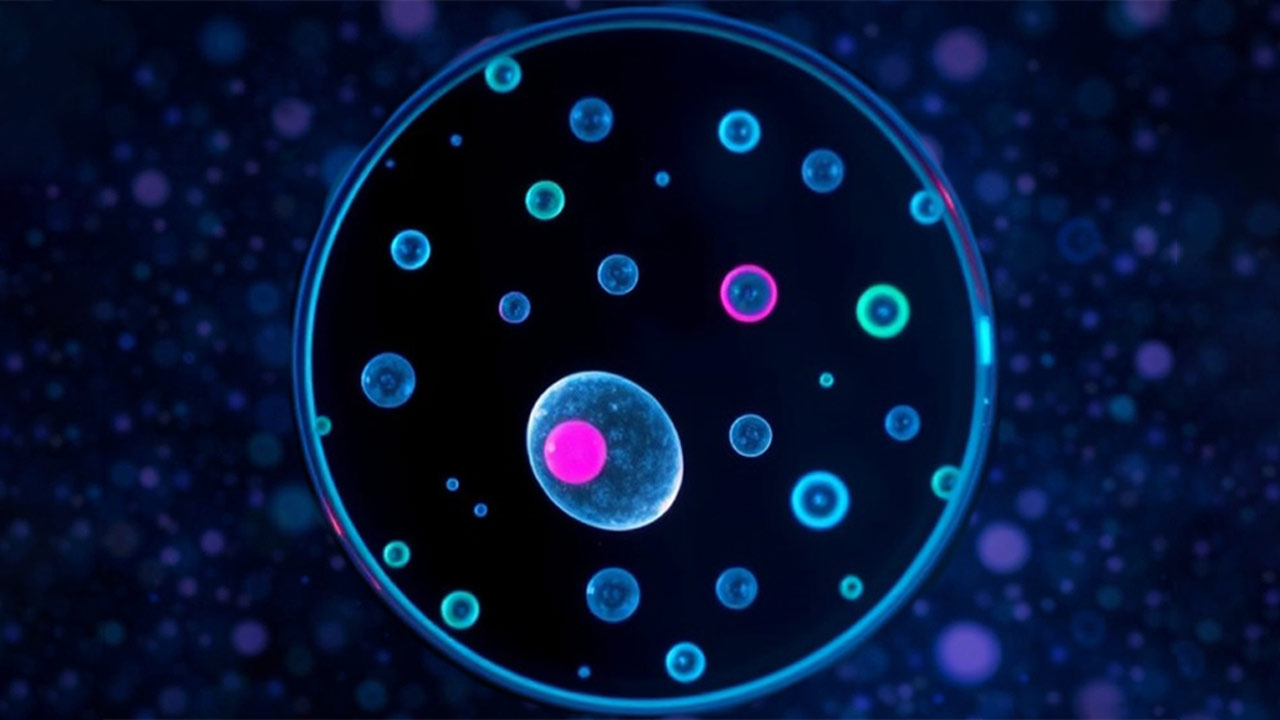
Scientists have found a new way to predict how likely it is that an embryo will implant. This is a huge step forward that could change how reproductive medicine works. It has dielectric wetting valves and chemiluminescent microfluidic chips. This advanced method fixes problems that have been common in in vitro fertilization - IVF for a long time by letting embryos be monitored for metabolic changes without having to touch them. This increases the chances that the best embryos will be chosen for implantation.
This microfluidic technology keeps track of small changes in the metabolism of single embryos by using chemiluminescence, a sensitive and quantitative optical method that measures light emitted by certain biological events. Morphological assessment, which is often subjective and not always correct, is often used in traditional procedures. Microfluidics is a new technology that moves small amounts of fluid around embryos. This makes it easier to accurately capture and analyse metabolites that are important for embryo viability, such as amino acids, glucose derivatives, and other important energy substrates.
At the centre of this technological platform happen to be dielectric wetting valves, which are ingeniously designed so as to regulate the fluid flow with high accuracy within the microchannels of the chips. These valves go on to function through applying electric fields, which make alterations to the wettability of the surfaces, helping with dynamic control on droplets that contain embryonic samples as well as reagents. This eradicates the mechanical components, decreases the risk of contamination, and enables automated and highly reproducible assays. The outcome is a versatile and strong evaluation device that is capable of repeated and gentle sampling, preserving embryo integrity along with viability.
This innovation crops up from a multidisciplinary partnership among bioengineers, reproductive biologists and chemists, who go on to converge in order to address the crucial need for enhancing the embryo selection criteria when it comes to assisted reproductive technology – ART. Embryo metabolism has for long been regarded as a major indicator when it comes to implantation potential; however, its assessment has been hindered due to technical limitations and also the delicate nature when it comes to preimplantation embryos. Through putting in place the microfluidic chips, the research team happens to bridge this gap, offering a quantitative metabolic readout that goes on to correlate pretty strongly with successful implantation results in the clinical trials.
It is well to be noted that the implications for IVF practice happen to be substantial. Present embryo evaluation majorly depends upon visual grading systems, which happen to be inherently subjective and can also lead to optimal implantation success rates that are pretty low. This chemiluminescent microfluidic technology goes on to pave the way for objective biomarker profiling, hence offering fertility specialists data that’s actionable in order to select embryos having the highest likelihood of turning into a pregnancy. Consequently, it could decrease the number of IVF cycles needed, reducing the patient burden and, along with it, emotional stress as well as healthcare expenditures.
When we talk of it from a technical perspective, the microfluidic chips get fabricated by way of making use of cutting-edge lithographic processes, which apparently define the micron-scale channels that are optimised for fluid handling and optical detection. These microenvironments go on to mimic the natural fluidic conditions that surround embryos, making sure of physiological relevance during the metabolite evaluation. The chemiluminescent assay gets integrated into the detection zone of the chip, where the emitted photons get captured through sensitive photodetectors, hence converting the light intensity into digital signals that are proportional to the metabolite concentrations.
It is worth noting that the dielectric wetting valve mechanism provides many benefits over the conventional valves. It helps with non-contact actuation so as to manipulate the droplets, hence getting rid of mechanical wear and tear or even biofouling problems for that matter, which are common in microfluidics. Besides, this technique can quickly switch the fluid pathways and isolate the specific reagents or even embryo-derived metabolites sans any cross-contamination. This sort of accurate control is necessary in order to run multiplexed assays at the same time on a single chip, hence increasing throughput and data richness exponentially for embryo evaluations.
Significantly, the research team went on to validate their technology by way of a group of embryos that are sourced from IVF clinics, comparing metabolite profiles along with the subsequent implantation as well as pregnancy outcomes. They went on to observe distinct metabolic signatures, which reliably predicted the success of implantation, going beyond the precision of the standard morphological evaluations. These findings happen to hold promise for customising the embryo selection protocols that are tailored to individual metabolic phenotypes, potentially transforming the future of fertility treatments.
The integration when it comes to chemiluminescence as well as dielectric wetting valves into microfluidic chips goes on to represent an elegant fusion of physics, engineering, and biology. It details how the advances in microscale device fabrication along with novel sensing modalities can go on to address certain crucial bottlenecks when it comes to healthcare diagnostics. This kind of platform is adaptable and can very well be extended to other applications that need sensitive biochemical measurements across small volumes, like single-cell analysis or even detection in early disease biomarkers.
Clinicians, along with researchers, have gone on to express their enthusiasm when it comes to the potential clinical effect of this tech. Through harnessing the metabolic insights and not merely morphological features, fertility specialists can very well enhance the embryo selection strategies by way of potentially elevating the live birth rates and also decreasing many pregnancies by enabling confident single embryo transfers. In a time that emphasises precision medicine, such kinds of non-invasive and functional assays go on to represent the forthcoming frontier in ART.
The fact is that future research is indeed going to focus on refining the assay sensitivity and throughput further, integrating AI algorithms so as to evaluate intricate metabolic data, and conducting certain large-scale clinical trials in order to establish the standardised protocols. Moreover, exploring the interplay between numerous metabolite pathways at the time of embryonic development could also yield much deeper biological insights, thereby shedding light on the mechanisms that give the implantation success and also early embryo health.
The commercialisation prospects when it comes to these microfluidic chips having dielectric wetting valves are indeed promising, leading to potential adoption by fertility clinics across the world seeking to enhance their IVF results. The portability as well as scalability of such technology enables point-of-care rollout, democratising the access as far as advanced embryo assessment tools are concerned. Teamed with established IVF infrastructures, it could very well become a standard adjunctive tool when it comes to reproductive medicine in the times to come.
Notably, ethical considerations that surround embryo research as well as selection remain a top priority, and this tech opens new dialogues pertaining to how best to go ahead and apply predictive analytics in a responsible way. Transparent communication with patients in connection to the implications as well as limitations of metabolite-based embryo evaluation is going to be necessary in order to win trust and make informed decisions when it comes to infertility treatments.
At the end of the day, the convergence of chemiluminescent detection along with microfluidics as well as dielectric wetting control opens a novel era when it comes to embryo viability evaluation and personalised reproductive medicine. This kind of pioneering research published in Nature Communications happens to signal a major stride towards more effective, precise, and also minimally invasive embryo selection protocols, thereby offering hope to a vast number of couples across the world who are seeking to conceive via assisted reproductive technologies.



Legacy, North America's leading digital male fertility clinic, has secured New York State CLEP approval for both its semen analysis and DNA fragmentation test – the only mandatory pre-market laboratory review programme in the United States. The approvals confirm clinical-grade validity for at-home samples, extending access to New York patients without a clinic visit.

From 1 July 2026, South Australia's Fertility Treatment Rebate Scheme provides eligible residents with a $250 rebate for pre-treatment testing and a $2,000 rebate for up to two fertility treatment cycles. Backed by an $18.5 million, four-year government commitment, the scheme directly addresses the financial barriers preventing South Australians from accessing fertility care.

apyen, a global leader in male fertility diagnostics, has entered a strategic partnership with My Surrogacy Journey to broaden fertility testing and reproductive health support for intended parents across the United States. The collaboration covers semen analysis, DNA fragmentation testing, and infectious disease screening, with plans for international expansion.

Nucleus Genomics has announced that the Fertility Institute of Hawaii Joins Nucleus IVF+ network, bringing advanced carrier and embryo screening to Hawaii's largest IVF practice. The partnership expands genetic optimization access across the Pacific, with risk reduction data covering endometriosis, heart disease, breast cancer, type 1 diabetes, and Alzheimer's disease.

TFC Taipei Fertility Center has introduced an AI-Powered Embryo Selection model that improves chromosomally normal embryo identification by up to 24%. Presented at ASPIRE 2026, the iDAScore v2.0 system brings precision and objectivity to IVF treatment, reducing implantation failure risk and shortening time to conception for infertile patients.

CDT Equity Inc. (Nasdaq: CDT) has announced the Canadian patent grant for AZD5904 in male infertility, completing approval across all key pharmaceutical target markets. The milestone strengthens CDT's IP position for the AstraZeneca-licensed Myeloperoxidase inhibitor as the company advances active out-licensing and strategic partnering discussions for the asset.

Nucleus Genomics has announced that Nucleus IVF+ joins SCRC, the Southern California Reproductive Center, as part of its rapidly expanding global network. The partnership integrates advanced carrier screening and embryo analysis across SCRC's four California locations, serving thousands of patients annually across Beverly Hills, Santa Barbara, Pasadena, and Ventura.