Home
 NewsNews
La Trobe University and GonGlobal have entered a strategic collaboration to develop and validate AI and digital twin technologies for ART and IVF. The partnership will build AI-driven fertility care tools, including cohort matching digital twins and deep-learning models, to predict pregnancy outcomes and support personalised clinical decision-making.



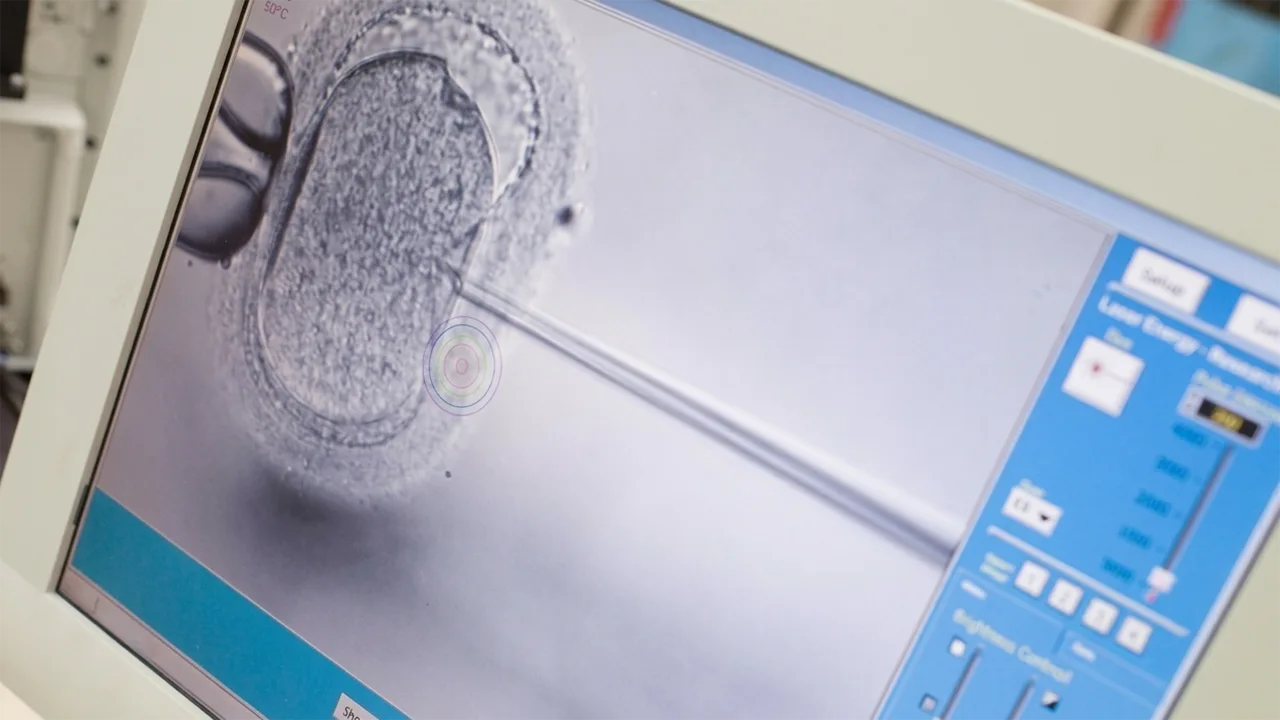
La Trobe University and reproductive health innovator GonGlobal have announced a strategic collaboration to develop and validate advanced artificial intelligence (AI) and digital twin technologies for Assisted Reproductive Technology (ART) and In Vitro Fertilization (IVF). The partnership marks a significant step towards AI-driven fertility care, a model of treatment that is increasingly personalised, predictive, and evidence-based.
The collaboration is led by Professor Nilmini Wickramasinghe as part of La Trobe’s Optus Digital Health team and brings together GonGlobal’s expertise in reproductive health innovation, spanning non-invasive drug delivery and therapeutic drug-device combination development, with the University’s internationally recognized capabilities in AI-enabled health systems and digital twin technology.
At the core of the collaboration is a programme of research designed to extract meaningful clinical intelligence from the large and complex datasets generated by ART and IVF treatment. The project will analyse those datasets with four specific aims:
To achieve these aims, the partnership will develop and evaluate three key AI technologies:
Together, these tools are intended to form a new generation of intelligent clinical decision-support systems, one where the clinician’s judgement is augmented, not replaced, by a continuously learning AI system trained on real-world fertility data.
GonGlobal brings to the partnership a specific and ambitious product vision. The company’s mission is to radically improve the ART and IVF patient experience and its most direct point of intervention is the injection burden that IVF currently imposes.
A typical IVF journey can involve hundreds of injections to achieve a live birth. GonGlobal is developing OVULAIR™, a cloud-connected digital device that delivers proprietary formulations of existing, approved drugs via inhalation rather than injection. The device is designed to facilitate real-time communication between IVF patients and their clinical teams, replacing a significant portion of the injection burden with a connected, data-generating alternative.
Combined with AI and machine learning applied to IVF datasets, GonGlobal’s technology has the potential to support care that is increasingly tailored to each patient’s individual biology and treatment trajectory, a vision that aligns directly with the analytical capabilities La Trobe’s research team is developing.
Professor Wickramasinghe, who leads the research from La Trobe, set out the significance of the collaboration:
“This is an exciting opportunity to translate our work in AI-enabled digital twins into a highly personalised clinical setting. By combining sophisticated predictive analytics with patient-specific digital twins, we have the potential to generate genuinely actionable intelligence for clinicians and ultimately improve outcomes and the experience of patients undergoing IVF.”
Professor Chris Pakes, Deputy Vice-Chancellor (Research and Innovation) at La Trobe, framed the announcement within the university’s broader research mission:
“La Trobe University has exceptional researchers, who continually develop new knowledge, technology and treatments. This partnership demonstrates the life-changing practices that arise when collaboration between industry and research occur. We are proud to support research with purpose and that makes a difference.”
Ellen Gonda, Co-Founder and CEO of GonGlobal, described what the collaboration means for the direction of reproductive healthcare:
“We are delighted to collaborate with Professor Wickramasinghe and La Trobe University to advance the future of reproductive healthcare. Our shared ambition is to move towards a more predictive, personalised and patient-centred model of reproductive care — one that can improve clinical decision making, treatment outcomes and the patient experience.”
Dr Igor Gonda, Co-Founder, Chief Scientist, and Executive Chairman of GonGlobal, placed the partnership’s AI focus within GonGlobal’s founding purpose:
“Our focus is to make each patient’s journey more joyful, with an improved chance of realising their dream of giving birth. The use of digital twins is very promising for personalised medicine, especially in such diverse populations of patients as those seeking ART/IVF.”
The ambition behind the La Trobe–GonGlobal collaboration is to establish a strong foundation for AI-driven fertility care that is genuinely predictive and personalised, moving IVF from a treatment protocol applied similarly across a population to one that responds dynamically to the individual patient’s data, history, and treatment trajectory.
If the technologies the partnership is developing prove out in clinical validation, the implications would extend across the ART and IVF sector: clinicians with better decision-support tools, patients with a clearer view of their individual probability of success, and a treatment experience that, through innovations like OVULAIR™, is materially less physically burdensome than the current standard.
Together, GonGlobal and La Trobe University aim to translate these advanced digital technologies into meaningful benefits for patients and healthcare professionals, not as a distant research aspiration, but as a set of validated clinical tools grounded in real-world fertility data.



Future Health, A Global Initiative by Abu Dhabi has launched the Future Health Digital Health Innovation Challenge 2026, inviting global innovators to develop AI, software, and connected technology solutions across fertility, population health, and well-being. Three finalists will share USD 105,000 at GITEX 2026, with selected solutions eligible for incubation and scale.

IVI Institute has announced the acquisition of The World Egg and Sperm Bank (TWESB), founded in 2004 and operating from Scottsdale, Arizona. The move expands access to reproductive solutions for patients and clinics across the United States and Australia, combining TWESB’s network of 500+ screened donors with IVI Institute’s global clinical and scientific infrastructure.

Doctors at NHS Lothian in Edinburgh have performed the UK’s first testicular tissue transplant, reimplanting tissue frozen before chemotherapy in a 19-year-old patient with a serious blood disorder. The testicular tissue transplant, only the second reported worldwide, could eventually give thousands of young boys a realistic path to future fatherhood.

Flora Fertility and Clue have announced the Flora Clue fertility partnership, connecting the first individually owned fertility insurance platform with the world’s leading women-led cycle tracking app. FLORA policyholders receive complimentary Clue Plus access, while Clue’s community of over 100 million members gains early exposure to proactive fertility financial planning.
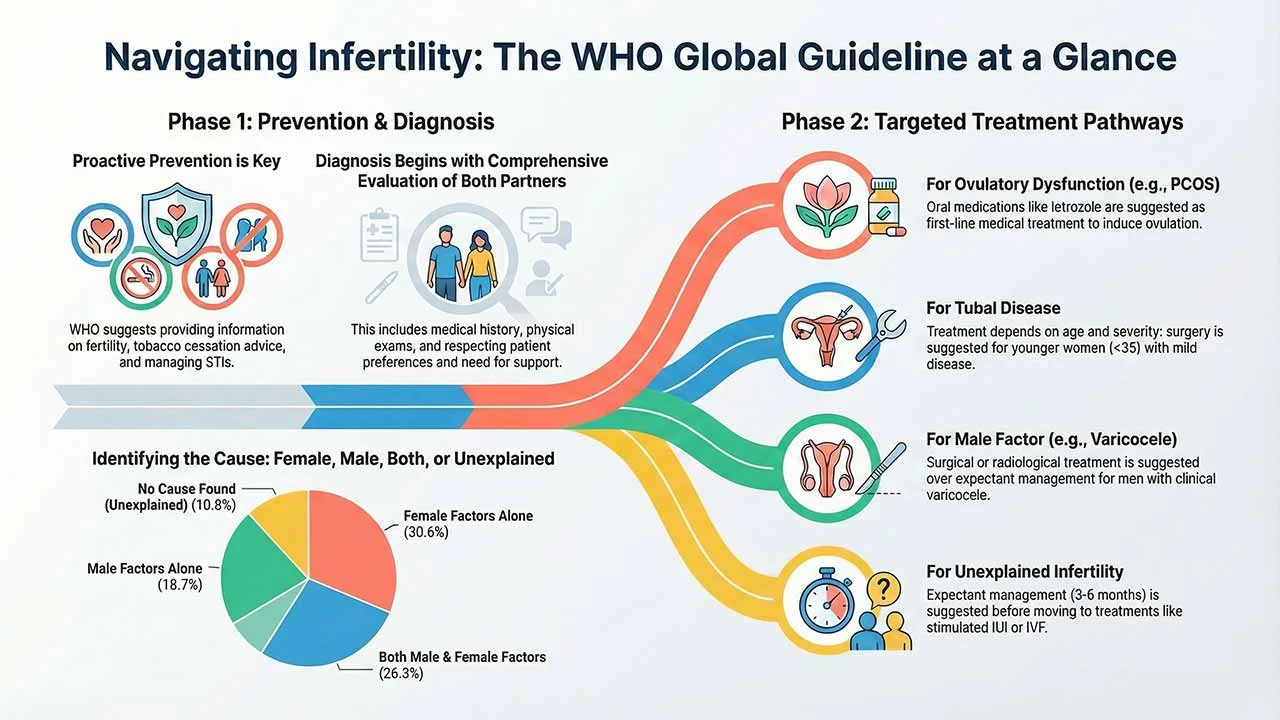
The World Health Organization releases its first comprehensive, evidence-based global guideline for infertility prevention, diagnosis, and treatment. Addressing one in six people of reproductive age worldwide, the guideline emphasizes equity, human rights, and standardized interventions to improve access to fertility care globally.

Gameto has secured $44 million in Series C funding to advance its stem cell-derived fertility therapy, Fertilo, into Phase 3 trials, marking a significant milestone in reproductive healthcare. This groundbreaking therapy uses induced pluripotent stem cell technology to mature eggs outside the body, significantly reducing hormonal stimulation and enhancing safety and efficacy in fertility treatments.