Home
 NewsNews
A groundbreaking artificial intelligence (AI) model developed by the University of Hong Kong’s LKS Faculty of Medicine, which enhances male fertility assessment by accurately identifying sperm capable of fertilization. This AI model replicates the egg's natural selection mechanism, aiming to streamline assisted reproductive treatments (ART) and improve outcomes for couples facing infertility.



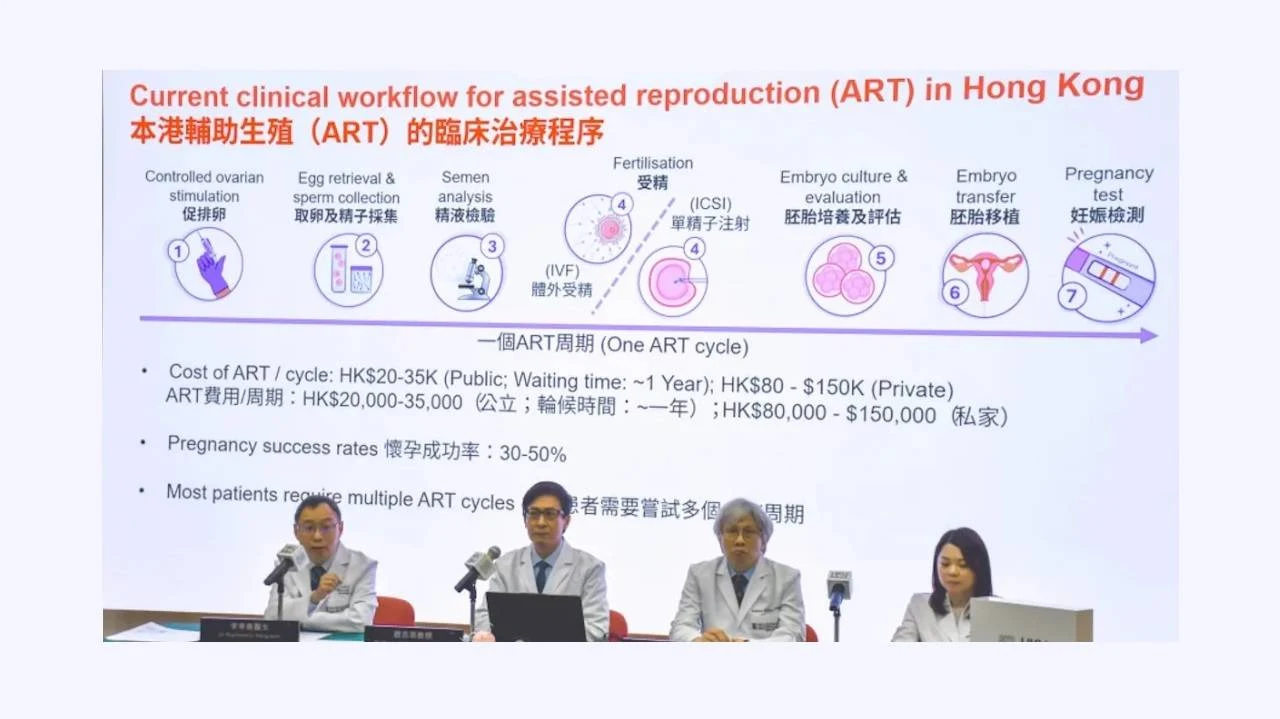
The University of Hong Kong’s LKS Faculty of Medicine (HKUMed) has unveiled a pioneering artificial intelligence (AI) model that dramatically enhances the precision of male fertility assessment by accurately identifying sperm capable of fertilisation. By emulating the egg’s natural selection mechanism, this deep-learning tool promises to streamline assisted reproductive treatments (ART), reduce diagnostic variability, and improve outcomes for couples experiencing infertility.

Addressing a Global Health Challenge
Infertility affects approximately one in six couples of reproductive age worldwide, with male factors contributing to 20–70% of cases. Traditional semen analysis evaluating sperm concentration, motility, and morphology under a microscope has long been the cornerstone of male fertility diagnostics. However, its reliance on subjective visual judgement leads to significant inter-laboratory variability and limits predictive power: even men with ostensibly normal semen parameters can experience fertilisation failure in 5–25% of in vitro fertilisation (IVF) attempts.
Against this backdrop, the HKUMed research team has developed the world’s first AI model that evaluates sperm morphology based on its capacity to bind to the zona pellucida (ZP), the egg’s outer coat, thereby replicating the natural selection process of fertilisation.
Leveraging advanced deep-learning techniques, HKUMed researchers trained the AI system on over 1,000 annotated sperm images, achieving an initial classification accuracy exceeding 96%. The model was subsequently validated on a vast dataset of over 40,000 sperm images drawn from 117 men diagnosed with infertility or unexplained infertility between 2022 and 2024. The results demonstrated a robust correlation between the AI-measured ZP-binding rate and actual ART outcomes, confirming the model’s clinical reliability.
The AI tool establishes a clinical threshold of 4.9% ZP-binding sperm: men whose samples fall below this threshold are considered at heightened risk of fertility issues during IVF. By flagging patients with impaired fertilisation potential early, clinicians can tailor treatment strategies, such as adjusting insemination methods or recommending intracytoplasmic sperm injection (ICSI), to optimise success rates and minimise the emotional and financial burdens of repeated ART cycles.
Conventional semen analysis is labour-intensive, time-consuming, and highly dependent on the expertise of laboratory technicians. This subjectivity leads to inconsistencies across practitioners and institutions. In contrast, the AI model provides a fully automated, reproducible assessment that is independent of operator bias, ensuring consistent diagnostic criteria worldwide.
By focusing on the biological event most closely linked to fertilisation, the AI model outperforms conventional parameters in forecasting ART success. Early clinical data suggest that integrating ZP-binding analysis into fertility workups could significantly reduce the incidence of fertilisation failure, accelerating the time to pregnancy for many couples.
Automating sperm selection analysis streamlines laboratory workflows, reducing technician workload and turnaround time. While initial deployment requires investment in imaging and computational infrastructure, the anticipated improvements in ART efficiency and reduced cycle repetition may offer long-term cost savings for fertility clinics and patients alike.
Professor William Yeung Shu-biu of HKUMed’s Department of Obstetrics & Gynaecology underscores the limitations of manual semen analysis: “This method is not only labour-intensive and time-consuming, but also highly dependent on the subjective judgement of laboratory technicians. This leads to significant variations between individuals and across laboratories, making it difficult to standardise sperm quality criteria and undermining the accuracy of male fertility evaluations.”
The HKUMed team is currently conducting large-scale clinical trials to further validate the AI tool’s efficacy across diverse patient populations and clinical settings. Pending regulatory approvals, integration of ZP-binding analysis into standard fertility assessments could redefine best practices in andrology labs globally.
Beyond diagnostics, the technology may inspire novel sperm-selection methods for ART, potentially improving embryo quality and live birth rates. As AI continues to permeate reproductive medicine, the fusion of machine learning with physiological insights holds the promise of personalised fertility care tailored to each couple’s unique needs.
By harnessing AI to simulate the egg’s natural selection of sperm, HKUMed’s breakthrough model sets a new benchmark for male fertility testing. With accuracy surpassing 96% and a clear linkage to ART outcomes, this innovation paves the way for more reliable diagnoses, personalised treatment plans, and ultimately, higher success rates for couples striving to conceive. The advent of AI male fertility testing ZP-binding analysis heralds a transformative era in reproductive medicine, one where data-driven precision meets the biology of life’s very beginnings.



Flora Fertility and Clue have announced the Flora Clue fertility partnership, connecting the first individually owned fertility insurance platform with the world's leading women-led cycle tracking app. FLORA policyholders receive complimentary Clue Plus access, while Clue's community of over 100 million members gains early exposure to proactive fertility financial planning.
South Korea's infertility treatment support budget at the local government level has risen 149.6%, from 67 billion won in 2021 to 167.2 billion won in 2025. As the central government continues expanding eligibility and benefits, municipalities are calling for the programme to return to national funding, warning of growing regional disparities.

Legacy, North America's leading digital male fertility clinic, has secured New York State CLEP approval for both its semen analysis and DNA fragmentation test – the only mandatory pre-market laboratory review programme in the United States. The approvals confirm clinical-grade validity for at-home samples, extending access to New York patients without a clinic visit.

From 1 July 2026, South Australia's Fertility Treatment Rebate Scheme provides eligible residents with a $250 rebate for pre-treatment testing and a $2,000 rebate for up to two fertility treatment cycles. Backed by an $18.5 million, four-year government commitment, the scheme directly addresses the financial barriers preventing South Australians from accessing fertility care.

apyen, a global leader in male fertility diagnostics, has entered a strategic partnership with My Surrogacy Journey to broaden fertility testing and reproductive health support for intended parents across the United States. The collaboration covers semen analysis, DNA fragmentation testing, and infectious disease screening, with plans for international expansion.

Nucleus Genomics has announced that the Fertility Institute of Hawaii Joins Nucleus IVF+ network, bringing advanced carrier and embryo screening to Hawaii's largest IVF practice. The partnership expands genetic optimization access across the Pacific, with risk reduction data covering endometriosis, heart disease, breast cancer, type 1 diabetes, and Alzheimer's disease.

TFC Taipei Fertility Center has introduced an AI-Powered Embryo Selection model that improves chromosomally normal embryo identification by up to 24%. Presented at ASPIRE 2026, the iDAScore v2.0 system brings precision and objectivity to IVF treatment, reducing implantation failure risk and shortening time to conception for infertile patients.