Home
 NewsNews
Germany is debating the legalization of egg donation in Germany, challenging decades-old restrictions under the Embryo Protection Act. Experts argue reform is overdue to align with modern reproductive science, reduce fertility tourism, and improve patient care, while policymakers work to balance ethical concerns with growing demand for advanced fertility treatments.




The landscape of reproductive medicine in Europe is undergoing a significant transformation, with Germany at the center of a pivotal legislative debate. For decades, the nation has maintained a restrictive stance on assisted reproduction, governed by laws established in the late 20th century. However, as 2024 data highlights a surge in fertility treatments, with the German IVF Register reporting approximately 131,800 treatment cycles, the pressure to update these regulations has reached a critical mass. At the heart of this discussion is the potential legalization of egg donation in Germany, a move that experts argue is long overdue to align domestic law with modern scientific standards and societal realities.
The primary hurdle for couples seeking expanded fertility options is the Embryo Protection Act of 1991. While this legislation was designed to provide an ethical framework for early reproductive medicine, critics argue it has failed to keep pace with the rapid evolution of biotechnology. Professor Dr. Claudia Wiesemann, a member of the National Academy of Sciences Leopoldina and a prominent medical ethicist, points out the growing disconnect between law and science. According to Wiesemann, the act’s “legal regulations of this act have not been adapted to the numerous new insights gained by research.”
This stagnation has left Germany in a unique position within the European Union. Alongside Luxembourg, Germany remains one of the only member states where the practice is still strictly forbidden. In 2019, the National Academy of Sciences Leopoldina and the Union of the German Academies of Sciences issued a joint statement titled “Reproductive medicine in Germany – towards an updated legal framework,” which advocated for a “new and comprehensive regulation of the requirements, processes and consequences of reproductive medicine.” The academies were unambiguous in their conclusion: “Egg donation, which has been prohibited in Germany up to now, should be permitted.”
The current prohibition has far-reaching consequences that extend beyond the inability to conceive. Because egg donation in Germany is currently illegal, many couples are forced to seek treatment abroad, navigating a landscape of varying legal and medical standards. This "fertility tourism" creates significant ethical and safety concerns.
Wiesemann highlights that the ban effectively silences necessary medical and legal discourse within the country. “In Germany, couples are unable to receive comprehensive advice on the advantages and disadvantages of this step, as such advice is considered aiding a criminal offence,” she explains. This lack of guidance leaves intended parents in the dark regarding the treatment of donors, who often remain anonymous. Furthermore, it compromises the child’s future rights, as they are “unable to enforce its basic right to know its origins.”
Even upon returning home, the challenges continue. Pregnant women who have utilized donors abroad often hide the nature of their conception due to a fear of social stigmatization. This silence can lead to clinical complications, as Wiesemann notes that these women often “receive worse care” because they do not disclose their full medical history to German providers.
Historically, the ban was justified by the desire to protect child welfare and avoid the concept of “split motherhood”, where the genetic mother and the gestational mother are different individuals. However, the legal environment presents a glaring inconsistency: while egg donation is banned, sperm donation is fully permitted.
Wiesemann argues that this unequal treatment is no longer defensible. The 2019 joint statement noted that the Embryo Protection Act may actually increase health risks for mothers and children by restricting access to modern, safer reproductive procedures. The expert consensus is that the original arguments for the ban “are no longer persuasive in light of recent research.” For many women, particularly those with congenital ovarian malformations or those experiencing premature menopause, egg donation is the only viable path to biological parenthood.
For lesbian couples, the benefits are equally profound. Legalization would allow one partner to donate eggs to the other, ensuring that “both have a physical link to the child. ”With respect to heterosexual couples, the advantage of egg donation compared to adoption is that the intended mother can give birth to the child herself and her partner can be the child’s genetic father.”
In response to these growing concerns, German Federal Health Minister Nina Warken (CDU) has initiated a political effort to move toward partial legalization. Warken’s proposal aims to create a “strictly regulated framework” that allows for egg donation within Germany while maintaining firm ethical boundaries. The core of the current proposal focuses on the donation of “unused” eggs, those that remain after a woman has completed her own fertility treatments.
While this is a step toward reform, some experts believe the proposal is too narrow. Wiesemann expresses concern that focusing solely on "superfluous" eggs will not meet the actual demand. “If only the donation of superfluous eggs is allowed, then at a purely quantitative level it will not be possible to help the vast majority of couples who have an unfulfilled desire to have children,” she states. Furthermore, she notes that these specific eggs are often of lower quality because “they come from infertile women or those already at a more advanced age.”
In contrast, data suggests that utilizing eggs donated by younger women can result in pregnancy success rates of up to 50 percent. While egg extraction is more physically demanding than sperm donation, Wiesemann points out that international studies show side effects can be “significantly reduced through improved hormonal stimulation protocols.”
Any movement toward legalizing egg donation in Germany must be accompanied by robust "guardrails" to prevent the commercialization of the process. The Leopoldina’s 2019 recommendations emphasize a responsible opening of the law, ensuring that donors and recipients are protected. Proposed regulations include a suggested age limit for recipients around 50 years old to mitigate the increased health risks associated with later-life pregnancies for both mother and child.
Two separate commissions of scientific experts, established by the Federal Ministry of Health and the Leopoldina, have reviewed the social and physical implications of donation. Their findings suggest that the physical burden on donors and the potential social consequences for families are no longer considered significant barriers.
As the Federal Ministry of Health engages in cross-departmental discussions with the Ministries of Justice and Family Affairs, the focus remains on balancing innovation with ethics. The overarching scientific consensus, as summarized by Professor Wiesemann, is that state intervention in the “constitutionally guaranteed reproductive autonomy of both donor and recipient is ‘no longer justified.’”
Continuing to restrict access to these medical advancements would, according to the academies, run counter to the provision of high-quality, international-standard treatment. While Minister Warken’s current proposal represents a cautious beginning, the ongoing debate indicates a broader shift toward a more inclusive and scientifically grounded approach to reproductive medicine in Germany. For the thousands of couples struggling with infertility, the modernization of these laws represents not just a legal change, but a restoration of the hope to build a family within their own borders.



Doctors at NHS Lothian in Edinburgh have performed the UK’s first testicular tissue transplant, reimplanting tissue frozen before chemotherapy in a 19-year-old patient with a serious blood disorder. The testicular tissue transplant, only the second reported worldwide, could eventually give thousands of young boys a realistic path to future fatherhood.
Flora Fertility and Clue have announced the Flora Clue fertility partnership, connecting the first individually owned fertility insurance platform with the world’s leading women-led cycle tracking app. FLORA policyholders receive complimentary Clue Plus access, while Clue’s community of over 100 million members gains early exposure to proactive fertility financial planning.
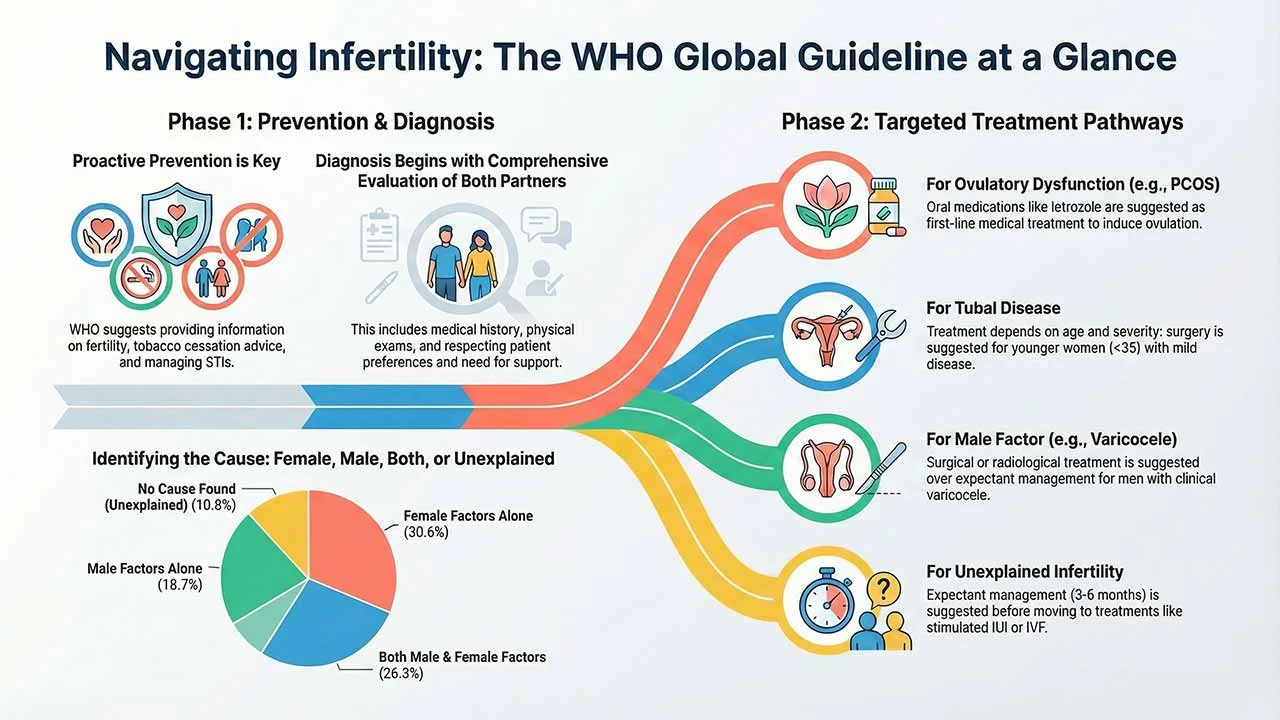
The World Health Organization releases its first comprehensive, evidence-based global guideline for infertility prevention, diagnosis, and treatment. Addressing one in six people of reproductive age worldwide, the guideline emphasizes equity, human rights, and standardized interventions to improve access to fertility care globally.

Gameto has secured $44 million in Series C funding to advance its stem cell-derived fertility therapy, Fertilo, into Phase 3 trials, marking a significant milestone in reproductive healthcare. This groundbreaking therapy uses induced pluripotent stem cell technology to mature eggs outside the body, significantly reducing hormonal stimulation and enhancing safety and efficacy in fertility treatments.

INVO Fertility partners with Heidi Health to integrate an AI-powered scribe at Wisconsin Fertility Institute, streamlining documentation so clinicians focus on care.
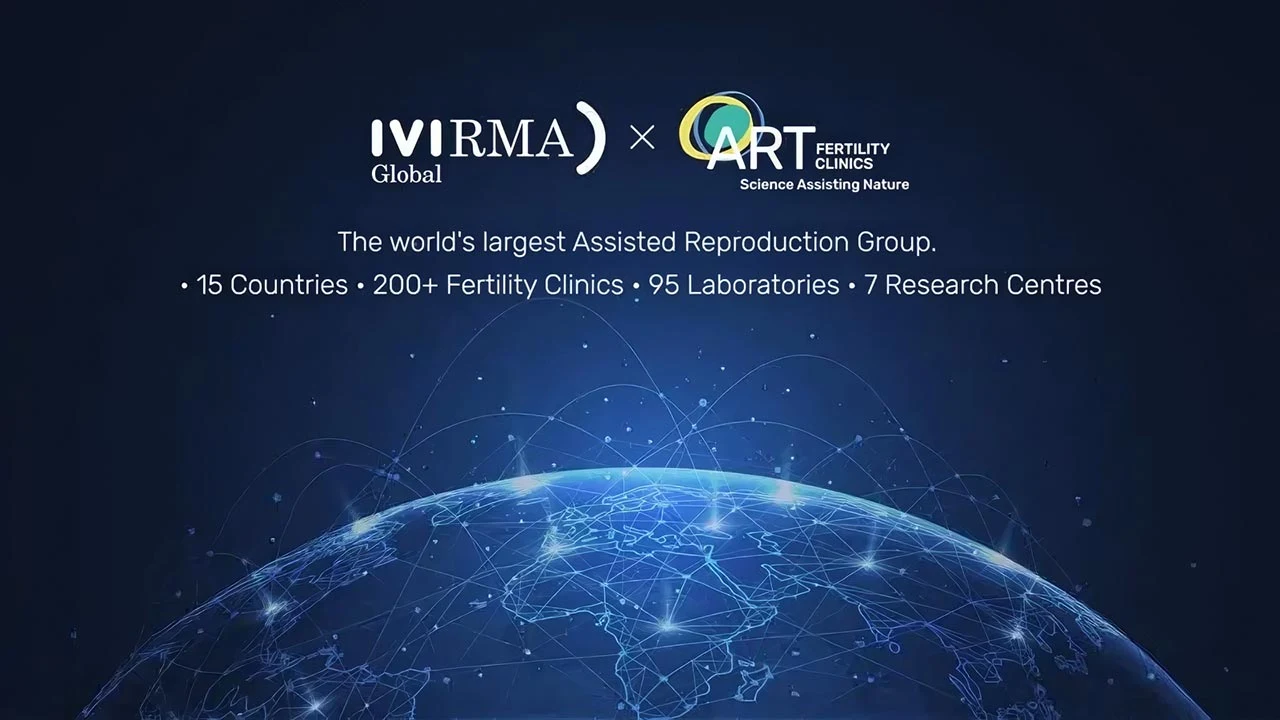
With ART Fertility Clinics now part of its network, IVI RMA Global has created a Middle East operating region to meet growing fertility needs. The integration boosts treatment capacity, scientific output, and care consistency across the UAE and Saudi Arabia as demographic pressures shape demand for assisted reproduction

California SB 729 now requires insured large employers to provide comprehensive coverage for infertility and IVF starting from 2026, significantly increasing workplace benefits.