Home
 NewsNews
The Fertility Society of Ghana has urged the government to officially recognize infertility as a disease and include basic fertility services in the National Health Insurance Scheme during its eighth Annual General meeting, held in Tema.



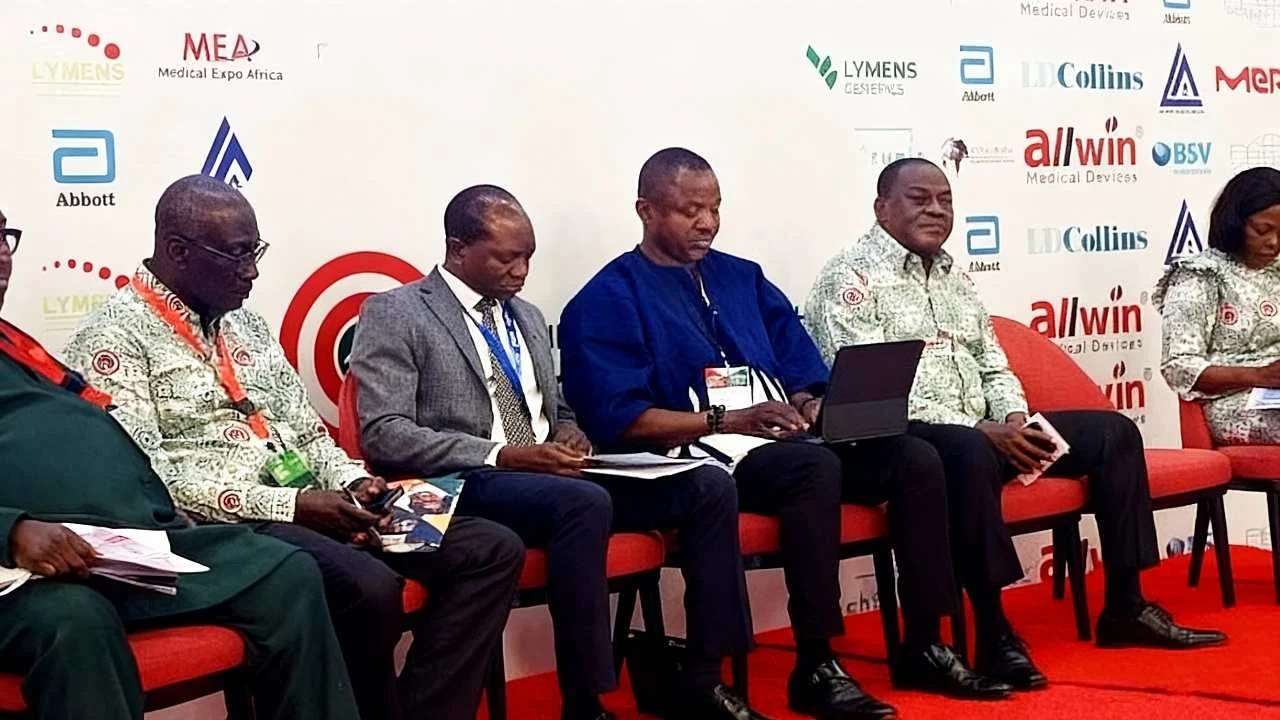
The Fertility Society of Ghana (FERSOG) has intensified calls for the government to officially recognize infertility as a disease, aligning with international health standards set by the World Health Organization (WHO). The society made this appeal during its eighth Annual General Meeting and Scientific Conference, which took place on October 16-18, 2025.
Dr. Rudolph Kantum Adageba, President of FERSOG, described the current healthcare arrangement where couples pay out-of-pocket for infertility services as "unfair, discriminatory and unjust." He emphasized that infertility must be viewed as a public health concern rather than a private financial burden.
The World Health Organization has defined infertility as a disease and a major disability. As a country, we must see it as such, just as we see other diseases, said Dr. Adageba at the conference, which brought together clinicians, embryologists, nurses, and policymakers under the theme "Reducing the Burden of Infertility in Ghana: Awareness, Preservation, and Infertility Prevention."
FERSOG has submitted a position paper to the National Health Insurance Authority (NHIA) and other stakeholders, advocating for the inclusion of basic infertility services in the National Health Insurance Scheme (NHIS). These services include clinical consultations, semen analysis, hormone profiling, pelvic ultrasound, and intrauterine insemination (IUI). Dr. Adageba noted that the society would continue engaging with the NHIA to establish realistic fees for these services.
The recognition of infertility as a disease carries significant implications for Ghana's healthcare system. Research indicates that infertility affects approximately 11.8% of women and 15.8% of men in Ghana, with affected couples facing devastating biomedical, psychological, and sociocultural consequences. In Ghanaian society, where children are expected to maintain family lineage and ensure marital stability, the inability to conceive often results in social stigma, discrimination, and psychological distress, particularly for women.
Currently, Ghana has 22 assisted reproductive technology (ART) centers located in only three of the country's 16 regions, primarily serving middle- and upper-class populations in urban areas. The average cost of in vitro fertilization (IVF) and intracytoplasmic sperm injection (ICSI) is approximately 50,000 Ghana Cedis (USD 3,400), far beyond the reach of most Ghanaians, whose national daily minimum wage stands at 19.97 Ghana Cedis (USD 1.4).
Prof. Dr. Titus Kofi Beyuo, Member of Parliament for Lambussie and member of the Parliamentary Select Committee on Health, announced that the Assisted Reproductive Technologies Bill is at an advanced stage. The Minister of Health is currently working on two key legislative documents: the ART Bill and the Organ Donation and Transplant Medicine Bill. The minister is very committed to passing this bill, Prof. Beyuo assured attendees, encouraging fertility professionals to collaborate more closely with Parliament in their advocacy efforts.
The conference highlighted that recognizing infertility as a disease would pave the way for regulatory frameworks, standardized care protocols, and financial support through the NHIS. This move would address the current situation where 70.2% of women seeking ART treatment withdraw due to prohibitive costs, and 35.57% discontinue due to partner unavailability.
FERSOG's advocacy represents a critical step toward achieving reproductive justice in Ghana. By securing disease status for infertility and integrating treatment into the national health insurance scheme, the government could significantly reduce the burden on affected couples and ensure equitable access to fertility care across all socioeconomic classes.


INVO Fertility, Inc has confirmed that its Wisconsin Fertility Institute-WFI clinic joined the Progyny network, making advanced reproductive care more widely available and accessible for more patients seeking fertility treatment.

Births resulting from essential Infertility Treatments, including advanced procedures like artificial insemination and IVF, have seen a very positive and promising climb, accounting for almost 15.1% of the total births recorded in 2024.
Fairfax IVI expand donor sperm access through a strategic partnership that enhances availability, integrates donor services into fertility care, and supports diverse patient needs. With personalised guidance, genetic insights, and streamlined logistics, the collaboration aims to reduce barriers and deliver a more accessible, inclusive path to parenthood.

Researchers have developed breakthrough microfluidic technology that can accurately predict how an embryo is going to implant, directly addressing long-standing IVF challenges and offering new hope for improved success rates.

The Florida Supreme Court has clarified that its statute on reproductive technology does not apply to At-Home Artificial Insemination.
Costco, Sesame, and IVI RMA North America have announced strategic partnership to alter fertility care in the U.S. by removing biggest obstacles to care including high costs and limited access.