Home
 ArticlesArticles
The circumstances when egg or sperm donation is essential for achieving pregnancy, including age-related infertility, genetic disorders, and medical conditions. It emphasizes that egg or sperm donation provides a valuable pathway to parenthood for individuals and couples facing reproductive challenges.



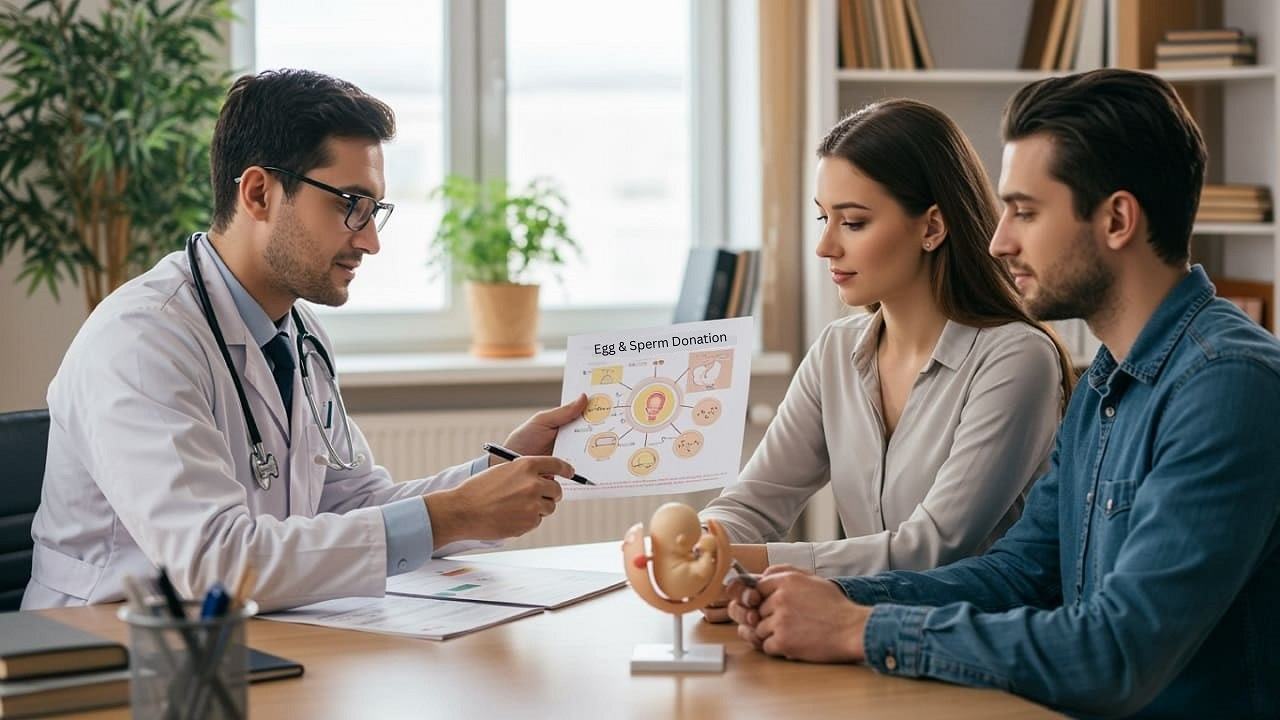
Donor eggs and sperm are essential solutions for those facing issues with infertility. There are circumstances, however, where egg or sperm donation is able to play a key role in achieving these goals, as many can conceive naturally, but others may face challenges. This article will explain such situations when these donations are required and how it can help people to come out of infertility.
 Infertility Due to Age
 As we age, especially women, the number and quality of eggs naturally decrease. Women over 35 may see a decline in fertility, and by their 40s, natural conception rates may have significantly dropped. For such women, egg donation becomes an effective solution for age-related infertility issues. Egg donation from younger, healthy women provides women an opportunity to carry a pregnancy to term.
Just like a woman’s eggs, a man’s sperm can also suffer age-related decline in quality, starting from about age 40. A man might have a lower sperm count, motility, or quality, any of which can impact his ability to impregnate. In cases where the male partner’s sperm quality is problematic, sperm donation may be advised as a way to achieve a successful pregnancy.
Egg (or sperm) donation can reduce the risk of hereditary conditions being passed on to the offspring of people or couples that have a history of genetic disorders. For example, some couples may carry a genetic condition that a child may inherit, causing serious health issues. In this case, using donor eggs or sperm from healthy donors who do not carry the genetic mutations of interest can enable a pregnancy free from these risks.
For same-sex couples and single people wishing to have children, egg or sperm donation is often a requisite first step. For example, a lesbian couple might need a sperm donor to conceive. while a gay couple may seek both an egg and sperm donor (through a surrogate) in order to have a child. To ensure they get a second chance, single women who want to have children can also donate sperm so they can get pregnant without a partner.
In some cases, egg, sperm, or embryo donation should be used when dealing with certain medical conditions that may cause infertility to either partner. In children or young women with conditions like ovarian failure, polycystic ovary syndrome (PCOS), or endometriosis, egg donation may be required for them to become pregnant. Women with damaged eggs due to treatments such as chemotherapy or radiation may choose to use an egg donor to experience motherhood.
For male patients, there are conditions like azoospermia (a complete absence of sperm) or severe oligospermia (very low sperm count) that necessitate sperm donation. Male infertility can also be caused by certain types of surgeries, hormonal imbalances, or treatments.
In some cases, a couple will have infertility with no apparent cause. Despite the availability of numerous medical tests, some of them may explain infertility without identifying its cause. This can be frustrating if you have gone through many rounds of IVF, as when the egg or sperm is from a donor, it usually means that fertility has been tried multiple times and succeeded in such a way that having a baby is not yet possible.
Sperm donation can help women who are single or in relationships where the male partner has infertility problems to get pregnant. From low sperm count to poor motility to total absence of sperm, sperm donation can help women going through assisted reproductive technologies such as intrauterine insemination (IUI) or IVF.
Surrogacy also is an option for women who cannot carry a pregnancy for health or anatomical reasons. If the intended mother’s uterus isn’t viable, her eggs could be donated and implanted in a surrogate who can bear the pregnancy, and if the male partner’s sperm isn’t viable, sperm donation may be required. This arrangement allows couples to conceive and give birth to a child who shares genetic traits with one or both of them.
Egg or sperm donation typically entails rigorous screening of the donors to protect the health and safety of the recipients. Donors are medically and genetically tested and, in some cases, psychologically screened. Once a matching donor is found, donor eggs or sperm can be used in assisted reproductive processes like IVF, IUI, or egg/sperm freezing.
Egg or sperm donation is the most significant opportunity for couples struggling with infertility. These donations can provide a pathway to parenthood when natural conception is impossible, whether it’s due to age, genetic conditions, medical problems, or other circumstances. As science and reproductive technology evolve, egg and sperm donation will continue to be a valuable tool in helping individuals have the families they want, despite any reproductive hurdles they may face.