Home
 ArticlesArticles
The evolving global landscape of IVF access for single parents. It outlines the countries that legally allow single women and men to pursue fertility treatments, their regulatory frameworks, and the practical considerations involved.




The landscape of assisted reproductive technology has undergone dramatic transformation since the birth of Louise Brown, the world's first "test-tube baby," in 1978. Today, single parents seeking to build their families through in vitro fertilization (IVF) face a complex web of international laws and regulations that vary significantly across borders. This comprehensive guide examines which countries currently allow single parents to access IVF treatment, the specific legal frameworks governing these procedures, and the evolving regulatory environment that continues to shape reproductive rights worldwide.
In vitro fertilization represents a revolutionary advancement in reproductive medicine, enabling individuals to conceive children through medical intervention. For single parents primarily single women but increasingly single men as well, IVF offers a pathway to parenthood that was previously impossible. However, access to these treatments remains heavily dependent on national legislation, cultural attitudes, and evolving ethical considerations.
The World Health Organization recognizes infertility as a disease affecting approximately 1 in 6 people globally, yet access to treatment remains unevenly distributed. For single parents, the barriers extend beyond medical and financial considerations to include legal restrictions that can either facilitate or completely block access to fertility treatments.
Spain stands as the undisputed leader in providing IVF access to single women, with approximately 40% of all European single women seeking fertility treatment choosing Spanish clinics. The country's progressive legal frameworks, under Law 14/2006 on Assisted Human Reproduction Techniques, Law explicitly allow single women, lesbian couples, unmarried heterosexual couples, and married couples equal access to fertility treatments. Spanish law permits the use of donor sperm and eggs, with comprehensive donor anonymity protections and one of Europe's most extensive donor banks.Spain updated its public health system in November 2021 to include single women, lesbian couples, and transgender individuals.
Denmark has emerged as another premier destination, particularly after liberalizing its laws in 1997 to allow single women access to fertility treatments. Danish clinics report some of Europe's highest success rates, with single women accounting for approximately 15% of all IVF patients. The country's public health system even provides partial funding for up to three IVF cycles for residents.
The United Kingdom legalized IVF access for single women through the Human Fertilisation and Embryology Act, with the Human Fertilisation and Embryology Authority (HFEA) providing comprehensive oversight. UK law permits single women to use donor sperm, with children conceived through donation having the right to access donor
information at age 18.
Sweden represents a significant case study in legislative evolution. Prior to 2016, Swedish law restricted fertility treatments to married couples or those in stable cohabiting relationships. The 2016 law change explicitly granted single women access to publicly funded fertility treatments, leading to a 300% increase in single women seeking IVF within the first two years.
The Netherlands, Belgium, Portugal, Finland, and Ireland all provide legal frameworks supporting single women's access to IVF, though with varying degrees of public funding and specific regulatory requirements.
The United States presents a complex regulatory environment where IVF access for single parents varies significantly by state and individual clinic policies. While no federal law prohibits single women from accessing IVF, insurance coverage and clinic policies create substantial variation in access. Recent developments include California's 2024 law requiring insurance coverage for IVF treatments, including for single women, and New Jersey's expansion of infertility coverage regardless of relationship status.
Canada provides universal access to IVF for single women through provincial health systems, though coverage levels vary by province. Ontario, for example, provides funding for one IVF cycle per lifetime for all residents, including single women, while Quebec offers tax credits for fertility treatments.
Australia legalized IVF access for single women nationwide, with Medicare providing rebates for fertility treatments regardless of relationship status. The country's regulatory framework through the Reproductive Technology Accreditation Committee ensures consistent standards across all states and territories.
New Zealand similarly provides legal access to IVF for single women, with public funding available through district health boards based on clinical need criteria.
India legalized IVF access for single women through the 2021 Assisted Reproductive Technology (Regulation) Act, which explicitly permits single women to access fertility treatments while establishing comprehensive regulatory oversight.
Thailand allows single women to access IVF treatments, having become a popular destination for international patients seeking affordable fertility care with high success rates.
South Korea and Singapore have recently expanded access, with Singapore's Ministry of Health announcing in 2023 that single women would be eligible for government subsidies for fertility treatments, including IVF.
Germany maintains restrictive policies under the Embryo Protection Act, which effectively prevents single women from accessing IVF treatments by prohibiting the use of donor sperm in IVF procedures. The law requires that both partners be present and consent to treatment, effectively excluding single women.
Italy implemented some of Europe's most restrictive fertility laws in 2004, explicitly limiting IVF access to "stable heterosexual couples" and prohibiting the use of donor sperm or eggs. While some modifications have occurred, single women remain effectively excluded from IVF access.
Poland and Czech Republic maintain restrictive policies that either explicitly prohibit or effectively prevent single women from accessing IVF treatments through regulatory barriers.
China prohibits single women from accessing IVF treatments, with regulations requiring couples to present marriage certificates before receiving fertility treatments. Recent discussions about policy reform have not yet resulted in legislative changes.
Japan maintains restrictive policies that effectively limit IVF access to married couples, though discussions about expanding access to single women have gained momentum in recent years.

Single parents considering IVF treatment abroad must navigate several practical considerations:
Legal Recognition: Ensure the destination country legally recognizes single parent families and provides appropriate birth certificates naming the single parent as the sole legal parent.
Citizenship and Travel: Consider the child's citizenship implications, particularly for international patients who may need to establish citizenship in their home country.
Medical Standards: Verify clinic accreditation, success rates, and regulatory oversight through organizations like the European Society of Human Reproduction and Embryology (ESHRE) or the American Society for Reproductive Medicine (ASRM).
Cost Transparency: Understand all associated costs, including medical treatment, medications, donor materials, legal fees, and potential multiple cycle requirements.
The expansion of IVF access to single parents has generated significant ethical debates regarding children's rights, family structures, and societal responsibilities. Critics argue that children conceived through IVF to single parents may face identity issues related to donor conception, while supporters emphasize the fundamental right to reproductive autonomy and the proven stability of single-parent families.
Research from the European Society of Human Reproduction and Embryology indicates that children raised in single-parent families conceived through IVF show no significant differences in psychological adjustment compared to children from traditional families. Long-term studies tracking donor-conceived individuals have found that family stability and parental involvement matter more than family structure.
The global landscape for single parent IVF access continues evolving rapidly, driven by changing social attitudes, legal recognition of diverse family structures, and technological advances in reproductive medicine. While significant disparities remain between countries, the overall trend points toward expanding access and reducing barriers for single parents seeking to build families through IVF.
Countries like Spain and Denmark demonstrate that comprehensive legal frameworks supporting single parent IVF access can coexist with high success rates and excellent outcomes for both parents and children. As more nations recognize the fundamental right to reproductive autonomy, the patchwork of global regulations may gradually converge toward more inclusive policies.
For single parents considering IVF treatment, the key lies in thorough research, careful financial planning, and selection of destinations with established legal frameworks and proven track records. The journey may require international travel and navigation of complex regulatory environments, but the expanding global access means more single parents than ever can realize their dreams of parenthood through IVF technology.
The next decade promises continued expansion of IVF access for single parents, with emerging technologies like improved genetic screening, enhanced donor matching systems, and potentially reduced treatment costs making parenthood increasingly accessible to diverse family structures worldwide.



Advanced female age causes fertility decline through reduced egg quantity, increased chromosomal abnormalities, and mitochondrial dysfunction. Understanding these biological mechanisms helps women make informed family planning decisions. Modern fertility treatments including IVF, preimplantation genetic testing, and egg freezing offer practical solutions to overcome age-related reproductive challenges when trying to conceive.
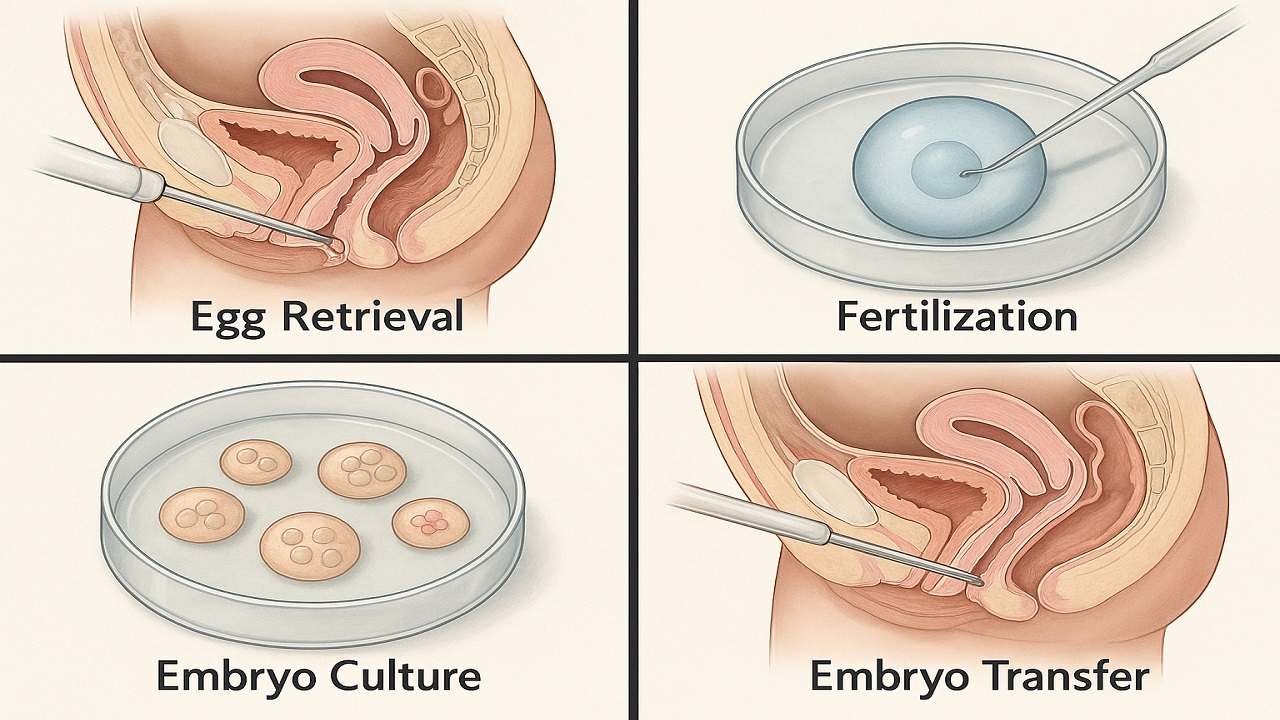
In Vitro Fertilization (IVF) process step by step, emphasising the importance of various stages such as ovarian stimulation, egg retrieval, fertilization, and embryo transfer in maximising the In Vitro Fertilization (IVF) Success Rate. It highlights how a thorough understanding of the procedure can prepare couples and individuals for their In Vitro Fertilization(IVF) journey, ultimately improving their chances of achieving a successful pregnancy.

Vitamin D Deficiency Affect IVF outcomes by influencing endometrial receptivity, embryo quality, and hormone balance. Clinical evidence, age-specific risks, and PCOS implications, while offering actionable strategies to optimize Vitamin D levels and improve IVF success rates and pregnancy outcomes in a structured, patient-focused approach.

Preimplantation Genetic Testing (PGT) revolutionizes IVF by screening embryos for chromosomal abnormalities and genetic disorders before transfer. This advanced technology increases pregnancy success rates, reduces miscarriage risk, prevents inherited diseases, and shortens time to pregnancy while providing diagnostic clarity and reducing emotional stress for couples.

Clinical evidence increasingly demonstrates that emotional stress or grief reduces the chances of IVF success through sophisticated biochemical pathways that directly influence reproductive physiology. This relationship extends far beyond simple correlations, revealing profound mechanistic connections between psychological distress and the delicate orchestration of hormonal events essential for successful conception.

IVF in 2025 is shifting from hype to evidence-based innovation. As precision, automation, AI, and genetic advances reshape fertility care, patients must distinguish proven breakthroughs from outdated add-ons. This guide examines five groundbreaking IVF technologies in 2025 to understand which advances genuinely improve outcomes

Managing Recurrent Implantation Failure (RIF) outlines evidence-based diagnostics and treatment pathways to improve IVF success rates, emphasizing clarity, cautious use of add-ons, and realistic patient expectations.