Home
 ArticlesArticles
Global leaders in assisted reproductive technology - ART drive innovation in IVF, set clinical standards, and improve access to fertility treatments and research worldwide while advancing patient outcomes and scientific excellence.




The International Federation of Fertility Societies – IFFS which was established in 1968 in Tel Aviv, Israel, emerged from the International Fertility Association that was founded in 1951 in Rio de Janeiro, Brazil, which marked the start of organized global cooperation when it comes to fertility research and treatment. As a federation representing over 65 national fertility societies across as many UN member countries, IFFS unites almost 50,000 physicians and reproductive medicine specialists along with healthcare professionals all across the world under a single umbrella organization.
Its primary mission is to stimulate research, spread the educational information, and also promote superior clinical care across all aspects of reproductive and fertility medicine, guided by the vision that all women and men indeed deserve access to quality fertility and reproductive health care. The organization, apparently, holds significant influence in the ART field as a non-state actor that actively supports the WHO objectives, especially the recognition of infertility as a disease that needs global attention. IFFS organizes triennial World Congresses on Fertility and Sterility, continuing with a tradition that began with the first such conference that took place in New York in 1953, while working to standardize research processes and also encourage scientific inquiry without any sort of national boundaries.

The International Fertility Alliance – IFA brings to the fore fertility experts, IVF patients, organizations as well as institutions into a collaborative global network that is dedicated to advancing reproductive medicine. The Alliance operates as an international body that unites stakeholders across borders in order to address fertility challenges that exist across the world. The primary purpose of the organization is to help patients in need by way of finding new treatment solutions while simultaneously critically examining the existing ones through research, besides educating future generations on fertility, which is a topic that concerns humanity as a whole.
What makes IFA significant in the ART field is its distinctly holistic approach to patient outcomes, creating an integrated pathway right from diagnostics to treatment through uniting experts from diverse disciplines such as clinical doctors, university researchers, embryologists, pharmaceutical companies, paramedical professionals, and non-governmental organizations. This multidisciplinary collaboration makes sure that every aspect of fertility care benefits from collective expertise and shared knowledge. The Alliance envisions a future in which everyone has access to information in order to better understand fertility and infertility, where treatments get widely available to those who are in need, and where transparency and social contribution by uniting leading fertility experts make all of it possible.

The International IVF Initiative - I3 is a landmark global non-profit educational platform that was formed to advance science and, along with it, the practice of Assisted Reproductive Technologies – ART across the world by way of serving as a central hub for consistent and continuous learning in addition to professional development. Its primary mission is to roll out free, high-quality educational content to reproductive biologists, clinicians, embryologists, students, and other professionals in the very fast-evolving field of IVF, hence making sure that knowledge remains accessible to one and all regardless of geographic or commercial hurdles.
What makes I3 truly extraordinary in ART is its unprecedented reach and scale, with thousands of users from more than 100 countries forming an international community that’s not just thriving but also committed to excellence in reproductive medicine. Through an extensive library of live as well as on-demand webinars, interactive virtual workshops, expert interviews, panel discussions, along with online conferences, I3 brings to the fore some of the most respected voices in reproductive medicine to share insights on topics that range from embryo biopsy techniques and AI applications in IVF labs to quality control along with patient-centered care. The initiative maintains a complete on-demand educational archive offering open access to umpteen recorded sessions, allowing professionals to revisit foundational principles, thereby supporting continuous growth and global collaboration throughout every aspect of ART.

The International Committee for Monitoring Assisted Reproductive Technologies - ICMART is an independent and international non-profit organization that began collecting global ART data in 1989 and was officially incorporated in California in 2003. It is governed by an international board of reproductive medicine professionals and is recognized as a non-state actor in relation to the WHO. Its primary mission is to promote trust, wisdom, and healthcare in infertility and fertility care, symbolized by a pomegranate representing fertility and blue hues reflecting trust, wisdom as well as healthcare.
What makes ICMART truly significant in the ART field is its role of being a global hub for standardized ART data collection and definition by way of its World Report Series, as it provides comprehensive global data on ART practice, utilization, and effectiveness, as well as safety. Whereas its ART Glossary, developed jointly with WHO, makes sure of a consistent terminology across the world. The organization's prominent activities include managing the ICMART Toolbox, which is an introductory package that helps clinics and countries collect and track ART outcomes through using standardized methodology, and overseeing a rigorous data collection process where the patient-level data flows from clinics to national registries and finally to ICMART as a non-identifiable summary data for the Global Registry.

The Society for Assisted Reproductive Technology – SART is the primary professional organization that stands dedicated to the practice of IVF along with assisted reproductive technology - ART in the US, representing the majority of ART clinics that are spread across the country, with 86% of US IVF clinics being members in 2018, thereby comprising over 95% of all IVF cycles that have been performed across the country.
Its primary mission is to establish and maintain the highest standards when it comes to ART practice, making sure that patients get to have the highest possible level of care by way of rigorous safety, quality, and patient care requirements, which all the member clinics must meet. What makes SART exceptionally extraordinary in the ART spectrum is its complete influence through clinical practice, insurance coverage, patient decision-making, and public policy. SART clinics are recognized as centers of excellence by major insurance companies, many of which offer coverage only at SART member centers.
The key activities of the organization include transparent IVF outcomes reporting by way of publicly available success rate data that enables patients to make informed decisions about their treatment choices. Through these multifaceted efforts, SART advances standards for ART practice in order to benefit patients, members, and society at large.

The American Society for Reproductive Medicine – ASRM was founded in 1944 in Chicago by a small group of fertility experts, who were led by Walter Williams, M.D., with thirty men elected as founding members in addition to a six-member Board of Directors, thereby establishing what would go on to become the oldest and also the most influential reproductive medicine organization in the US. ASRM’s primary mission is to advance the science and practice of reproductive medicine via a complete approach that consists of education, research, advocacy for physicians and patients, and ethical standards.
What makes ASRM significant in the ART field is its foundational role when it comes to shaping modern reproductive medicine. This is indeed a pioneering organization that was established even before the birth of the first IVF baby. ASRM has spent over seven decades building scientific, ethical, and clinical infrastructure on which the modern fertility practice rests. The organization accomplishes its mission by pursuing excellence in evidence-based, lifelong education along with learning for professionals across every career stage, supporting innovative research that pushes boundaries of reproductive science, and developing and spreading the highest ethical and quality standards within patient care, which serve as yardsticks across the country.

The European Society of Human Reproduction and Embryology - ESHRE was established in Europe as the leading professional society dedicated to reproductive medicine and science in Europe. It operates with a global reach while at the same time maintaining its European roots and viewpoints.
The primary purpose of this organization is to promote interest within the gamut of infertility care and build a holistic understanding pertaining to reproductive biology and medicine that consists of scientific, psychological, clinical, and social dimensions of fertility. What makes ESHRE very significant within the ART space is its complete influence across European and international practice as it collaborates worldwide by advocating universal upgrades within scientific research and encourages and evaluates new developments that come up in reproductive medicine.
The extensive activities of the organization include teaching and training programs, professional accreditations that apparently set the highest benchmarks for practitioner competence, mentoring, and also career planning initiatives when it comes to junior professionals, along with the development and maintenance of critical data registries that track ART practice and outcomes throughout Europe. ESHRE also enables and spreads research in human reproduction along with embryology to the general public, scientists, clinicians, and patient associations, while at the same time partnering with politicians and policymakers across Europe and worldwide to serve as a primary source for evidence-based infertility care.

The British Fertility Society – BFS was founded in 1972 in the UK with the encouragement of IVF pioneer - Patrick Steptoe. It emerged from a small group of professionals who shared a common interest in infertility at a time when reproductive medicine was at a very nascent stage.
The primary purpose of BFS has evolved alongside the explosive growth of the field, and today the society promotes sharing of knowledge, education, and raising standards of practice very actively throughout all elements of fertility care. What makes BFS historically important in the ART field is its direct connection to the very origins of clinical IVF, which was founded with Steptoe's encouragement.
The ART field has grown alongside the development of the specialty from those early days to the present, thereby broadening its interests. The Society does recognize the fundamentally multidisciplinary nature pertaining to modern reproductive medicine and welcomes into its membership counsellors, andrologists, embryologists, endocrinologists, and nurses, along with other professional groups that are working in the field, thereby creating a truly comprehensive professional home for all fertility practitioners. The activities of BFS are directed by an Executive Committee, which is elected by the membership and is supported by specialized subcommittees.

The Fertility Society of Australia and New Zealand - FSANZ serves as a prominent body that represents scientists, researchers, doctors, nurses, and consumers, as well as counsellors in reproductive medicine throughout both Australia and New Zealand, operating as the unified professional voice for the complete fertility sector throughout the region.
Its primary mission is to support with clinical guidance and direction, which in a way enhances the standard of reproductive medical practice, while simultaneously determining and consistently enhancing the quality of fertility services that are offered throughout both countries. What makes FSANZ especially important in ART is its scope as the sole multidisciplinary organization that has in it every stakeholder in Australasian fertility care, right from clinicians and laboratory scientists to nurses, researchers, and the patients, hence creating an integrated community where all viewpoints contribute towards advancement of the field. The key activities of the society include facilitating research within reproductive health, offering in-depth educational opportunities for members so as to raise the care standards, assisting government along with other interested parties to develop fertility-related plans, and creating forums for discussion on challenges that are associated with both infertility and fertility control.|

The Japan Society for Reproductive Medicine – JSRM was established in 1956 and incorporated as a general incorporated association in Japan. It became a member of the Japan Medical Association in 1976. Its major purpose is to contribute towards the advancement of academic studies along with the welfare of humanity through publishing research results, exchanging ideas, and offering information related to basic and clinical research that concerns the reproduction of humans. What makes JSRM important in ART is its major role in the Japanese regulatory and certification system, as it alongside the Japan Society of Obstetrics and Gynecology – JSOG governs ART practice in Japan through certifying the ART specialists who must be affiliated with JSOG-approved clinics, hence making sure that only qualified professionals oversee treatment.
The prominent activities of the Society include holding annual academic lectures as well as regional block meetings, publishing - Reproductive Medicine and Biology – a journal and also administering a specialist certification system when it comes to reproductive medicine professionals and coordinators. Because of these efforts, JSRM demonstrates wisdom and good sense so as to develop reproductive medicine in Japan, hence helping leading medical professionals and offering safe and high-quality medical care to people.
The information above is based on independent research conducted by FertilityIn using publicly available sources and official organizational materials. Roles, missions, and activities of these organizations may change over time as policies, leadership, and programs evolve. The descriptions are intended solely for informational and educational purposes and may not reflect the most current updates from the respective organizations. Readers are advised to refer to the official websites of the organizations for the latest information.



Immunotherapy in restoring human fertility is emerging as a promising approach for addressing immune-related reproductive disorders. Recent clinical advances highlight its potential to improve implantation, pregnancy outcomes, and reproductive health, offering renewed hope for patients facing infertility linked to immune system dysfunction.

The smart fertility tracker market has transformed male fertility diagnostics, but how reliable are these devices? This report examines what at-home sperm tests actually measure, where they fall short compared to clinical analysis, and how men and couples can use them appropriately within a broader reproductive care pathway.
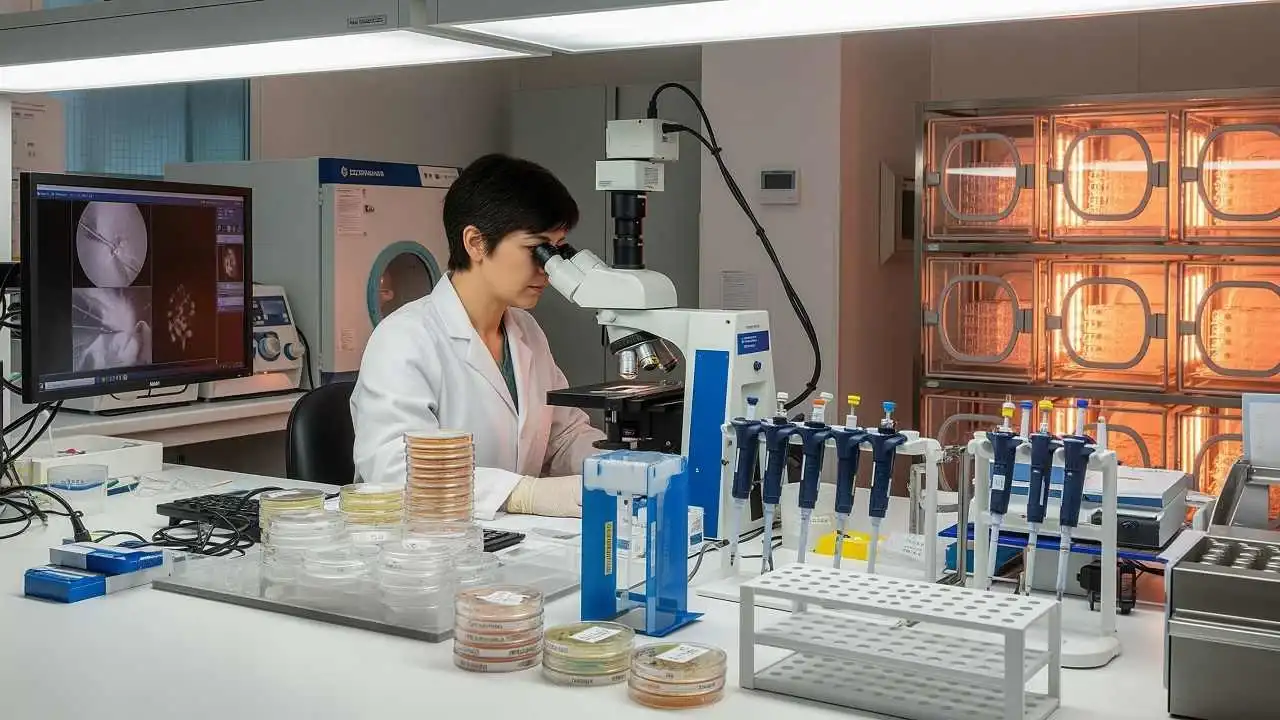
The distinct assisted reproductive technologies of Intrauterine Insemination (IUI), In Vitro Fertilization (IVF), and Intracytoplasmic Sperm Injection (ICSI). It outlines how each procedure works, the medical indications for their use, and their respective success rates. The importance of choosing the right treatment based on factors such as patient age, infertility diagnosis, and personal circumstances.

Assisted Reproductive Technology (ART), a groundbreaking medical field that provides solutions for individuals and couples facing fertility challenges. It defines ART, explains its core techniques such as In Vitro Fertilization (IVF) and Intracytoplasmic Sperm Injection (ICSI), and discusses clinical applications and success rates.

Common questions about pregnancy with polycystic ovary syndrome (PCOS) through IVF and IUI. It discusses PCOS-related infertility, success rates, treatment options, and the importance of personalised protocols. Emphasising holistic care and emotional support, it offers hope and insights for women navigating the challenges of PCOS.

The potential of stem cells to improve ovarian reserve and egg quality, focusing on their application in women with diminished fertility. It discusses how mesenchymal stem cells and other stem cell therapies can rejuvenate ovarian function by enhancing the ovarian environment, promoting tissue repair, and stimulating follicle growth. While the therapy shows promise, the article emphasizes the need for more extensive studies to understand its efficacy and safety.

Clinical pearls for treating infertility and low testosterone in men, emphasizing reproductive goal assessment, empiric medical therapies, and comprehensive multidisciplinary management strategies.