Home
 ArticlesArticles
The Pioneers of ICSI, including Dr. Gianpiero Palermo, revolutionized male infertility treatments by developing Intracytoplasmic Sperm Injection (ICSI), allowing successful pregnancies. The Pioneers of ICSI have forever changed reproductive medicine, offering new hope to many couples.



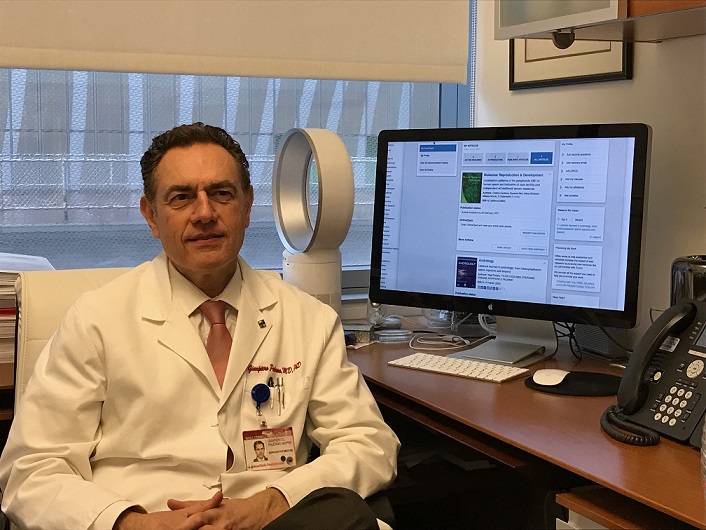
Reproductive medicine was revolutionized by the introduction of intracytoplasmic sperm injection (ICSI), a breakthrough largely credited to The Pioneers of ICSI, including Dr. Gianpiero Palermo, whose work has transformed fertility treatments worldwide. Another important person behind its development and success is Italian-born reproductive biologist Dr. Gianpiero Palermo, who was one of the first pioneers in making ICSI a reality. His early work in the 1990s has greatly impacted fertility treatment and helped millions of couples around the world achieve their dreams of parenthood after years of struggling with infertility.
Gianpiero Palermo was born in Italy in the late 1950s and took an early interest in biology and medicine. He graduated in 1980 from the University of Naples, where he studied biology. Driven by his love for medical research, Palermo continued his education and eventually completed his doctorate in reproductive biology. His academic credentials also provided a strong foundation for his early research into the mechanisms of fertilization, which paved the way for his subsequent groundbreaking developments in the field of assisted reproduction.
Palermo’s early career had focused on understanding human reproduction at the cellular and molecular levels. In particular, he became absorbed by fertilization, which he saw as a scientific touchpoint ultimately leading to better outcomes with assisted reproductive technologies (ART). In the 1980s, in vitro fertilisation (IVF) and other techniques were ascendant, yet male-factor infertility was an enormous roadblock for couples trying to conceive.
These included male infertility factors such as low sperm counts, lack of sperm motility, and sperm deformities. While IVF was a breakthrough, it was not always successful in severe cases of male infertility. Palermo then understood that sperm need to circumvent the traditional fertilization process when they are weak.

Dr. Gianpiero Palermo, one of The Pioneers of ICSI, played a crucial role in developing the technique in the early 1990s. His innovative approach allowed fertilization to occur even in cases of severe male infertility. Researchers were looking for ways to improve IVF back then, especially when sperm quality was a limiting factor. Palermo’s solution was to insert one sperm directly into an egg, bypassing the hurdles of natural fertilisation that sperm commonly face.
Palermo developed and pronounced ICSI successfully in 1992 at the Vrije Universiteit Brussel (VUB), in Belgium, where he worked with multiple other top experts in the field of reproductive medicine. The defining moment happened one day, during which Palermo and his colleagues brought about the first successful pregnancy using ICSI. This was a landmark in the history of ART, because fertilisation could occur even in the presence of sperm that could not fertilize the egg naturally.
ICSI involves selecting one sperm from a semen sample, isolating it, and injecting it directly into an egg with a fine needle. This method bypasses the need for a motile sperm or a large amount of sperm traditionally needed for fertilization. For couples where male infertility played a significant role, this paved the way for successful pregnancies.
In 1992, the first birth as a result of ICSI was reported, opening up a new chapter in fertility therapy, after which many ICSI babies were born. This success showed that even in the presence of severe male infertility, a sperm can still successfully fertilise an egg to create a viable pregnancy. The first ICSI baby, a girl born in Belgium in 1993, offered promise for the technique. Her birth was not only a milestone in reproductive medicine but also a new hope for couples in need of help with male infertility across the world.
Fertility clinics worldwide quickly embraced the technique. By the mid-1990s, ICSI was an accepted part of IVF treatments, particularly for couples with male infertility. It proved especially valuable in cases of azoospermia (absence of sperm in semen) or severe oligospermia (very low sperm count), in which classic IVF would not have been useful.
Palermo didn’t just help create ICSI; he went on to develop and refine the technique as well. He helped develop sperm retrieval techniques such as percutaneous epididymal sperm aspiration (PESA) and testicular sperm extraction (TESE), which involve obtaining sperm directly from men’s testicles, even in those who have no sperm in their ejaculate.
Thus, these developments also expanded the application of ICSI, allowing men with obstructive and non-obstructive azoospermia to become fathers. Palermo’s research also resulted in protocols for storing sperm and eggs in the lab, improving success rates with ICSI and IVF.

As ICSI gained widespread acceptance as a standard treatment for male infertility, the contributions of the pioneers of ICSI, including Dr. Palermo, were globally recognized for revolutionizing reproductive medicine and assisted reproductive technology. He has assisted countless couples worldwide by helping them solve fertility problems that had previously seemed insurmountable. Moreover, the successes of ICSI have brought to light ethical issues related to assisted reproduction, such as the manipulation of human gametes and the associated genetic risks.
Palermo and other field pioneers have stressed the need for ethics within ART programs, emphasizing the adoption of technology only if it is used responsibly and in consideration of its long-term impacts. Owing to the nature of the technique, there has been speculation regarding the potentially increased risk of adverse health outcomes in children conceived with ICSI, and long-term studies assessing these outcomes have been performed; however, until now, most of the results have shown no difference between the groups of ICSI-conceived children and their naturally conceived peers.
Dr. Gianpiero Palermo’s work with ICSI revolutionized fertility treatments, enabling countless couples to undertake successful pregnancies, but the major technological wave building under the reproductive medicine umbrella didn’t end there. Now in practice, he continues to be an influential figure in the field, conducting research and teaching future generations of reproductive specialists. His research on male infertility, sperm biology, and ART has paved the way for the next generation of fertility treatments and provides inspiration for innovation in the field.
He has received many honors, including recognition from scientific communities and institutions in Malta, where he was born, as well as in the United States. Palermo’s work has had a lasting impact, and ICSI remains a crucial part of modern-day fertility treatments, providing hope to couples who once had few alternatives.
Dr. Gianpiero Palermo is the driving force behind developing a whole insemination technique called Intracytoplasmic Sperm Injection (ICSI), a true celebrity in fertility and reproductive medicine. His pioneering work in the early 1990s revolutionized the way infertility was treated, most notably male infertility. Palermo's dedication and innovation made it possible for millions of couples to conceive when it would have otherwise seemed impossible. He was a key player in ART, and his legacy lives on in the families made possible by ICSI.