Home
 ArticlesArticles
In Vitro Fertilization (IVF) and Intrauterine Insemination (IUI) have revolutionized reproductive medicine, offering new hope for couples facing infertility. These groundbreaking techniques have dramatically improved over the years, providing more successful outcomes and expanding opportunities for parenthood. Their advancements have reshaped family-building, creating a future full of possibilities for individuals around the world.



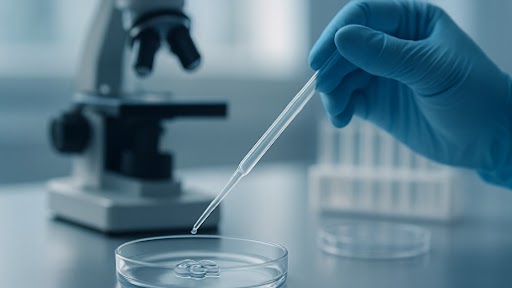
In the area of ART, millions of phylogenetically different sexes have recently become able to wed each other, despite the world explaining why they don't exist. Two of these advancements, which revolutionised ART, In Vitro Fertilization (IVF) and Intrauterine Insemination (IUI), have enabled plenty of people to feel the joy of becoming a parent. These methods were groundbreaking breakthroughs in the history of reproductive medicine, and each successful birth was the result of years of research, experimentation, and scientific innovation.

No doubt, the first successful birth from IVF is one of the most iconic moments in the field of reproductive medicine. This momentous event took place on July 25, 1978, when Louise Brown, the world’s first so-called test-tube baby, was born in the United Kingdom. Louise was conceived outside her mother’s womb and then born at the dawn of a new era in fertility treatments. Her birth in 1978 marked a monumental milestone in reproductive medicine, demonstrating the potential of IVF to revolutionise fertility treatment.
This achievement was pioneered by Dr. Robert Edwards, a British physiologist, and Dr. Patrick Steptoe, a gynaecologist. They had spent years spiralling to come up with the IVF process, which involves fertilizing an egg outside the body and then implanting that resulting embryo into the woman’s uterus. The road to the IVF procedure was extremely rocky, to say the least; there was the inability to fertilize eggs outside the body, and even after initial success in fertilization, they could not conceptively implant their embryos.
However, everything culminated in 1978 with the birth of Louise Brown at the Oldham General Hospital in England. Her birth was not just a medical milestone but also a beacon of hope for millions of couples dealing with infertility. Back then, in vitro fertilization (IVF) was regarded as a last resort for couples unable to conceive naturally. Louise’s birth also demonstrated that assisted reproduction could offer solutions for many individuals facing fertility issues, particularly those with blocked fallopian tubes or male infertility.
Eventually, their work would be recognized with the awarding of the Nobel Prize in Physiology or Medicine in 2010, an honour that acknowledged their groundbreaking work on science and human fertility.

Another comparison is Intrauterine Insemination (IUI), which is the introduction of sperm into the woman's uterus. Unlike in vitro fertilization, or IVF, in which an egg is fertilized outside the body, IUI entails depositing sperm directly in a woman’s uterus to achieve fertilization. IUI is a commonly used method in cases of sperm quality issues, cervical factors, or unexplained infertility, and it is considered less invasive than IVF.
In fact, the first successful birth from IUI (a procedure in which sperm is injected into a woman's uterus) occurred in 1971, seven years before IVF was even possible. The landmark birth was achieved by Dr. Gerald L. Adamson and his associates at the University of California, Irvine. The lady who got pregnant with IUI had struggled with infertility in the past, as her cervical mucous was too inhospitable for sperm to get to the egg.
IUI at the time was revolutionary, as it delivered sperm directly into the uterus and bypassed any issues with the cervix that would hinder natural conception. The sperm had been washed and prepared in a lab to maximize the likelihood of fertilizing an egg. The woman subsequently became pregnant after the procedure and gave birth to a healthy baby, which presents a promising advance in ART as a less invasive alternative for couples experiencing infertility.
In the years after the first live birth from successful IUI, the technique progressed, and IUI emerged as one of the most widely used interventions in the world of fertility clinics. Fast forward to today, and IUI is still commonly used for couples with male infertility, cervical problems, or unexplained infertility and is often paired with fertility medications to improve success rates.
The impact on repoductive medicine through the successful births from IVF and IUI has made it truly revolutionary. The ART revolution created not just new and exciting options for couples struggling with infertility but also the foundation for continued research and technological progress in ART. Therefore, assisted reproductive technologies have become more sophisticated and available over the years, providing a chance for men and women, either alone or together, that they may not otherwise have had the opportunity to have children.
IVF has come a long way since the day Louise Brown was born. Over the years, new techniques like intracytoplasmic sperm injection (ICSI), egg freezing and genetic testing have improved the success rates and customization of IVF. Today, IVF is a standard solution for all sorts of infertility problems, from male infertility to ovulatory disorders to blocked fallopian tubes.
The introduction of fertility drugs for ovulation induction has made IUI more successful. These days, IUI is often performed with the use of controlled ovarian hyperstimulation (COH), where fertility medications stimulate the woman’s body to release several eggs at once to improve the chances of pregnancy.
Both IVF and IUI have gone from experimental treatments to accepted practices that give millions of individuals a shot at building their families. These procedures have also enabled individuals of varying medical backgrounds, including same-sex couples, single individuals and women whose health issues would prevent them from carrying a pregnancy, to experience parenthood.
The increasing use of IVF and IUI also led to important ethical and social debates about reproduction. Disputes over embryo selection, sperm and egg donation, and surrogacy are raising questions about the ethics of assisted reproduction. It is also important to note that advances in genetic testing and gene-editing technologies cause considerable concerns regarding ART in its course and the design of embryos in the future.
Although the ease of access to reproductive technology has brought about these ethical dilemmas in medicine, the implications of IUI and IVF have had on people's lives have been overwhelmingly positive. For a lot of people, these treatments symbolise the culmination of an intense personal and emotional journey, and they’ve allowed people to form families in ways they never thought possible.
The births of those babies through IVF and IUI were landmark moments in reproductive medicine. The birth of Louise Brown in 1978 from IVF characterised a watershed moment that changed the face of fertility treatments, offering hope to millions of couples. In a similar manner, the first successful IUI birth in 1971 (two decades after ICSI was developed) established a less invasive and more accessible alternative for couples grappling with infertility.
Now, IVF and IUI are common methods used in fertility clinics globally, with increasing success rates due to new findings and technologies. These are treatments that have helped thousands of people and couples achieve their dreams of parenthood, completely transforming reproductive medicine. The births through IVF and IUI have been landmark moments, each a milestone in reproductive medicine, changing how the world approaches infertility and parenthood. But as science advances, ART will continue to improve, and new breakthroughs present ever-available opportunities for all looking to construct families.