Home
 ArticlesArticles
Mitochondrial donation, often called three-parent IVF, has now produced the first detailed clinical results, with healthy children born to mothers at high risk of passing on mitochondrial disease. This article explains how the technique works, who it is for, what the evidence shows and which scientific questions remain open



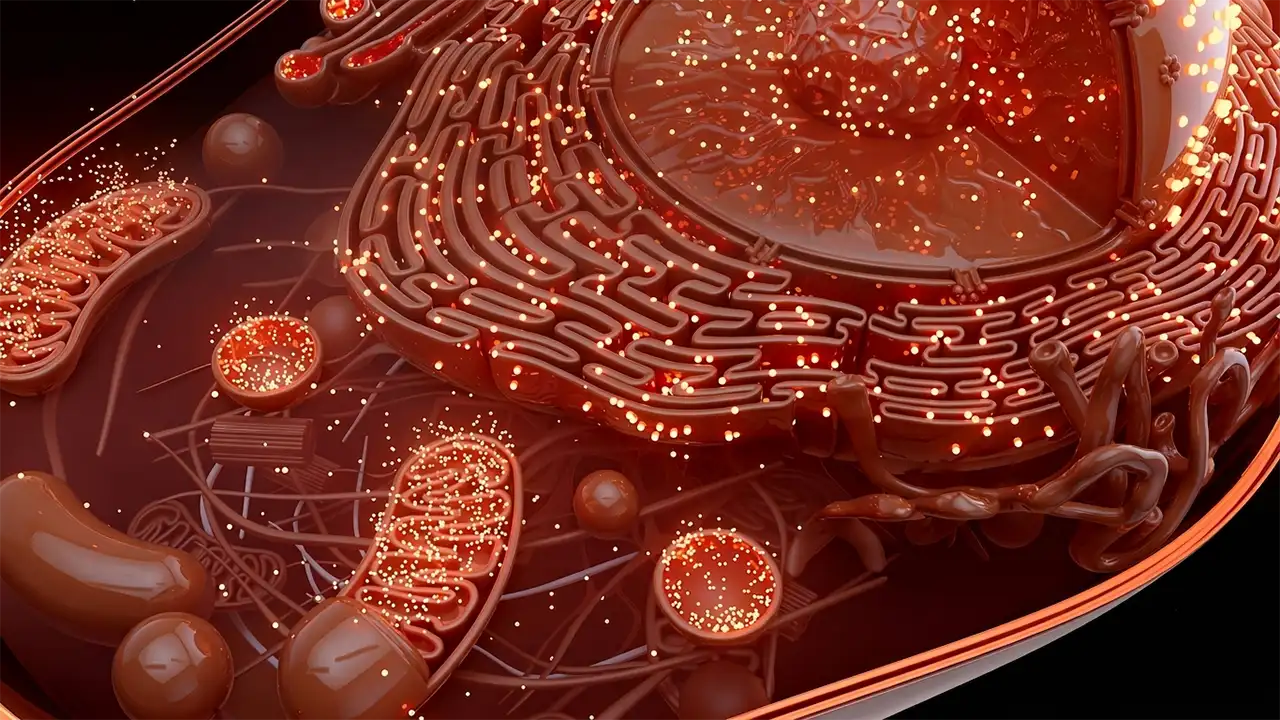
Few inherited conditions are as cruel or as unpredictable as mitochondrial disease. Passed from mother to child, it can damage the organs that need the most energy, including the brain, heart, muscles and liver. Some children are born severely affected; others develop symptoms later in life. For families who carry these mutations, the question of having children has often felt impossible to answer.
Mitochondrial donation was developed to change that. After more than a decade of research, public consultation and legislation, clinicians in Newcastle, United Kingdom, have now published the first detailed outcomes of the technique in the New England Journal of Medicine. Eight children have been born, all healthy and meeting their developmental milestones. It is a landmark moment for reproductive medicine and one that deserves careful explanation.
Mitochondria are tiny structures inside almost every cell that convert nutrients into the energy the body runs on. Unusually, they carry their own small set of DNA, separate from the nuclear DNA that determines traits such as height, eye colour and most of our biology. Mitochondrial DNA contains only a few dozen genes, but those genes are essential for energy production.
Crucially, mitochondria are inherited almost exclusively from the mother, because they come from the egg rather than the sperm. When a woman carries harmful mutations in her mitochondrial DNA, those mutations can pass to her children. Around one in 5,000 births is affected by mitochondrial DNA disease, and there is currently no cure.
The picture is complicated by a phenomenon called heteroplasmy. A woman's eggs may contain a mixture of healthy and mutated mitochondria in varying proportions, so the severity of disease in her children can be difficult to predict. Some women with low levels of mutation can use preimplantation genetic testing to select embryos with minimal mutated DNA. For women with high levels, that option often does not work, and mitochondrial donation may be the only route to a genetically related child without disease.
The Newcastle team primarily used a method called pronuclear transfer. It begins with IVF. The mother's egg is fertilised with her partner's sperm, and a donor egg from a woman with healthy mitochondria is fertilised at the same time. Shortly after fertilisation, each embryo contains two pronuclei, one carrying the mother's nuclear DNA and one carrying the father's.
Using precise micromanipulation, embryologists remove the pronuclei from the mother's fertilised egg and transfer them into the donor's fertilised egg, from which the original pronuclei have been removed. The result is an embryo that carries the parents' nuclear DNA, which shapes the child's characteristics, together with the healthy mitochondria of the donor.
This is why the technique is popularly called three-parent IVF, although that label can be misleading. The donor contributes only mitochondrial DNA, a tiny fraction of the child's total genetic material, and none of the genes that influence appearance or personality. A related approach, maternal spindle transfer, moves the mother's chromosomes before fertilisation instead of after.
The published results describe 22 women carrying disease-causing mitochondrial mutations who underwent pronuclear transfer. This led to eight births, including one set of identical twins, and one ongoing pregnancy at the time of reporting. The children, four boys and four girls, ranged from a few months to more than two years old.
All eight were healthy at birth and are developing normally. None shows signs of mitochondrial disease. In some children, small amounts of the mother's mutated mitochondrial DNA were detected, but at levels the researchers consider very unlikely to cause illness. For families who had watched earlier children or relatives suffer, the significance of these outcomes is hard to overstate.
The United Kingdom became the first country to explicitly permit mitochondrial donation when Parliament changed the law in 2015. Two years later, the Newcastle Fertility Centre became the first and only clinic licensed to perform it, with the first cases approved in 2018.
Access remains tightly controlled. The Human Fertilisation and Embryology Authority assesses every application individually, and treatment is available only to people at very high risk of passing on serious mitochondrial disease. Children born through the programme are followed up over time so that researchers can monitor their health and development.
This cautious, transparent model has drawn international attention. Australia has since introduced legislation to allow mitochondrial donation within a regulated framework, and patient organisations in other countries are watching closely. The debate over how and whether to permit the technique continues in many jurisdictions.
The Newcastle results are encouraging, but they are not the end of the story. One area of active discussion is mitochondrial reversion. During the transfer, a small amount of the mother's mitochondria can be carried over with the pronuclei. In some embryos and cell studies, this small proportion of maternal mitochondrial DNA has been seen to increase over time. If it rose high enough, it could in theory lead to disease, which is the very outcome the procedure aims to prevent.
Researchers are therefore working to reduce carryover further and to understand why reversion happens in some cases and not others. Long-term follow-up of the children will be central to this work. Scientists and ethicists alike have stressed that mitochondrial donation reduces risk substantially but does not guarantee a completely unaffected child, and that families must be counselled on that basis.
There are also wider questions about success rates. Of the women treated, not all achieved a pregnancy, reflecting the realities of IVF as well as the additional demands of the procedure. Refining the technique to improve efficiency without compromising safety is another research priority.
For women who carry serious mitochondrial mutations, mitochondrial donation offers something that did not previously exist: the possibility of a child who is genetically their own and free of the disease that has shaped their family history. It sits alongside other choices, including preimplantation genetic testing, egg donation and adoption, and the right path depends on the specific mutation, its level in the woman's eggs and her personal values.
Any woman considering these options benefits from assessment by a specialist mitochondrial disease team and a clinical geneticist. They can measure mutation levels, explain the likelihood of disease in future children and outline which options are available where she lives. Specialist genetic counselling is essential, because decisions about inherited disease are complex both medically and emotionally.
Will the child look like the donor? No. Physical and personal characteristics are shaped by nuclear DNA, which comes entirely from the intended parents. Is the donor a legal parent? In the United Kingdom, the law is clear that she is not, and donors do not have parental rights or responsibilities. Can the change be passed on? Because mitochondria are inherited through the egg, daughters born through the procedure would pass the donor's mitochondria to their own children, while sons would not. This is one reason the technique has been debated so carefully and why long-term follow-up across generations is considered important. Families are encouraged to raise these questions openly with their clinical team before treatment.
Beyond the families directly affected, three-Parent IVF mitochondrial donation is significant for the whole field of assisted reproduction. It shows how a new technique can move from laboratory research to clinical care through open public debate, clear legislation, independent regulation and careful follow-up. For embryologists, it demonstrates the extraordinary precision now possible in micromanipulation. For policymakers, it offers a working example of how to govern innovation that touches the human germline.
The story of mitochondrial donation is still being written. With each year of follow-up, researchers will learn more about safety, reversion and long-term health. For now, eight healthy children represent a powerful proof that science, handled responsibly, can offer families a future that once seemed out of reach.
Disclaimer: Fertility In shares this information based on published research and material from reliable, recognised sources. The content is intended for general awareness only and should not be taken as medical advice. Anyone with questions about their fertility or who needs medical attention should consult their own doctor or a qualified fertility specialist.
Center for Genetics and Society – Questions that remain after the UK mitochondrial donation results
Science Media Centre Spain – Expert reaction to the NEJM mitochondrial donation results


In vitro gametogenesis, the science of creating eggs and sperm from ordinary body cells, has moved from mouse studies towards human research. This article explains how the approaches work, what recent milestones really show, the obstacles that remain and why clinical use is still likely to be several years away.
A new AI sperm recovery technique is changing the outlook for men with azoospermia. This article explains how the STAR method scans semen samples for rare hidden sperm, what its first reported pregnancy means, who may benefit, and the key questions couples should raise with their own fertility specialist.
Immunotherapy in restoring human fertility is emerging as a promising approach for addressing immune-related reproductive disorders. Recent clinical advances highlight its potential to improve implantation, pregnancy outcomes, and reproductive health, offering renewed hope for patients facing infertility linked to immune system dysfunction.
The smart fertility tracker market has transformed male fertility diagnostics, but how reliable are these devices? This report examines what at-home sperm tests actually measure, where they fall short compared to clinical analysis, and how men and couples can use them appropriately within a broader reproductive care pathway.
The distinct assisted reproductive technologies of Intrauterine Insemination (IUI), In Vitro Fertilization (IVF), and Intracytoplasmic Sperm Injection (ICSI). It outlines how each procedure works, the medical indications for their use, and their respective success rates. The importance of choosing the right treatment based on factors such as patient age, infertility diagnosis, and personal circumstances.
Assisted Reproductive Technology (ART), a groundbreaking medical field that provides solutions for individuals and couples facing fertility challenges. It defines ART, explains its core techniques such as In Vitro Fertilization (IVF) and Intracytoplasmic Sperm Injection (ICSI), and discusses clinical applications and success rates.