Home
 ArticlesArticles
Digital nursing platforms are changing IVF treatment by allowing patients to receive care at home using telemedicine, mobile apps, and remote monitoring, giving them more control, convenience, and access to fertility services while still achieving similar results to traditional care.




The landscape of assisted reproductive technology has undergone a remarkable transformation recently, with digital innovation reshaping how patients access and experience fertility treatment. IVF fertility care at home represents one of the most significant advances in reproductive medicine, offering patients unprecedented convenience, autonomy, and control throughout their treatment journey. As telemedicine platforms, mobile health applications, and remote monitoring devices become increasingly sophisticated, digital nursing has emerged as a powerful enabler of patient empowerment, fundamentally changing the dynamics between healthcare providers and those seeking fertility services.
This shift toward home-based care transcends mere technological convenience. It addresses longstanding barriers to fertility treatment, including geographical distance, time constraints, financial burden, and the emotional toll of frequent clinic visits. Through digital nursing platforms, patients now receive personalized support, real-time guidance, and continuous monitoring without sacrificing the quality of care they would receive in traditional clinical settings. The integration of virtual consultations, at-home medication administration support, and wearable monitoring devices has democratized access to IVF fertility care at home while simultaneously improving patient satisfaction and treatment adherence.
Digital nursing in fertility care encompasses far more than simple video consultations or appointment reminders. It represents a comprehensive ecosystem of interconnected technologies designed to support patients throughout every phase of their IVF journey. The evolution began earnestly during the COVID-19 pandemic when fertility clinics rapidly adopted telehealth solutions to maintain continuity of care amid lockdowns and social distancing requirements. What started as an emergency response has matured into standard practice, with studies demonstrating that telemedicine in assisted reproduction technology yields pregnancy rates comparable to traditional in-person care while achieving patient satisfaction levels exceeding 91%.
Key components of modern digital nursing platforms include:
This approach saves considerable time and expense while allowing patients to engage with their care teams from comfortable, private settings where they may feel more at ease discussing sensitive personal matters. The flexibility inherent in virtual consultations has proven particularly valuable for working professionals, those living in rural or underserved areas, and patients managing complex schedules alongside fertility treatment.
Mobile apps are now essential tools for modern IVF fertility care at home. They turn patients who are not involved in their treatment into active participants. Research demonstrates that mobile health applications significantly enhance both patient knowledge and satisfaction with fertility treatment. In one randomized controlled trial involving 54 IVF patients, those using a dedicated fertility app reported significantly higher satisfaction scores and demonstrated greater knowledge about treatment procedures compared to patients receiving standard care. The app users accessed their platform an average of 57 times throughout their treatment cycle, revealing substantial patient demand for ongoing information and support.
Benefits of fertility mobile applications include:

This psychological dimension of empowerment should not be underestimated, particularly given the emotional vulnerability that often accompanies infertility and fertility treatment. By providing patients with knowledge, tools, and direct communication channels, digital nursing platforms foster autonomy and control that research consistently links to improved health outcomes.
The integration of remote patient monitoring and wearable devices represents another frontier in IVF fertility care at home, enabling continuous tracking of physiological parameters that inform treatment decisions. These technologies allow fertility specialists to monitor hormone levels, ovulation indicators, and treatment responses without requiring patients to present repeatedly for blood draws and ultrasound appointments.
Innovative remote monitoring approaches include:
The benefits of remote monitoring extend beyond convenience:
The convergence of digital nursing, mobile health applications, and remote monitoring has enabled the emergence of comprehensive home-based IVF treatment models that minimize clinic visits while maintaining clinical oversight. Platforms such as Seeds of Innocence's Home IVF in India integrate virtual consultations, customized treatment plans, home-based hormone injections, and diagnostic tracking into unified care pathways that allow patients to complete much of their fertility treatment from home.
Typical home IVF protocols involve:
Clinical evidence supports home-based approaches:
These models specifically address barriers that have historically limited fertility treatment access, including stigma, geographical distance, limited local infrastructure, and financial constraints. By decentralizing the fertility journey, home IVF seeks to make assisted reproduction more adaptable and patient-focused.
While IVF fertility care at home offers substantial benefits, its implementation also raises important challenges that must be addressed to ensure equitable access and appropriate care.
Key challenges include:
Strategies to address these challenges:
The trajectory of digital nursing in fertility treatment points toward increasingly personalized, data-driven, and accessible care models.
Emerging trends and innovations include:

The future of IVF fertility care at home will likely see continued integration of advanced technologies with compassionate, patient-centered nursing care. Success in this evolution requires maintaining focus on patient empowerment as both a means and an end, ensuring that technological innovations serve to enhance rather than diminish the human connections that remain central to fertility treatment.
IVF fertility care at home, enabled by sophisticated digital nursing platforms, represents a paradigm shift in reproductive medicine that places patients at the center of their treatment experience. Through virtual consultations, mobile health applications, remote monitoring technologies, and home-based treatment protocols, digital nursing empowers patients with knowledge, control, autonomy, and convenience previously unavailable in fertility care. The evidence demonstrates that these approaches achieve clinical outcomes equivalent to traditional care while substantially improving patient satisfaction, treatment accessibility, and quality of life during the fertility journey.
As technology continues to advance and healthcare systems adapt to meet evolving patient expectations, IVF fertility care at home will likely become the standard rather than the exception. Success in this transition requires thoughtful attention to equity, privacy, security, and the irreplaceable human elements of care that technology should augment rather than replace. By maintaining focus on patient empowerment as both means and end, digital nursing can fulfill its promise to democratize fertility care, improve outcomes, and support individuals and couples as they navigate one of life's most profound challenges.



Advanced female age causes fertility decline through reduced egg quantity, increased chromosomal abnormalities, and mitochondrial dysfunction. Understanding these biological mechanisms helps women make informed family planning decisions. Modern fertility treatments including IVF, preimplantation genetic testing, and egg freezing offer practical solutions to overcome age-related reproductive challenges when trying to conceive.
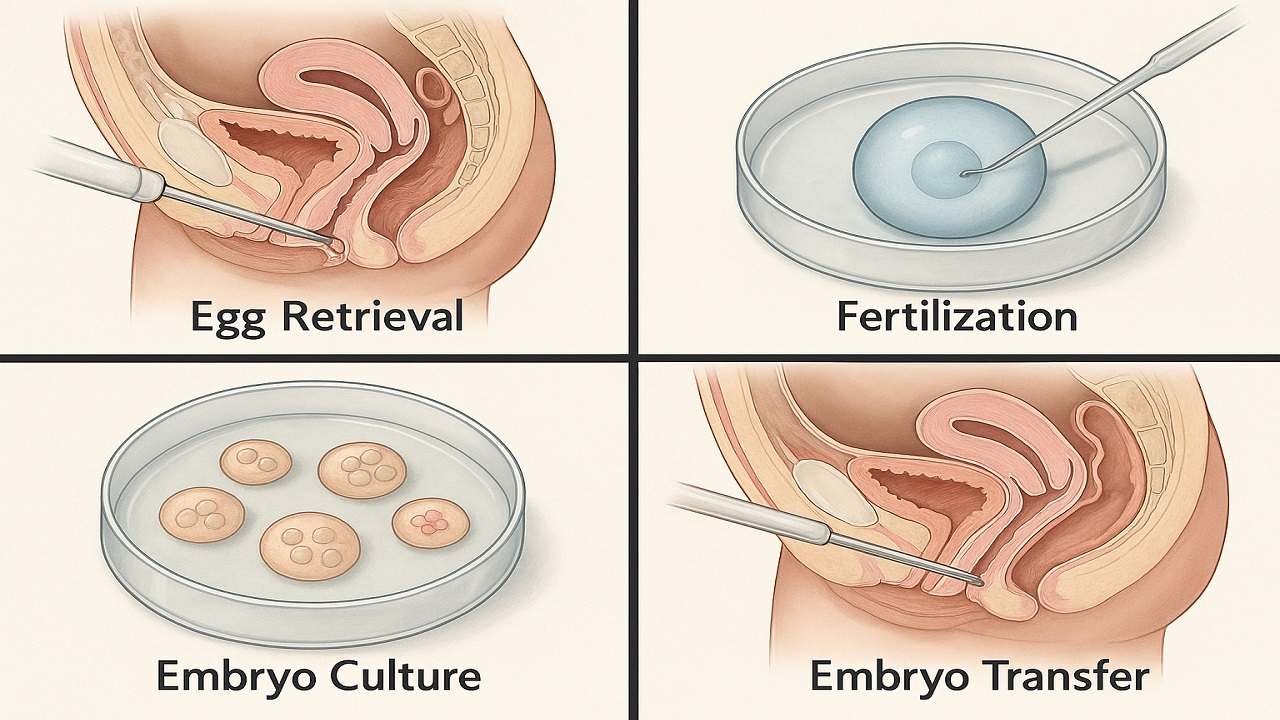
In Vitro Fertilization (IVF) process step by step, emphasising the importance of various stages such as ovarian stimulation, egg retrieval, fertilization, and embryo transfer in maximising the In Vitro Fertilization (IVF) Success Rate. It highlights how a thorough understanding of the procedure can prepare couples and individuals for their In Vitro Fertilization(IVF) journey, ultimately improving their chances of achieving a successful pregnancy.

Vitamin D Deficiency Affect IVF outcomes by influencing endometrial receptivity, embryo quality, and hormone balance. Clinical evidence, age-specific risks, and PCOS implications, while offering actionable strategies to optimize Vitamin D levels and improve IVF success rates and pregnancy outcomes in a structured, patient-focused approach.
Preimplantation Genetic Testing (PGT) revolutionizes IVF by screening embryos for chromosomal abnormalities and genetic disorders before transfer. This advanced technology increases pregnancy success rates, reduces miscarriage risk, prevents inherited diseases, and shortens time to pregnancy while providing diagnostic clarity and reducing emotional stress for couples.

Clinical evidence increasingly demonstrates that emotional stress or grief reduces the chances of IVF success through sophisticated biochemical pathways that directly influence reproductive physiology. This relationship extends far beyond simple correlations, revealing profound mechanistic connections between psychological distress and the delicate orchestration of hormonal events essential for successful conception.

IVF in 2025 is shifting from hype to evidence-based innovation. As precision, automation, AI, and genetic advances reshape fertility care, patients must distinguish proven breakthroughs from outdated add-ons. This guide examines five groundbreaking IVF technologies in 2025 to understand which advances genuinely improve outcomes

Managing Recurrent Implantation Failure (RIF) outlines evidence-based diagnostics and treatment pathways to improve IVF success rates, emphasizing clarity, cautious use of add-ons, and realistic patient expectations.