Home
 ArticlesArticles
In Vitro Fertilization (IVF) insurance and financial options available to individuals and couples, helping to alleviate the financial burden of fertility treatments. It highlights various resources, including state mandates, employer-sponsored coverage, financing plans, and grants, that can make IVF more accessible.




In vitro fertilisation (IVF) is a transformative therapy that enables many individuals and couples to realise their dreams of parenthood. The cost of IVF can be substantial, which may create an overwhelming financial burden for some individuals and couples. Luckily, insurance coverage and financial assistance options are available for affordable IVF so that people who need it can access treatment without compromise.
Understanding the various IVF insurance and financial options available can significantly ease the financial burden of fertility treatments.
One step towards a more accessible IVF experience is understanding how to use insurance coverage to your advantage and help lower the out-of-pocket expense. Like with the types of coverage, IVF insurance coverage varies based on your insurance provider, state, and health plan. Not all insurance plans cover IVF, but many will cover some parts of the fertility treatment process. Here’s a look at whether insurance may cover part of the cost of IVF:
Some states require insurance companies to cover fertility treatments, including IVF by law. But this changes dramatically from state to state, meaning that you should verify whether your state actually has a fertility treatment mandate. States like Massachusetts, New Jersey, and Connecticut, for instance, mandate coverage for certain fertility treatments, including IVF, under certain circumstances.
These state mandates may include the items listed below:
If you live in a state that mandates IVF coverage, your insurance plan may cover a large percentage of your treatment, which could alleviate the overall burden on your costs.
A handful of employer-sponsored insurance plans cover fertility treatment, including IVF. Some companies with robust health plans will offer coverage for IVF, fertility testing, and medications. Such coverage is especially common for larger companies, but make sure to check the specifics of your employer’s health plan to be certain what’s covered.
Some employers may offer fertility benefits as part of their broader wellness programs. These programs may include:
If your company provides these benefits, you can save potentially thousands of dollars on IVF.
Potentially this rule does not apply to people who buy insurance in the health insurance marketplace or through private insurance plans; IVF coverage may still be available to those individuals. In some cases, individual insurance plans may offer coverage for fertility treatments, but the specifics can vary significantly.
While your health insurance plan may not cover IVF, you may be able to claim coverage for other related services such as:
Be sure to read the fine print of your policy and discuss your specific future insurance needs with your insurance company to better understand exactly what’s covered and what’s not.
Exploring IVF insurance and financial options is essential for individuals seeking to manage the costs associated with IVF treatments.

Many fertility clinics have financing options, so patients can pay for IVF treatments over time. Many fertility clinics offer zero- to low-interest IVF financing plans, allowing you to make affordable monthly payments. Some clinics collaborate with companies that specialise in financing for individuals undergoing fertility treatment, ensuring a streamlined and accessible application process.
Here are some financing terms you may encounter:
Other fertility clinics operate on refund programs, under which patients pay a flat fee for a series of IVF cycles. If the patient does not get pregnant, they can still recover some of their treatment costs. These programs are especially valuable for patients who expect to require multiple IVF cycles but want to minimise their out-of-pocket costs.
A typical IVF refund program may provide the following benefits:
Refund programs provide assurance that the financial investment is secure in the event that IVF fails the first time.
Many of these organisations provide grants for IVF and fertility treatment. Such grants are typically need-based, with the intention of making IVF treatments more accessible to individuals or couples who may not otherwise be able to afford it.
Here are a few IVF assistance programs that you just heard about:
These grants can cover part of the cost of IVF and are a valuable resource for those who qualify.
Platforms such as GoFundMe have become increasingly common places to raise money for fertility treatments. Individuals and couples have raised money from friends, family members, and even strangers to pay for IVF costs with great success. We consider crowdfunding Born as a way for patients to tell their story and get support from their network.
Crowdfunding can be time-intensive, but it is a way to gather funds to process IVF if your ability to pay for it in other ways has been limited.
Fertility treatments may be tax-deductible in some instances. The IRS permits deducting certain medical expenses from taxable income if they exceed a threshold (usually 7.5% of adjusted gross income). Fertility treatments, such as IVF, medications, and related procedures, might be considered qualifying medical expenses.
That's why it's a great idea to keep careful track of all fertility-related costs, as these expenses will lower your taxes and allow more money to be spent on other parts of the IVF process.
Although IVF can create a considerable financial burden, multiple insurance policies and financial aid options can help make it more affordable and accessible. State mandates, employer benefits, individual health insurance, financing plans, and fertility grants are just a few of the numerous resources available to help bridge the financial gap for individuals and couples seeking to build their dream family without incurring significant financial burdens.
In other words, one should always explore all options as well as work with fertility clinics and insurance plans that take the patient into consideration before negotiating IVF. When supported well, IVF can become a much less burdensome experience for those who need it. By understanding IVF insurance and financial options, individuals can navigate their paths to parenthood more effectively.



Womb transplantation is giving women with absolute uterine factor infertility the chance to carry and deliver their own child. This article explains how the process works from donor to delivery, who may be suitable, the risks involved and what recent births from living and deceased donors mean for patients.

Advanced female age causes fertility decline through reduced egg quantity, increased chromosomal abnormalities, and mitochondrial dysfunction. Understanding these biological mechanisms helps women make informed family planning decisions. Modern fertility treatments including IVF, preimplantation genetic testing, and egg freezing offer practical solutions to overcome age-related reproductive challenges when trying to conceive.
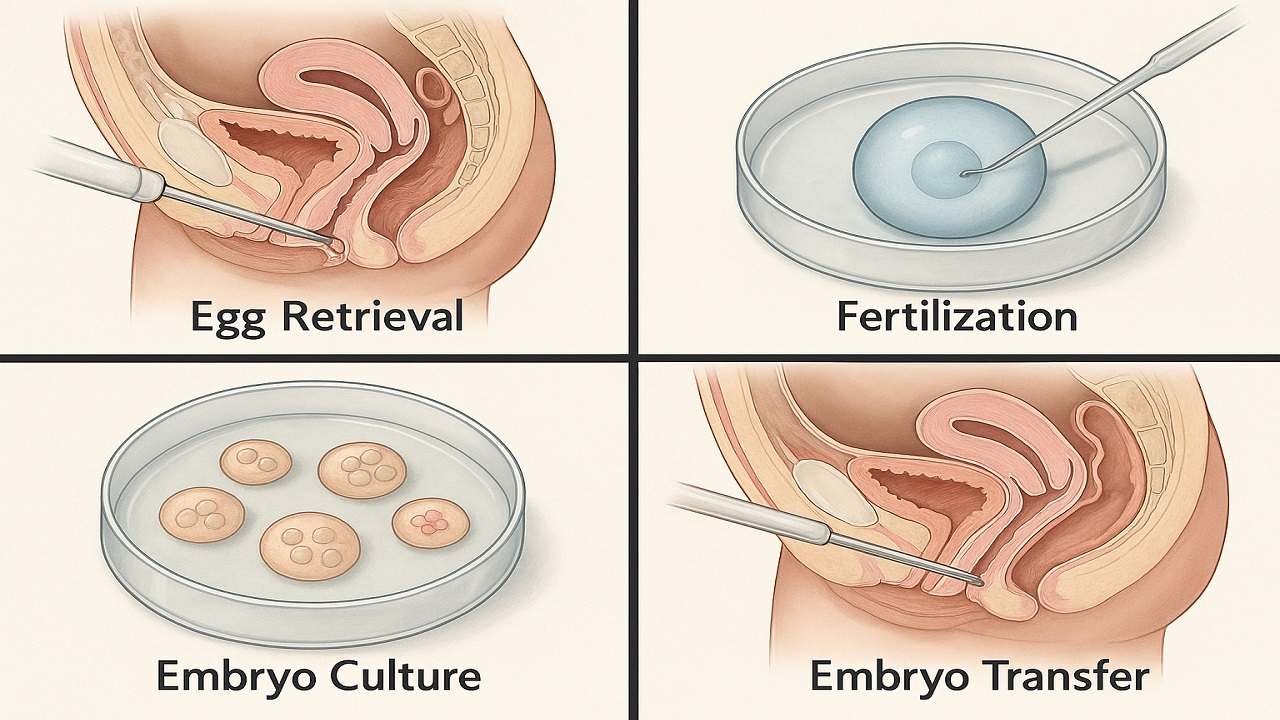
In Vitro Fertilization (IVF) process step by step, emphasising the importance of various stages such as ovarian stimulation, egg retrieval, fertilization, and embryo transfer in maximising the In Vitro Fertilization (IVF) Success Rate. It highlights how a thorough understanding of the procedure can prepare couples and individuals for their In Vitro Fertilization(IVF) journey, ultimately improving their chances of achieving a successful pregnancy.

Vitamin D Deficiency Affect IVF outcomes by influencing endometrial receptivity, embryo quality, and hormone balance. Clinical evidence, age-specific risks, and PCOS implications, while offering actionable strategies to optimize Vitamin D levels and improve IVF success rates and pregnancy outcomes in a structured, patient-focused approach.

Preimplantation Genetic Testing (PGT) revolutionizes IVF by screening embryos for chromosomal abnormalities and genetic disorders before transfer. This advanced technology increases pregnancy success rates, reduces miscarriage risk, prevents inherited diseases, and shortens time to pregnancy while providing diagnostic clarity and reducing emotional stress for couples.

Clinical evidence increasingly demonstrates that emotional stress or grief reduces the chances of IVF success through sophisticated biochemical pathways that directly influence reproductive physiology. This relationship extends far beyond simple correlations, revealing profound mechanistic connections between psychological distress and the delicate orchestration of hormonal events essential for successful conception.

IVF in 2025 is shifting from hype to evidence-based innovation. As precision, automation, AI, and genetic advances reshape fertility care, patients must distinguish proven breakthroughs from outdated add-ons. This guide examines five groundbreaking IVF technologies in 2025 to understand which advances genuinely improve outcomes