Home
 ArticlesArticles
In vitro gametogenesis, the science of creating eggs and sperm from ordinary body cells, has moved from mouse studies towards human research. This article explains how the approaches work, what recent milestones really show, the obstacles that remain and why clinical use is still likely to be several years away.



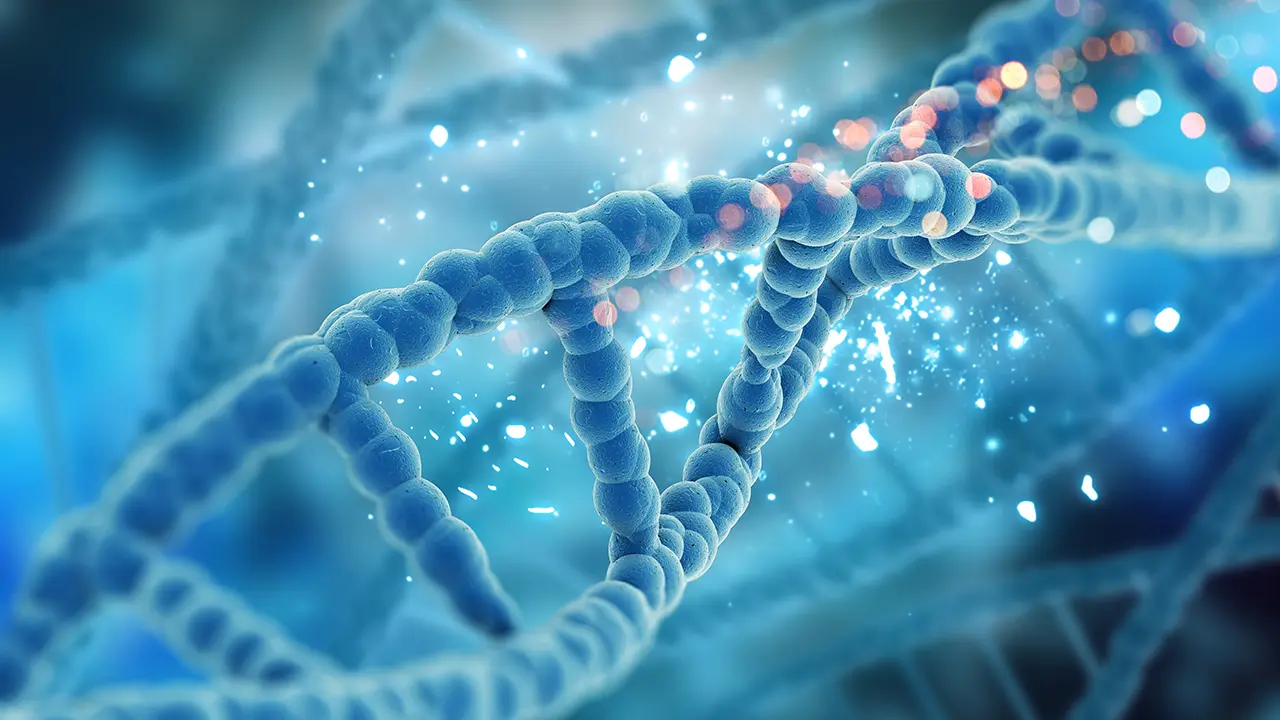
Imagine a future in which a woman who has lost her eggs to cancer treatment or who has reached the end of her reproductive years could have eggs made from a small sample of her own skin or blood. It sounds like science fiction, yet it is the goal of one of the most closely watched research fields in reproductive biology.
The field is called in vitro gametogenesis, or IVG, and it refers to creating gametes, meaning eggs and sperm, outside the body from ordinary cells. Over the past two years, laboratories in the United States and Japan have reported important steps forward. Headlines have sometimes suggested that lab-made babies are around the corner. The reality is more nuanced, and understanding it helps patients, clinicians and the public see both the promise and the distance still to travel.
In natural reproduction, eggs and sperm develop through a long and highly specialised process. Egg development begins before a woman is born and involves meiosis, a unique form of cell division that halves the number of chromosomes from 46 to 23 so that, at fertilisation, egg and sperm together restore the full set. The developing egg also depends on surrounding support cells in the ovary.

In vitro gametogenesis tries to recreate this process in the laboratory. The most widely studied route starts with a body cell, such as a skin or blood cell, which is reprogrammed into an induced pluripotent stem cell. These stem cells can, in principle, become almost any cell type. Scientists then guide them, step by step, through the stages of germ cell development, ideally alongside laboratory-built ovarian or testicular tissue that supports their maturation.
Two recent developments show how the field is advancing along different paths. In late 2025, researchers at Oregon Health & Science University published a proof-of-concept study in Nature Communications using a different strategy. Rather than reprogramming cells into stem cells, they transferred the nucleus of a human skin cell into a donor egg whose own nucleus had been removed. The challenge was that a skin cell carries a full set of chromosomes, twice what an egg needs.
To solve this, the team induced a new type of cell division they named mitomeiosis, which prompted the egg to discard one set of chromosomes. They produced 82 functional eggs and fertilised them with sperm. Only a small proportion developed to the blastocyst stage, and the resulting embryos carried chromosomal abnormalities. The researchers were clear that this is early laboratory work and that clinical use is likely at least a decade away.
In 2026, the California-based company Conception announced it had generated early human egg cells, known as primary oocytes, from stem cells. Starting with a simple blood draw, the team reprogrammed blood cells into stem cells and coaxed them to form miniature ovary-like structures containing developing eggs. These eggs are still immature, and growing them to full maturity remains the next major hurdle.
The central scientific challenge is chromosomes. Eggs must carry exactly the right number of chromosomes, correctly paired and separated during meiosis. Errors in this process are a leading cause of failed implantation and miscarriage even in natural conception. Any in vitro gametogenesis method must reproduce meiosis with extraordinary accuracy before it could be considered safe.
The second challenge is epigenetics. Gametes carry chemical marks on their DNA, including imprints that determine whether certain genes are switched on from the mother's or father's copy. These marks are reset during natural germ cell development. If a laboratory process fails to reset them correctly, the consequences for embryo development and long-term child health could be serious and might not be obvious at first.
Third is maturation. Growing an immature egg to full competence requires months of interaction with supporting cells in a precise hormonal environment. Recreating that environment reliably in the laboratory is a formidable engineering and biological task. Leading scientists have estimated that viable human eggs from IVG may still be several years to a decade away, and even then, extensive safety testing would be needed before any clinical trial.
If in vitro gametogenesis becomes safe and effective, its potential reach is broad. It could help women with premature ovarian insufficiency, those whose eggs were damaged by chemotherapy or radiotherapy, and women of advanced reproductive age who have few or no viable eggs. It could offer men with no sperm production a route to genetic parenthood. It could also allow same-sex couples to have a child genetically related to both partners, a possibility researchers themselves have highlighted.
For today's patients, however, the message is clear. IVG is not an available treatment, and no clinic can offer it. Women concerned about future fertility should continue to rely on proven options such as egg or embryo freezing and should discuss timing with a fertility specialist.
Few areas of reproductive science raise as many ethical questions. If eggs and sperm could be made from any cell, how would consent be protected so that a person's cells could not be used without their knowledge? Should there be limits on who can use the technology, or on the number of embryos that could be created? How would regulators assess safety across generations?
Most countries would need new legislation before IVG-derived gametes could be used in treatment, and some existing laws explicitly restrict fertility treatment to naturally produced eggs and sperm. Bodies such as the United States National Academies of Sciences, Engineering, and Medicine have convened expert workshops to examine the scientific, ethical and regulatory implications well before the technology is ready, an approach many ethicists welcome.
For reproductive specialists, in vitro gametogenesis is a field to follow closely rather than a near-term clinical tool. Its research is already yielding insights into how eggs and sperm develop, why chromosomal errors occur and why some people are infertile. Those insights may improve existing treatments long before lab-made gametes reach the clinic.
For embryologists, the eventual arrival of IVG would transform laboratory practice, raising new standards for testing gamete quality and genetic integrity. Clinics that engage early with the science and the ethics will be better placed to guide patients when questions inevitably arise.
In vitro gametogenesis sits at the frontier of reproductive medicine. The progress of recent years is real and significant, and it has brought a once-unimaginable idea within scientific reach. Yet the path from immature egg cells in a dish to a healthy baby is long, and it must be travelled carefully. For now, the most responsible message for patients is one of informed hope: this is science to watch, not a treatment to wait for.
Disclaimer: FertilityIn shares this information based on published research and material from reliable, recognised sources. The content is intended for general awareness only and should not be taken as medical advice. Anyone with questions about their fertility, or who needs medical attention should consult their own doctor or a qualified fertility specialist.
Reference Sources
Disabled World – Conception grows first early human eggs from stem cells (2026)
Oxford Academic – In Vitro Gametogenesis: Creation of Gametes in a Dish (2026)


Mitochondrial donation, often called three-parent IVF, has now produced the first detailed clinical results, with healthy children born to mothers at high risk of passing on mitochondrial disease. This article explains how the technique works, who it is for, what the evidence shows and which scientific questions remain open
A new AI sperm recovery technique is changing the outlook for men with azoospermia. This article explains how the STAR method scans semen samples for rare hidden sperm, what its first reported pregnancy means, who may benefit, and the key questions couples should raise with their own fertility specialist.
Immunotherapy in restoring human fertility is emerging as a promising approach for addressing immune-related reproductive disorders. Recent clinical advances highlight its potential to improve implantation, pregnancy outcomes, and reproductive health, offering renewed hope for patients facing infertility linked to immune system dysfunction.
The smart fertility tracker market has transformed male fertility diagnostics, but how reliable are these devices? This report examines what at-home sperm tests actually measure, where they fall short compared to clinical analysis, and how men and couples can use them appropriately within a broader reproductive care pathway.
The distinct assisted reproductive technologies of Intrauterine Insemination (IUI), In Vitro Fertilization (IVF), and Intracytoplasmic Sperm Injection (ICSI). It outlines how each procedure works, the medical indications for their use, and their respective success rates. The importance of choosing the right treatment based on factors such as patient age, infertility diagnosis, and personal circumstances.
Assisted Reproductive Technology (ART), a groundbreaking medical field that provides solutions for individuals and couples facing fertility challenges. It defines ART, explains its core techniques such as In Vitro Fertilization (IVF) and Intracytoplasmic Sperm Injection (ICSI), and discusses clinical applications and success rates.