Home
 ArticlesArticles
The cost of the In Vitro Fertilization (IVF) cycle across different countries, highlighting how factors like healthcare systems and government funding affect affordability. From the high cost of the In Vitro Fertilization (IVF) cycle in the USA to affordable options in India, it emphasises the importance of balancing price with quality of care and success rates in fertility treatments.




In vitro fertilization (IVF) is one of the best-known assisted reproductive technologies. But besides the price differences, the cost of the IVF cycle varies across different countries based on country-specific factors such as healthcare systems, medical infrastructure, regional economic conditions, etc. It also covers price ranges of IVF in the USA, UK, India, Australia, and Canada, the structured cost of the IVF cycle, insurance coverage in the USA, UK and Australian countries and other related factors.

Here in the U.S., the cost of the IVF cycle typically ranges anywhere from $12,000 to $25,000, with medications often adding another $3,000 to $5,000. IVF in the U.S. can be one of the world’s priciest options, and though a handful of insurance plans include IVF coverage, many people are left to cover high out-of-pocket costs. You might get better coverage depending on your state and clinic, and financing options exist, but the overall cost is still high. Success rates differ widely by clinic, and many couples struggle financially because of the high costs involved in multiple rounds of IVF.
The cost of the IVF cycle is also cheaper in the United Kingdom than in the U.S., where private clinics charge £5,000 to £8,000 (about $6,500 to $10,500) per cycle. The UK’s National Health Service (NHS) offers free IVF treatments to eligible patients as well. But there are strict criteria for access to NHS-funded IVF, including age limits, medical conditions, and the number of cycles previously attempted. Consequently, many people choose private clinics to escape lengthy waiting lists for the NHS, especially if they don't meet eligibility criteria.
India is the most visited country for fertility tourism because the cost of the IVF cycle is only $1,200 to $3,000 in India. The price remains low even with high-quality medical care, making it reasonable for patients coming from countries where IVF procedures are expensive. With the introduction of various cutting-edge technologies, India has become the destination for IVF treatment at a fraction of the cost compared to Western countries with experienced IVF specialists. Although insurance rarely covers IVF in India, its affordability makes it appealing to many.
The average cost per cycle of IVF in Australia is between AUD $9,000 to $12,000 (or USD $6,000 to USD $8,000). It’s not as expensive as the U.S., but it remains a heavy financial cost. The Australian government offers no subsidies for IVF treatments but provides partial subsidisation and rebates, which reduces the financial burden on patients to some extent. However, due to the high standard of care and an abundance of government funding, IVF in Australia remains relatively balanced, as medications and further procedures can add onto these costs.
The cost of the IVF cycles is anywhere from around $8,000 to $15,000 CAD ($6,000 to $11,000 USD) in Canada. Cost varies by province, with some provinces providing partial funding or rebates for fertility treatment. However, comprehensive government-funded IVF is not universally accessible, resulting in substantial out-of-pocket expenses for patients. Although the Canadian healthcare system offers universal coverage for various services, fertility treatments usually fall outside of this coverage, prompting many couples to seek financing or private insurance.
The cost of the IVF cycle varies from country to country, with the USA being the most expensive and India having the most economical treatment options. In contrast, countries like the UK and Australia have relatively moderate drug prices due to some level of government support or insurance coverage that can facilitate cost sharing for patients. IVF prices in Canada are similar to those in Australia, but government funding availability differs by province.
When selecting where to have treatment for IVF, cost isn't the only factor to consider, with success rates, quality of care, and eligibility for insurance or government help also playing a role. Before proceeding in adopting a course of action, patients need to research and weigh the financial considerations and consult with fertility specialists to find the strategy that makes the most sense based on their needs.
And for those who are unable to afford the exorbitant costs associated with IVF, we are also seeing fertility tourism as a real possibility, with accredited hospitals and care available at a fraction of the cost, including in India, where options for IVF have been deemed affordable without compromising on the quality of care. The price for such a procedure may be adjusted here and there, but if quality is missing, any such negotiation is not worth it at all.



Womb transplantation is giving women with absolute uterine factor infertility the chance to carry and deliver their own child. This article explains how the process works from donor to delivery, who may be suitable, the risks involved and what recent births from living and deceased donors mean for patients.

Advanced female age causes fertility decline through reduced egg quantity, increased chromosomal abnormalities, and mitochondrial dysfunction. Understanding these biological mechanisms helps women make informed family planning decisions. Modern fertility treatments including IVF, preimplantation genetic testing, and egg freezing offer practical solutions to overcome age-related reproductive challenges when trying to conceive.
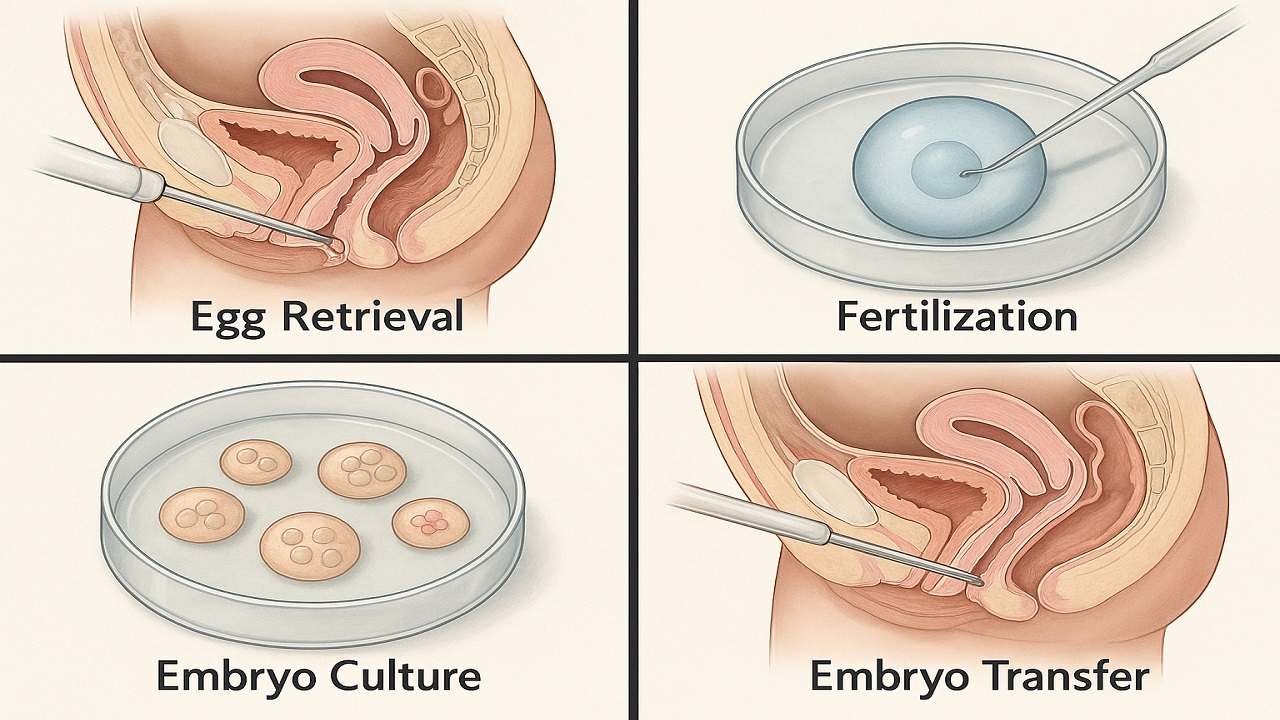
In Vitro Fertilization (IVF) process step by step, emphasising the importance of various stages such as ovarian stimulation, egg retrieval, fertilization, and embryo transfer in maximising the In Vitro Fertilization (IVF) Success Rate. It highlights how a thorough understanding of the procedure can prepare couples and individuals for their In Vitro Fertilization(IVF) journey, ultimately improving their chances of achieving a successful pregnancy.

Vitamin D Deficiency Affect IVF outcomes by influencing endometrial receptivity, embryo quality, and hormone balance. Clinical evidence, age-specific risks, and PCOS implications, while offering actionable strategies to optimize Vitamin D levels and improve IVF success rates and pregnancy outcomes in a structured, patient-focused approach.

Preimplantation Genetic Testing (PGT) revolutionizes IVF by screening embryos for chromosomal abnormalities and genetic disorders before transfer. This advanced technology increases pregnancy success rates, reduces miscarriage risk, prevents inherited diseases, and shortens time to pregnancy while providing diagnostic clarity and reducing emotional stress for couples.

Clinical evidence increasingly demonstrates that emotional stress or grief reduces the chances of IVF success through sophisticated biochemical pathways that directly influence reproductive physiology. This relationship extends far beyond simple correlations, revealing profound mechanistic connections between psychological distress and the delicate orchestration of hormonal events essential for successful conception.

IVF in 2025 is shifting from hype to evidence-based innovation. As precision, automation, AI, and genetic advances reshape fertility care, patients must distinguish proven breakthroughs from outdated add-ons. This guide examines five groundbreaking IVF technologies in 2025 to understand which advances genuinely improve outcomes