Home

arrow iconArticlesarrow iconarrow icon

ICSI vs Traditional IVF - Key Differences 

ICSI vs Traditional IVF - Key Differences 

Effective infertility treatment methods, comparing Intracytoplasmic Sperm Injection (ICSI) and traditional In Vitro Fertilization (IVF). It highlights how both techniques address male infertility and their unique advantages, helping couples make informed decisions on their fertility journey.

By FertilityIn

25 Oct 2025

6 min read

 ICSI vs IVF

ICSI vs IVF

Differences between ICSI and Traditional IVF

Assisted reproductive technologies are a widely used method to treat infertility, with both Intracytoplasmic Sperm Injection (ICSI) and traditional In Vitro Fertilization (IVF) recognized as effective infertility treatment methods. Both procedures are intended to assist couples who are having difficulty conceiving, but they differ in their methods of fertilization. Grasping these differences is key to couples weighing fertility treatments and aiding them in the best decision for their specific situation. Let’s examine ICSI and traditional IVF more closely and discuss their main differences. 


What is Traditional IVF? 

In vitro fertilization (IVF), often referred to as traditional IVF, is the most recognized and effective method for treating fertility issues. In the process, eggs from the woman are retrieved following ovarian stimulation, and sperm is obtained from the male partner or a donor. The sperm and eggs are then mixed together in a laboratory dish, allowing fertilization to happen naturally. The embryos created are watched as they grow, and a few days later, the best ones are chosen and put into the woman’s uterus. 


What is ICSI? 

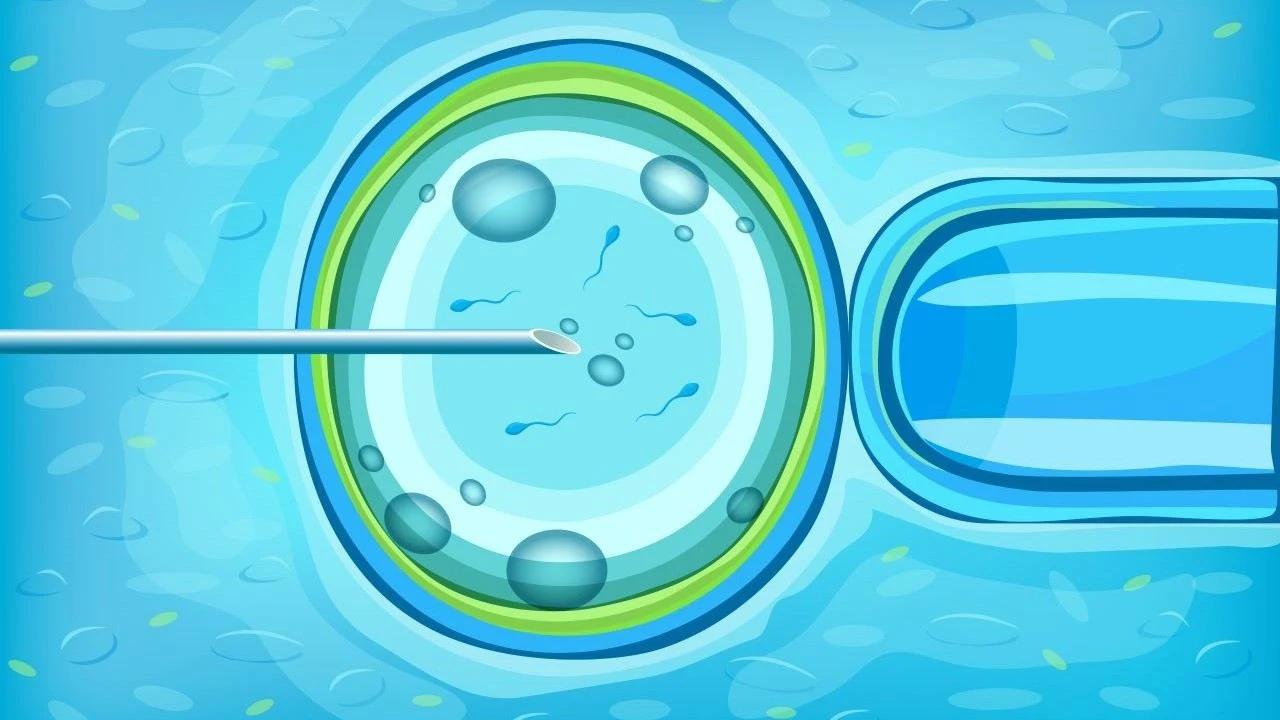
ICSI refers to Intracytoplasmic Sperm Injection, which is a more advanced form of IVF. The big difference with ICSI is how sperm and eggs are combined. In ICSI, a single healthy sperm is injected into an egg via a fine needle instead of allowing a sperm to fertilize the egg naturally. Accordingly, this method is particularly helpful in situations of male infertility, such as when there is a low sperm count, poor sperm motility, or concerns over morphology. 


ICSI vs Traditional IVF: Key Differences 

ICSI, as a more advanced form of IVF, is considered an effective infertility treatment method for cases of male-factor infertility. Picture


Fertilization Method 

  • In the process of IVF, fertilization occurs naturally by placing sperm close to the egg in a laboratory. The sperm must be able to swim forward and penetrate the egg by itself. This process depends on the sperm's natural ability to swim and fertilize the egg. 
  • Intracytoplasmic sperm injection (ICSI): A single sperm is injected directly into the egg in ICSI. This eliminates the need for the sperm to swim or penetrate the egg itself, which is ideal in situations where male fertility is impaired. 


Indication for Use 

  • IVF: Because IVF is performed on women, it is traditionally utilised when there are problems with the woman’s fertility (i.e., blocked fallopian tubes or ovulatory problems), but male infertility can also impact IVF. But there is still hope; as long as there's sufficient healthy sperm for fertilization, IVF can still succeed even if the quality is sub-par. 
  • ICSI: ICSI is especially useful in cases of male factor infertility, when there is low sperm quality or quantity. It is also used if sperm is extracted from the testes in azoospermia (none in the ejaculate) or if sperm cannot efficiently fertilize an egg naturally. 


Sperm Quality and Quantity 

  • Conventional IVF: Normal sperm motility and shape are required for fertilization in conventional IVF. While sperm with low motility or abnormal shape can occasionally fertilize an egg, excessive quality issues may prevent successful fertilization. 
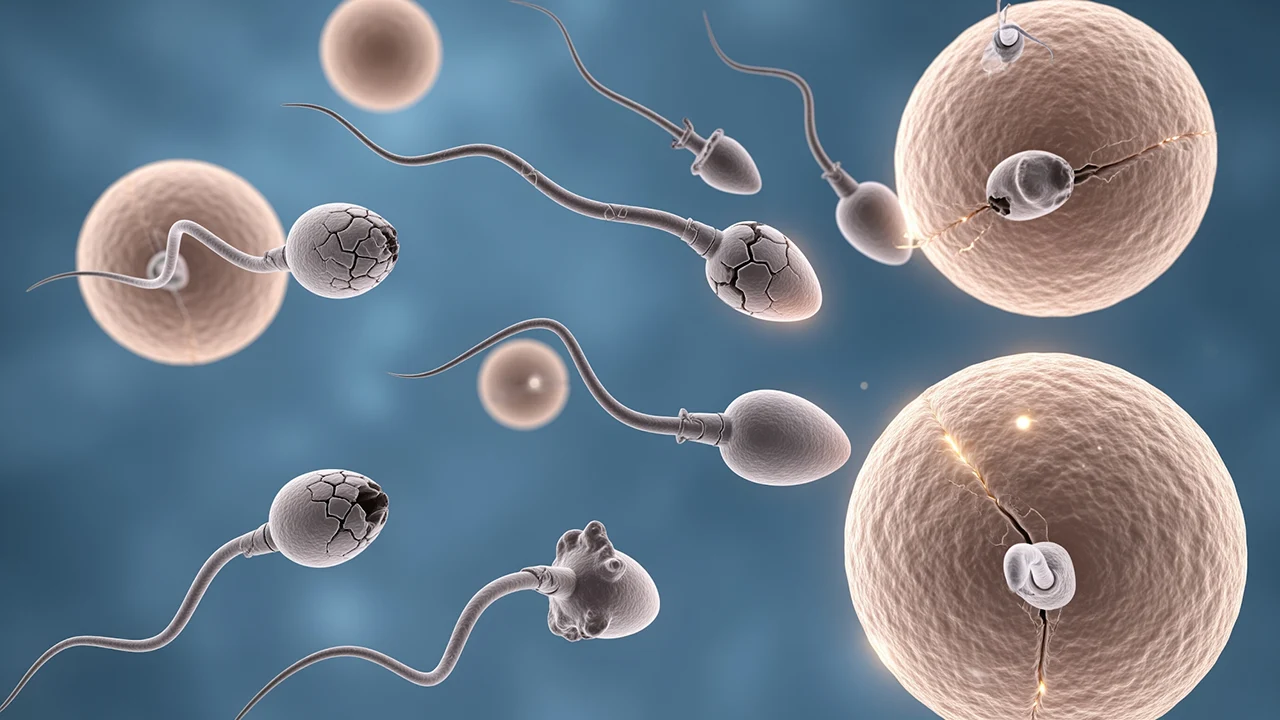
  • ICSI: One of ICSI's main benefits is that it can still work when sperm have low motility, are abnormally shaped, or are in low numbers. ICSI enables the selection of the ideal sperm, with subsequent direct injection of the sperm into the egg, thereby sidestepping natural barriers to fertilization. 


Micromanipulation of Sperm 

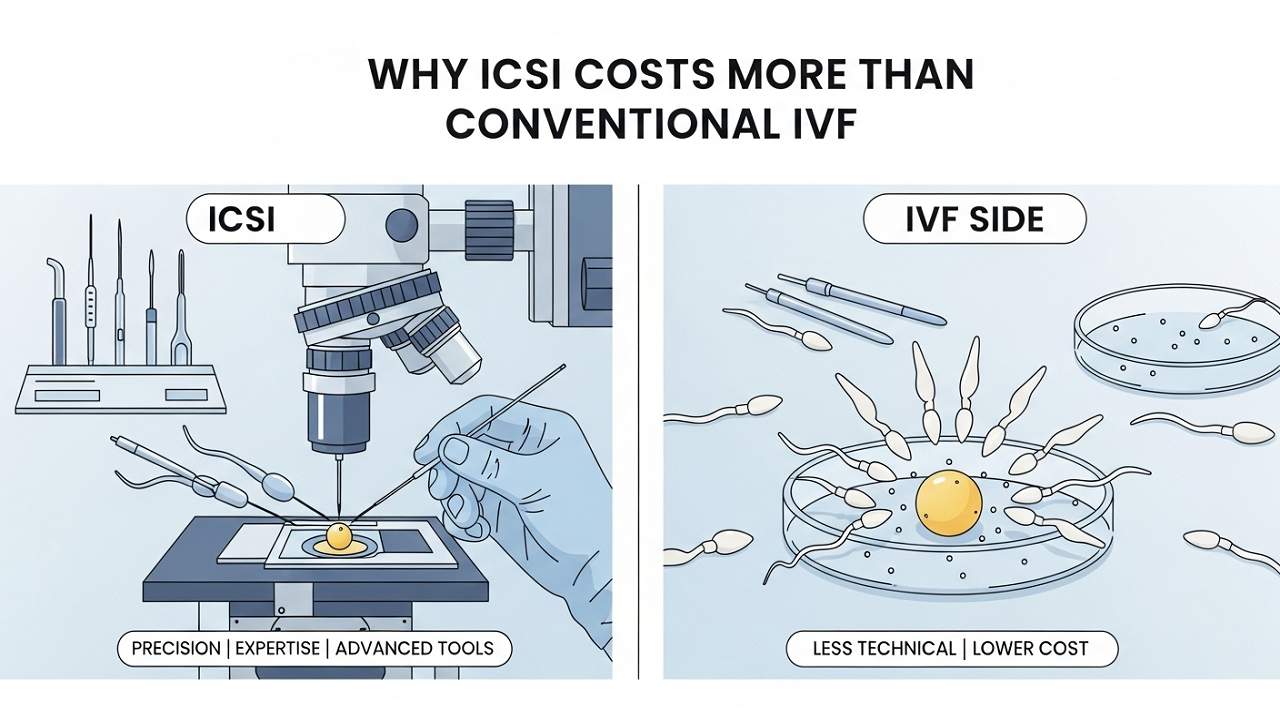
  • Conventional IVF: The micromanipulation of sperm is not needed for IVF. The sperm is just put in a petri dish along with the egg, and fertilization happens naturally. 
  • ICSI: ICSI involves more advanced micromanipulation, where a single sperm is injected directly into the egg using a microscopic needle. This is a very accurate method but requires specialist lab personnel and equipment. 


Success Rates 

  • IVF: IVF success rates are generally excellent, especially for couples with female infertility problems. The success rate varies with the woman's age and the egg and sperm quality. 
  • ICSI: Also provides high success rates, especially in male infertility cases. It is a type of assisted reproductive technology (ART) where sperm is injected directly into the egg, so it guarantees fertilization regardless of male fertility problems. If the male partner is producing normal-quality sperm, then ICSI may not be needed. 


Cost and Complexity 

  • Traditional IVF: IVF is costly because of the drugs used to stimulate the ovaries and the transfer of embryos and retrieval of eggs. ICSI is also more time-consuming than traditional IVF due to micromanipulating sperm. 
  • ICSI: This test is usually more expensive than traditional IVF, because, in ICSI, the sperm are micromanipulated and injected into the egg. Moreover, the specialised equipment and expertise needed contribute to the procedure's total cost. 


Embryo Development Monitoring 

  • Traditional IVF: With traditional IVF, after fertilization, embryos are watched throughout their development. If fertilization occurs, the embryos are cultured for several days, and the best embryos are selected for transfer. 
  • ICSI: The monitoring of embryo development is analogous to this in a traditional IVF cycle. In ICSI, however, fertilization is ensured; thus, we focus on selecting the best embryo(s) for transfer, with fewer concerns of fertilisation failure.


Risk of Genetic Issues 

  • Traditional IVF: IVF fertilization depends on the sperm being able to fertilise the egg, so if sperm have genetic problems, there is cause for concern. For inherited genetic disease conditions, many clinics now have genetic screening methods available, including PGT (Preimplantation Genetic Testing). 
  • ICSI: Sometimes, ICSI is used in association with genetic screening for male infertility problems if the sperm is suspected to be genetically abnormal. Because the sperm is injected directly into the egg, they will take the best candidate, so it's important to be careful with sperm selection to reduce the chances of genetic problems being passed on. 

Which Treatment is Right for You?

The decision to perform traditional IVF or ICSI is based mainly on the cause of infertility. For women with problems of egg production, blocked fallopian tubes, or endometriosis, conventional IVF might be the more suitable choice. On the other hand, ICSI is especially good for low sperm count (oligozoospermia), poor motility (asthenozoospermia) or any structural sperm problems. 


Your fertility specialist will evaluate both partners' reproductive health and determine the best approach on a case-by-case basis. 


Conclusion 

ICSI and traditional IVF both stand out as effective infertility treatment methods, each offering targeted solutions to different causes of infertility. Although traditional IVF is the standard treatment for many couples, ICSI represents a critical option for couples with male infertility problems. The difference is in the process of fertilization. ICSI represents a more targeted and potent solution for male fertility issues. Every treatment has its benefits, but with the help of a fertility specialist, couples can navigate the best route to their family. 

29 views

Share

FertilityIn

Send Enquiry for this Story

Related Articles

What is ICSI? Understanding Intracytoplasmic Sperm Injection for Infertility

What is ICSI? Understanding Intracytoplasmic Sperm Injection for Infertility

ICSI (Intracytoplasmic Sperm Injection) is an advanced fertility treatment where a single sperm is injected directly into an egg. This procedure helps couples overcome male infertility challenges like low sperm count or poor motility, offering hope for biological parenthood when conventional IVF methods aren't successful.

ICSI

1 min read

Why ICSI is More Expensive Than Traditional IVF

Why ICSI is More Expensive Than Traditional IVF

The Intracytoplasmic Sperm Injection (ICSI) procedure, where a single sperm cell is injected directly into an egg, a specialized form of In Vitro Fertilization (IVF), is typically more costly due to its complexity, requiring skilled embryologists and specialized equipment. It is particularly beneficial for couples facing male infertility issues, as it increases the chances of fertilization and successful pregnancies.

ICSI

1 min read

Mental Health During Fertility Treatments: How to Cope with Stress, Failure, and Hope

Mental Health During Fertility Treatments: How to Cope with Stress, Failure, and Hope

Mental health during fertility treatments is vital to cope with stress, anxiety, and emotional ups and downs. By focusing on self-care, resilience, and fostering hope, individuals can navigate challenges and maintain their mental health during fertility treatments while building a positive outlook for their fertility journey.

ICSI

1 min read

How ICSI Overcomes Male Infertility Challenges

How ICSI Overcomes Male Infertility Challenges

The innovative solution of Intracytoplasmic Sperm Injection (ICSI), designed to tackle male infertility challenges such as low sperm count and poor motility. ICSI creates new opportunities for couples who are eager to start a family by directly injecting a single sperm into an egg. Discover how this groundbreaking technique is transforming the landscape of reproductive medicine and offering hope to those facing infertility.
ICSI

1 min read

The History of Intracytoplasmic Sperm Injection (ICSI) and Its Inception in the 1990s

The History of Intracytoplasmic Sperm Injection (ICSI) and Its Inception in the 1990s

The history and inception of Intracytoplasmic Sperm Injection (ICSI) began with early advancements in micromanipulation, leading to its first successful use in the 1990s to treat male infertility. The history and inception of ICSI revolutionized assisted reproduction, offering hope to couples by enabling fertilization even in cases of severe sperm-related challenges.

ICSI

1 min read

How IVF and ICSI Address Male Infertility Factors

How IVF and ICSI Address Male Infertility Factors

In Vitro Fertilization (IVF) and Intracytoplasmic Sperm Injection (ICSI) treat male infertility factors, highlighting their effectiveness in addressing issues such as low sperm count, poor motility, and blockages in the reproductive tract. By utilizing advanced reproductive technologies like IVF and ICSI, many men have overcome infertility challenges, providing hope for successful pregnancies for couples struggling to conceive.

ICSI

1 min read

How ICSI Changed the Treatment of Male Infertility

How ICSI Changed the Treatment of Male Infertility

Intracytoplasmic Sperm Injection (ICSI) has transformed Male Infertility Treatment, enabling men with severe fertility issues to conceive biological children. By allowing even the weakest sperm to fertilize an egg, ICSI has significantly improved success rates in Male Infertility Treatment and provided new hope for couples facing infertility challenges.
ICSI

1 min read

Landing Page Image

Subscribe to our Newsletter

Stay updated with the latest news, expert insights, and exclusive offers delivered straight to your inbox. Join our community today!

Email Address