Home
 ArticlesArticles
IVF in 2025 is shifting from hype to evidence-based innovation. As precision, automation, AI, and genetic advances reshape fertility care, patients must distinguish proven breakthroughs from outdated add-ons. This guide examines five groundbreaking IVF technologies in 2025 to understand which advances genuinely improve outcomes



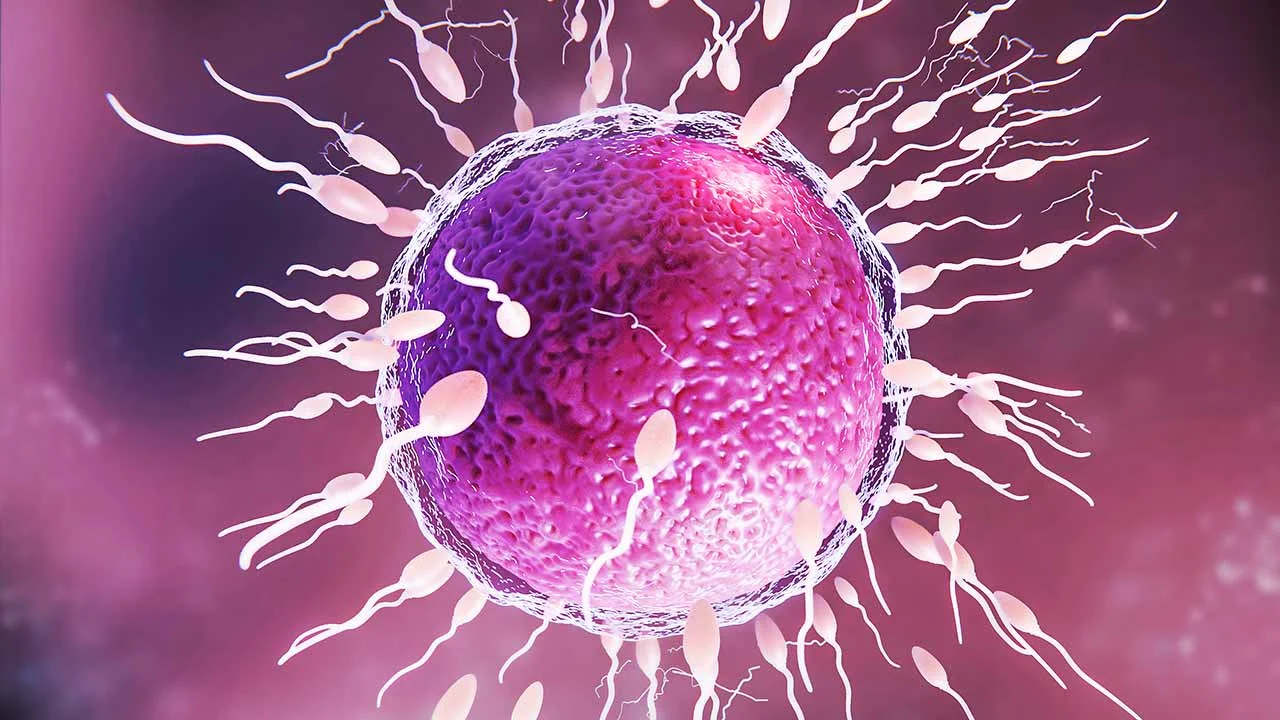
The journey to parenthood is often paved with hope, resilience, and an endless search for answers. If you are navigating the complex world of assisted reproductive technology (ART), you likely feel the tension between the desire for the "latest and greatest" and the need for treatments that actually work. As we move through 2025, the fertility landscape is experiencing a seismic shift. We are moving beyond standard protocols into an era defined by precision, automation, and biological reprogramming.
But with rapid innovation comes a critical question: Which of these groundbreaking IVF technologies 2025 offer real hope, and which are merely hype? This analysis cuts through the headlines to examine the evidence behind the five most transformative advancements shaping reproductive medicine today.
For decades, the success of an IVF cycle hinged on the subjective eye of a skilled embryologist. They would examine embryos under a microscope, grading them based on appearance. While effective, this method has limits. Enter Artificial Intelligence (AI).
New AI systems, such as BELA and DeepEmbryo, are not just "looking" at embryos; they are analyzing them with a depth of data humanly impossible to process. By training on millions of images and time-lapse videos, these algorithms detect subtle patterns, metabolic shifts, division timing, and morphological nuances that predict viability with startling accuracy.

As the chart above illustrates, the gap in predictive power is widening. In recent systematic reviews, AI models achieved an accuracy of 81.5% in predicting clinical pregnancy, significantly outperforming the 51% accuracy of a standard human assessment. This isn't about replacing embryologists; it is about empowering them with a tool that acts as a "second opinion" rooted in massive datasets, ultimately aiming to shorten your time to pregnancy.
Preimplantation Genetic Testing for Aneuploidy (PGT-A) has become a staple in IVF, used to screen embryos for chromosomal abnormalities. However, it requires a biopsy, removing cells from the embryo, which carries a small risk and high cost. The frontier is shifting toward Non-Invasive PGT (niPGT).
Embryos naturally release small amounts of DNA into the liquid they grow in. niPGT analyzes this "cell-free" DNA, potentially offering a genetic profile without ever touching the embryo. While early versions struggled with accuracy, 2025 has seen major leaps. New amplification methods are pushing concordance rates higher, aiming to make genetic screening safer and more accessible.
Not all innovations endure over time. A crucial part of modern fertility care is recognizing when a technology does not deliver on its promise. Two high-profile "add-ons," Endometrial Receptivity Analysis (ERA) and Ovarian Rejuvenation (PRP), are currently facing intense scientific scrutiny.
For years, the ERA test promised to find the perfect "window of implantation" for embryo transfer. However, rigorous randomized controlled trials (RCTs) have upended this theory.
Recent re-analysis of high-quality data has shown that for many patients, specifically those with Recurrent Implantation Failure, altering transfer timing based on ERA results didn't just fail to help; it may have hindered success. The data suggest a 13% relative reduction in live birth rates for personalized transfers compared to standard protocols. This serves as a powerful reminder: in fertility treatment, "more" intervention is not always "better."
Similarly, Platelet-Rich Plasma (PRP) injections into the ovaries were heralded as a way to "turn back the clock" for women with diminished ovarian reserve. Nevertheless, 2024-2025 RCTs have shown that while PRP might temporarily boost hormonal markers, it has not translated into the metric that matters most: live birth rates.
If AI is the evolution of IVF, IVG is the revolution. In Vitro Gametogenesis is the science of creating eggs and sperm from ordinary cells, like skin or blood cells.

While currently experimental and largely limited to mouse models (where researchers have successfully created offspring from two male mice), the implications for humans are profound. In the future, this could allow same-sex couples to have biologically related children and offer options for women who have depleted their ovarian reserve.
Finally, the physical lab itself is changing. We are seeing the rise of automated vitrification (freezing) systems and microfluidic chips for sperm sorting. These technologies minimize human variation and reduce stress on gametes. By creating a stable, undisturbed environment for embryos, automation ensures that every cycle is performed with the highest possible consistency.
The era of groundbreaking IVF technologies in 2025 is characterized by a mature, data-driven approach. We are moving away from unproven "add-ons" and toward innovations like AI and niPGT that address the core biological hurdles of reproduction.
For you as a patient, the change means the conversation with your specialist should shift. Ask not just "what is new," but "what is proven." By focusing on technologies backed by robust evidence, you can navigate this exciting frontier with confidence, optimizing your path to the family you’ve always dreamed of.



Advanced female age causes fertility decline through reduced egg quantity, increased chromosomal abnormalities, and mitochondrial dysfunction. Understanding these biological mechanisms helps women make informed family planning decisions. Modern fertility treatments including IVF, preimplantation genetic testing, and egg freezing offer practical solutions to overcome age-related reproductive challenges when trying to conceive.
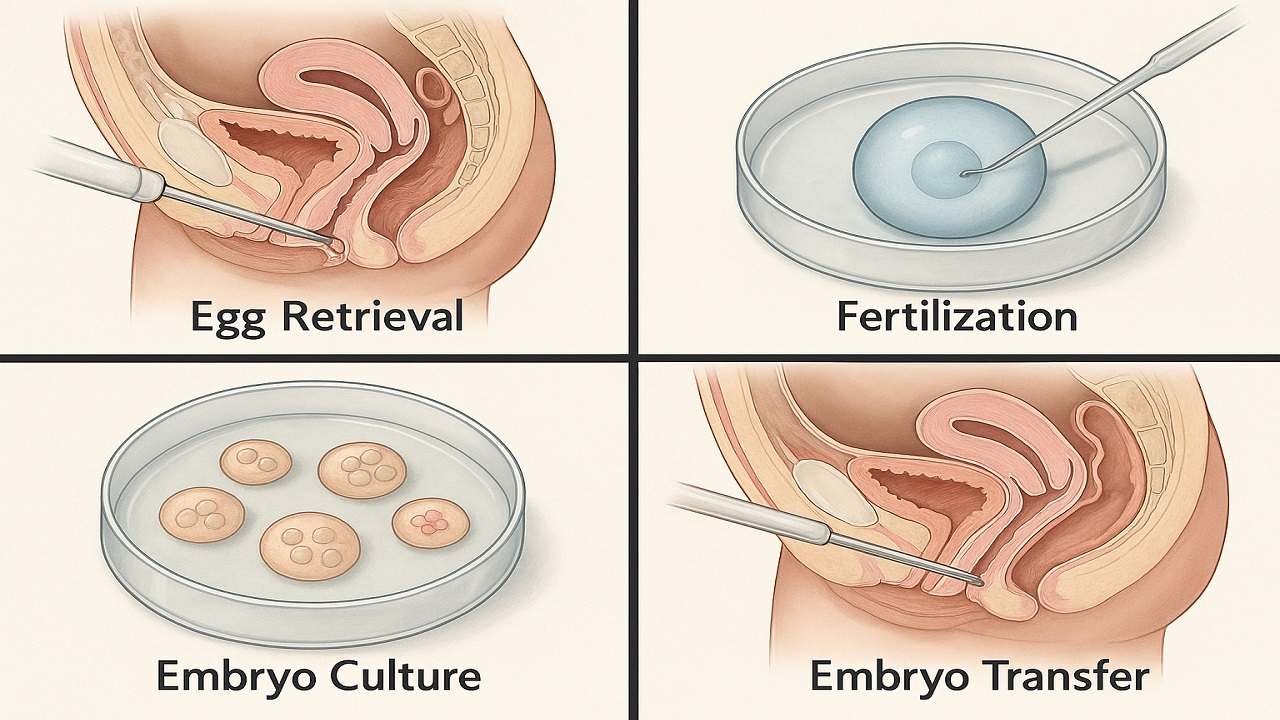
In Vitro Fertilization (IVF) process step by step, emphasising the importance of various stages such as ovarian stimulation, egg retrieval, fertilization, and embryo transfer in maximising the In Vitro Fertilization (IVF) Success Rate. It highlights how a thorough understanding of the procedure can prepare couples and individuals for their In Vitro Fertilization(IVF) journey, ultimately improving their chances of achieving a successful pregnancy.

Vitamin D Deficiency Affect IVF outcomes by influencing endometrial receptivity, embryo quality, and hormone balance. Clinical evidence, age-specific risks, and PCOS implications, while offering actionable strategies to optimize Vitamin D levels and improve IVF success rates and pregnancy outcomes in a structured, patient-focused approach.
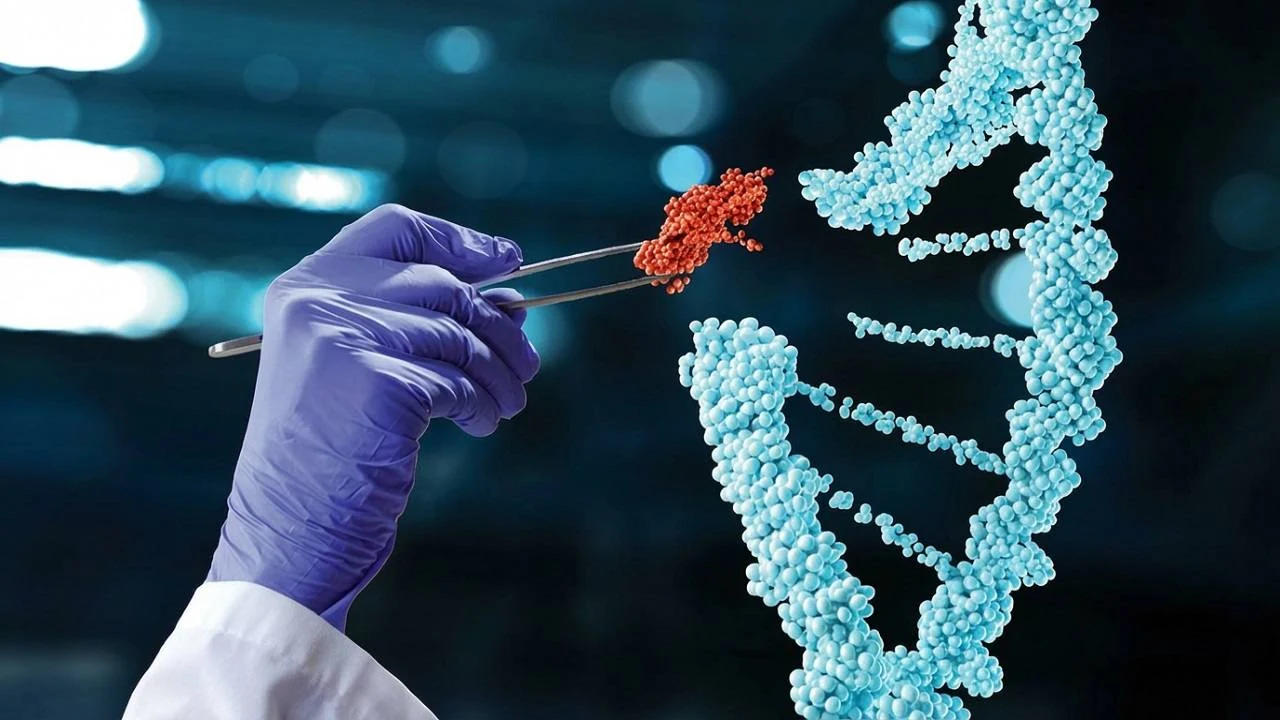
Preimplantation Genetic Testing (PGT) revolutionizes IVF by screening embryos for chromosomal abnormalities and genetic disorders before transfer. This advanced technology increases pregnancy success rates, reduces miscarriage risk, prevents inherited diseases, and shortens time to pregnancy while providing diagnostic clarity and reducing emotional stress for couples.

Clinical evidence increasingly demonstrates that emotional stress or grief reduces the chances of IVF success through sophisticated biochemical pathways that directly influence reproductive physiology. This relationship extends far beyond simple correlations, revealing profound mechanistic connections between psychological distress and the delicate orchestration of hormonal events essential for successful conception.

Managing Recurrent Implantation Failure (RIF) outlines evidence-based diagnostics and treatment pathways to improve IVF success rates, emphasizing clarity, cautious use of add-ons, and realistic patient expectations.