Home
 ArticlesArticles
How irregular sleeping hours impact IVF success rates, with insights on hormonal balance, ovarian response, embryo quality, implantation success, and research-driven interventions to support better reproductive outcomes.




The journey to parenthood through assisted reproduction is complex, influenced by biology, lifestyle, and environmental factors. Among these, one often overlooked element is sleep. In recent years, researchers have asked: Do irregular sleeping hours impact IVF success rates? The answer is not straightforward, yet mounting evidence points to a significant link between circadian health and reproductive outcomes. Sleep is not merely a nightly pause; it is a biological cornerstone that regulates hormone cycles, follicular development, and embryo potential. For couples investing emotionally, physically, and financially in IVF, the rhythms of rest may hold more weight than imagined.
Sleep is intimately tied to reproductive health through the body’s circadian rhythm. This internal clock orchestrates the release of key hormones melatonin, cortisol, luteinising hormone (LH), and follicle-stimulating hormone (FSH) that guide ovulation and embryo implantation. Irregular schedules, whether from night shifts, late hours, or inconsistent sleep patterns, destabilise this delicate rhythm.
Melatonin, produced during nighttime sleep, plays a protective role by shielding eggs from oxidative stress. A reduction in melatonin caused by poor sleep can impair egg quality and compromise fertilisation rates. In IVF, where success hinges on precise timing and high-quality oocytes, this disruption may quietly undermine outcomes.
One of the clearest ways irregular sleeping hours impact IVF success rates is through hormonal imbalance. Women with inconsistent sleep cycles often exhibit altered estrogen and progesterone levels. These hormonal shifts not only disturb menstrual regularity but also reduce ovarian responsiveness to stimulation drugs used during IVF cycles.
Clinical studies have reported that women working rotating shifts face up to 20–25% reduced pregnancy rates compared to those with stable schedules. The ovarian follicles, highly sensitive to hormonal cues, may produce fewer or less viable eggs when disrupted by irregular sleep. This reduced response complicates retrieval outcomes and lowers the probability of high-quality embryos suitable for transfer.
Embryo development is another stage where sleep disruption leaves its mark. Research indicates that women experiencing chronic sleep irregularity may generate embryos with lower viability, reducing the likelihood of successful implantation. One study published in Fertility and Sterility noted that poor sleep quality correlated with higher rates of early pregnancy loss after IVF.
Furthermore, implantation of a finely tuned dialogue between the endometrium and the embryo is vulnerable to circadian misalignment. Sleep deprivation elevates cortisol levels, creating a stress response that can impair uterine receptivity. Even the most promising embryos cannot thrive when implantation fails, which is why IVF protocols increasingly emphasise lifestyle alignment with natural rhythms.
Even after conception, irregular sleep continues to shape reproductive outcomes. Women with chronic sleep disruption face heightened risks of gestational diabetes, preeclampsia, and preterm birth. These complications are particularly concerning in IVF pregnancies, which already carry higher baseline risks.
In this sense, the question 'Do irregular sleeping hours impact IVF success rates?' extends beyond fertilisation and implantation. It underscores a continuum: from gamete quality to pregnancy maintenance and delivery, circadian stability safeguards every step.
Sleep disruption does not occur in isolation; it often accompanies stress, anxiety, and occupational demands. For couples undergoing IVF, already navigating immense psychological pressure, poor sleep can amplify emotional strain. Fatigue impairs coping mechanisms, heightens irritability, and reduces adherence to treatment regimens.
This psychosocial burden further underscores why clinicians recommend sleep hygiene as part of pre-IVF counselling. Encouraging consistency in bedtime routines, minimising blue-light exposure, and fostering restorative rest are not trivial suggestions but integral components of optimising reproductive outcomes.
The forward-looking dimension of this discussion lies in how medicine can mitigate the consequences of disrupted sleep. Several promising interventions are under exploration:

While the field is still young, these innovations recognise that fertility does not operate in isolation from lifestyles. Just as diet, exercise, and stress management are monitored, sleep quality is gaining traction as a measurable and modifiable factor in IVF success.
So, do irregular sleeping hours impact IVF success rates? The evidence strongly suggests yes. Disrupted circadian rhythms interfere with hormone balance, diminish ovarian responses, lower embryo quality, and jeopardise implantation. Beyond biological mechanisms, the psychosocial consequences of poor sleep compound the challenges couples already face.
For individuals pursuing IVF, investing in healthy sleep is not merely self-care but a strategic component of reproductive planning. In a world where night shifts and demanding schedules may be unavoidable, awareness and proactive management of sleep hygiene can make a decisive difference. Ultimately, aligning the body’s rhythm with the intricate choreography of IVF may improve not only success rates but also the health of pregnancies that follow.



Advanced female age causes fertility decline through reduced egg quantity, increased chromosomal abnormalities, and mitochondrial dysfunction. Understanding these biological mechanisms helps women make informed family planning decisions. Modern fertility treatments including IVF, preimplantation genetic testing, and egg freezing offer practical solutions to overcome age-related reproductive challenges when trying to conceive.
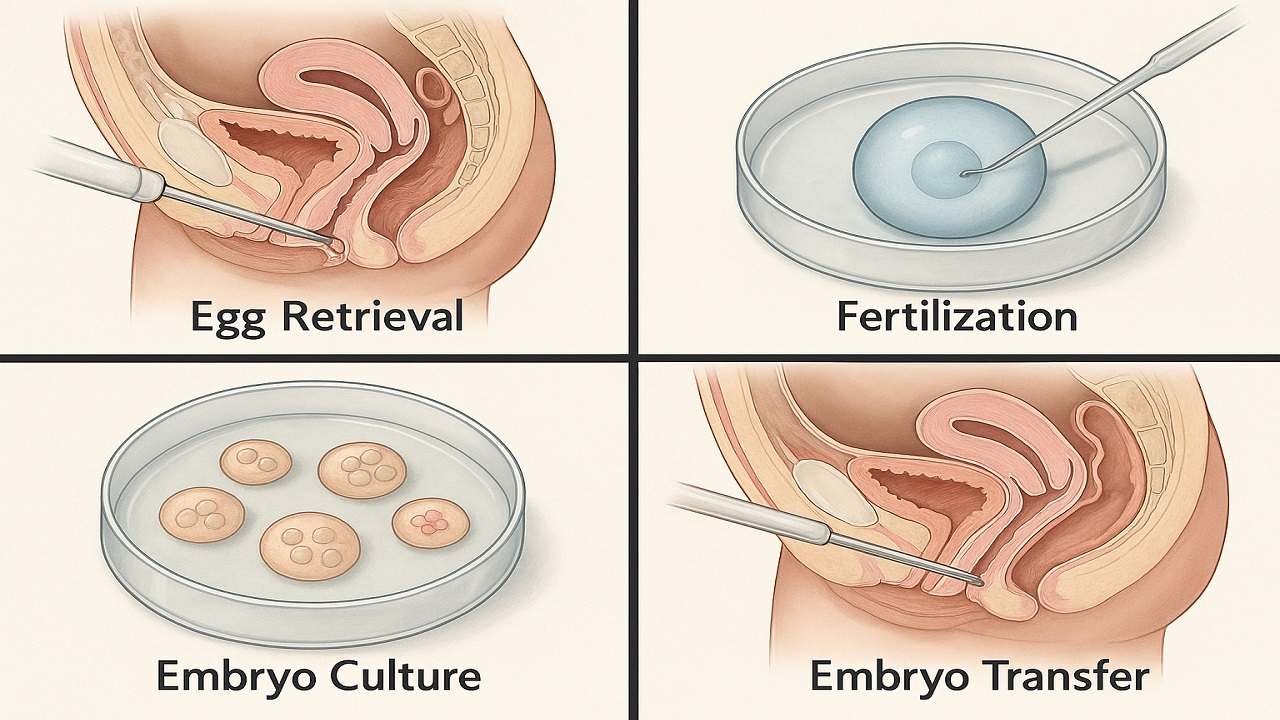
In Vitro Fertilization (IVF) process step by step, emphasising the importance of various stages such as ovarian stimulation, egg retrieval, fertilization, and embryo transfer in maximising the In Vitro Fertilization (IVF) Success Rate. It highlights how a thorough understanding of the procedure can prepare couples and individuals for their In Vitro Fertilization(IVF) journey, ultimately improving their chances of achieving a successful pregnancy.
Vitamin D Deficiency Affect IVF outcomes by influencing endometrial receptivity, embryo quality, and hormone balance. Clinical evidence, age-specific risks, and PCOS implications, while offering actionable strategies to optimize Vitamin D levels and improve IVF success rates and pregnancy outcomes in a structured, patient-focused approach.

Preimplantation Genetic Testing (PGT) revolutionizes IVF by screening embryos for chromosomal abnormalities and genetic disorders before transfer. This advanced technology increases pregnancy success rates, reduces miscarriage risk, prevents inherited diseases, and shortens time to pregnancy while providing diagnostic clarity and reducing emotional stress for couples.

Clinical evidence increasingly demonstrates that emotional stress or grief reduces the chances of IVF success through sophisticated biochemical pathways that directly influence reproductive physiology. This relationship extends far beyond simple correlations, revealing profound mechanistic connections between psychological distress and the delicate orchestration of hormonal events essential for successful conception.

IVF in 2025 is shifting from hype to evidence-based innovation. As precision, automation, AI, and genetic advances reshape fertility care, patients must distinguish proven breakthroughs from outdated add-ons. This guide examines five groundbreaking IVF technologies in 2025 to understand which advances genuinely improve outcomes

Managing Recurrent Implantation Failure (RIF) outlines evidence-based diagnostics and treatment pathways to improve IVF success rates, emphasizing clarity, cautious use of add-ons, and realistic patient expectations.