Home
 ArticlesArticles
How same-sex couples can achieve parenthood through assisted reproductive technology (ART), including IUI and IVF. It discusses the options available for lesbian couples, such as reciprocal IVF, and for gay male couples using surrogacy. The article also addresses legal challenges, success rates, and the future of family-building for LGBTQ+ couples



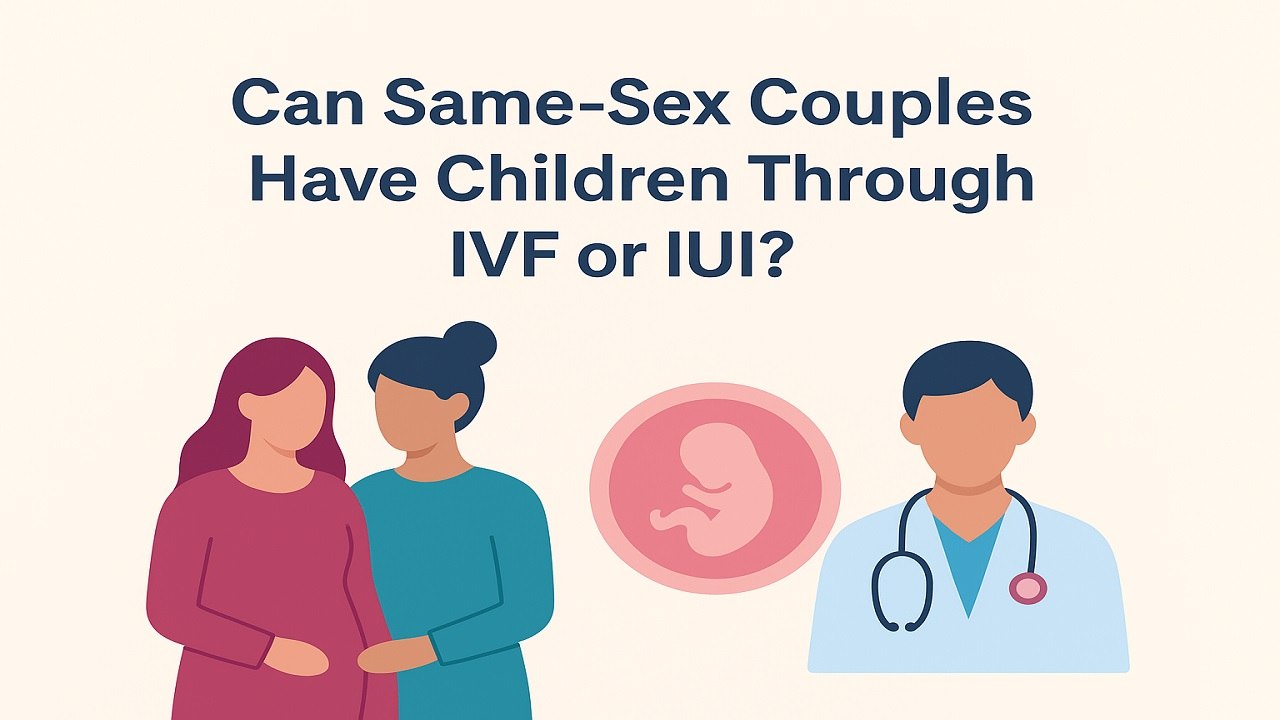
In the evolving tapestry of modern parenthood, the question, “Can same-sex couples have children through IVF or IUI?” resonates deeply with many. For lesbian couples, the journey often begins with intrauterine insemination (IUI) or in vitro fertilization (IVF) using donor sperm. IVF, in particular, offers the possibility of reciprocal arrangements, allowing both partners to share in the biological connection to their child. For gay male couples, the path typically involves IVF with donor eggs and a gestational carrier. These advancements in assisted reproductive technology (ART) have made parenthood more accessible, yet challenges remain, especially concerning legal recognition and insurance coverage.
Assisted reproductive technologies provide various avenues for same-sex couples to build their families:

Fertility clinics are increasingly supporting these options, which are becoming more commonplace as societal acceptance grows.
While medical advancements have made ART more accessible, legal challenges persist. In some regions, same-sex couples face hurdles in gaining legal recognition as parents. For instance, in Italy, a recent court ruling granted parental rights to same-sex couples who underwent IVF abroad, acknowledging both partners as legal parents. However, such recognition is not universal, and couples may need to navigate complex legal landscapes to ensure both parents are acknowledged.
Additionally, insurance coverage for ART varies widely. In some areas, same-sex couples may encounter discrimination or limited coverage options, making the financial aspect of family-building more challenging.
Studies indicate that same-sex couples often experience success rates in ART comparable to heterosexual couples. For example, a study examining birth outcomes following assisted reproductive technology found that same-sex lesbian couples had favourable or similar birth outcomes compared to heterosexual couples who conceived naturally or through ART. This suggests that factors unrelated to sexual orientation, such as age and health, play a more significant role in ART success.
The landscape of family-building for same-sex couples is evolving. As societal attitudes continue to shift and legal frameworks adapt, access to ART is expected to improve. Advocacy for fertility equality is gaining momentum, with more states considering legislation to require insurers to cover fertility treatments for same-sex couples.
Moreover, advancements in reproductive technology may offer new possibilities. For instance, the development of artificial gametes could one day allow same-sex male couples to have a biological child without the need for donor eggs. While still in the research phase, such innovations hold promise for the future.
In conclusion, indeed, same-sex couples have children through IVF, IUI and In vitro gametogenesis (IVG). While challenges remain, particularly concerning legal recognition and insurance coverage, the progress made in assisted reproductive technology offers hope and opportunity. As society continues to evolve, the dream of parenthood is becoming increasingly attainable for all couples, regardless of sexual orientation.



Boys treated for cancer before puberty cannot bank sperm, but freezing testicular tissue containing spermatogonial stem cells may one day restore their fertility. This article explains how the first transplants in adult survivors work, what the early research shows, the risks involved and why families should know about this option.
Microplastics have now been found in human follicular fluid and seminal fluid. This article explores the fast-growing body of research on microplastics and fertility, what scientists know and do not yet know about their effects on eggs and sperm, and practical, evidence-based ways that couples can reduce their everyday exposure.

Fertility conversations often focus on women, yet new research on sperm epigenetics shows a father's environment matters too. This article explains how air pollution may alter chemical marks on sperm DNA, why those changes could matter for fertility and pregnancy, and the practical steps men can reasonably consider before conception.
Donor eggs have long been seen as a way to reset the reproductive clock, but new research suggests uterine ageing also plays a role. This article explains what the latest evidence shows, how the ageing uterus may affect implantation and pregnancy, and how women in their late forties can prepare.

In vitro gametogenesis, the science of creating eggs and sperm from ordinary body cells, has moved from mouse studies towards human research. This article explains how the approaches work, what recent milestones really show, the obstacles that remain and why clinical use is still likely to be several years away.
Mitochondrial donation, often called three-parent IVF, has now produced the first detailed clinical results, with healthy children born to mothers at high risk of passing on mitochondrial disease. This article explains how the technique works, who it is for, what the evidence shows and which scientific questions remain open

A new AI sperm recovery technique is changing the outlook for men with azoospermia. This article explains how the STAR method scans semen samples for rare hidden sperm, what its first reported pregnancy means, who may benefit, and the key questions couples should raise with their own fertility specialist.