Home
 ArticlesArticles
A groundbreaking clinical study from Lund University reveals that a simple oral swab test can identify which hormone treatment works best for individual women undergoing IVF. By matching personalized genetic profiles with appropriate hormone therapy, this innovative approach using oral swab test for personalized IVF treatment success increases pregnancy rates by 38% and could transform how fertility clinics optimize ovarian stimulation protocols globally.



In vitro fertilization has revolutionized fertility treatment, offering hope to millions of couples worldwide. However, the reality remains sobering: approximately 75 percent of IVF attempts fail, and up to 20 percent of women experience severe side effects during hormone stimulation. These statistics underscore a fundamental challenge in modern reproductive medicine: determining which hormone treatment will work best for each individual woman. Now, researchers at Lund University have developed an elegant solution that could transform how fertility clinics approach this critical decision-making process through an oral swab test for personalized IVF treatment success.
When women undergo IVF, their ovaries must be stimulated to produce multiple eggs rather than the single egg typically released during a natural menstrual cycle. This process requires powerful hormone therapy, specifically follicle-stimulating hormone (FSH). Currently, fertility specialists face a significant clinical dilemma: there are two main types of FSH available biological FSH derived from human sources and synthetic FSH manufactured in laboratories. Healthcare providers have historically had to make educated guesses about which type would be more effective for each patient, often discovering the answer only after weeks of treatment and significant hormone exposure.
This "trial and error" approach not only delays treatment but also exposes women to unnecessary side effects and increases treatment costs. The Lund University research team recognized that the answer to this puzzle might lie in patients' genetic profiles. Their investigation focused on a specific genetic variant in the FSH receptor gene, known as N680S, which plays a crucial role in how individual women respond to hormone stimulation.
The clinical study involved 1,466 women undergoing IVF at the Reproductive Medicine Centre at Skåne University Hospital in Malmö, Sweden. Of these participants, 475 were randomized to receive one of two different hormone treatments, while the remainder served as control subjects. The researchers used advanced gene sequencing to identify specific genetic variants in the FSH receptor gene that correlated with differential responses to biological versus synthetic gonadotropins.
The results were remarkable. Women carrying a particular variant of the FSH receptor gene responded significantly better to biological hormone treatment, while those with different genetic profiles benefited more from the synthetic alternative. This straightforward genotype-treatment relationship opened the door to a revolutionary approach: oral swab test for personalized IVF treatment success, eliminating the guesswork from hormone selection in assisted reproductive technology.
Recognizing that complex genetic sequencing is too time-consuming and expensive for routine clinical use, the research team developed a practical alternative: a simple oral swab test that can identify FSH receptor variants within one hour. The elegant design uses a colorimetric readout—displaying either pink or yellow depending on the genetic result allowing clinicians and patients to visualize the results without specialized equipment or technical expertise.

This innovation transforms genetic knowledge into an immediately actionable clinical tool. Women can complete the test as part of their routine fertility clinic visit, and results are available before hormone therapy begins, enabling truly personalized treatment selection from day one. The oral swab genetic test for personalized IVF treatment success represents a significant advancement in how precision medicine principles can be practically implemented in reproductive endocrinology.
The implications of this genetic screening approach extend far beyond individual patient outcomes. For healthcare systems and fertility clinics, genotype-guided treatment offers substantial economic advantages. By improving success rates and reducing the need for multiple stimulation cycles, the oral swab test for personalized IVF treatment success decreases overall treatment costs while simultaneously improving patient outcomes and reducing the burden of failed cycles.
Additionally, this approach addresses a critical gap in precision medicine within reproductive health. While other medical fields have increasingly adopted genetic testing to guide treatment decisions, IVF treatment protocols have largely remained standardized or based on clinical intuition. The Lund University research demonstrates that implementing precision medicine principles in hormone selection can deliver measurable improvements in pregnancy rates and patient safety.
For women undergoing fertility treatment, the benefits are equally significant. Reducing side effects means lower physical and emotional burden during an already stressful process. Increasing success rates means fewer repeated cycles and shorter timelines to achieving pregnancy. Most importantly, the oral swab test for personalized IVF treatment success represents a shift toward truly individualized fertility care rather than one-size-fits-all hormone protocols.
The research team, led by Professor Yvonne Lundberg Giwercman at Lund University, has established a company called Dx4Life to commercialize this innovation. With support from Lund University's innovation ecosystem and successful investment rounds already completed, the team aims to make the oral swab genetic test commercially available by early 2026. This timeline suggests that fertility clinics in multiple countries could soon integrate this genetic screening approach into their standard IVF protocols.
The broader significance of this research lies in its demonstration that even relatively simple genetic biomarkers can meaningfully improve treatment outcomes in assisted reproductive technology. As the field of reproductive genetics continues to evolve, we can expect additional discoveries that further personalize fertility treatment, potentially involving multiple genetic markers that predict responses to different components of IVF protocols.
For prospective patients considering IVF, this research offers renewed hope that treatment protocols are becoming increasingly sophisticated and individualized. The days of standardized hormone prescriptions without regard to individual genetic variation may soon be behind us. Patients can increasingly expect that their fertility specialists will utilize genetic information to optimize every aspect of their treatment plan.
For healthcare providers, implementing genetic screening for FSH receptor variants represents a relatively straightforward addition to existing fertility clinic workflows. The simplicity of the oral swab test means minimal additional training or infrastructure investment is required. The rapid turnaround time ensures that genetic results are available before treatment begins, enabling immediate clinical application.
The research from Lund University demonstrates that a simple oral swab test for personalized IVF treatment success can meaningfully improve IVF outcomes by enabling genetic profiling that guides hormone therapy selection. By matching biological or synthetic FSH to individual FSH receptor genetic variants, fertility clinics can increase pregnancy rates by 38 percent while simultaneously reducing side effects and treatment costs. This innovation exemplifies how precision medicine principles can transform assisted reproductive technology, offering hope to couples struggling with infertility. As the oral swab genetic test for personalized IVF treatment success moves toward commercial availability in 2026, it promises to establish a new standard of care in how fertility specialists approach ovarian stimulation one based on individual genetic profiles rather than clinical intuition.



Advanced female age causes fertility decline through reduced egg quantity, increased chromosomal abnormalities, and mitochondrial dysfunction. Understanding these biological mechanisms helps women make informed family planning decisions. Modern fertility treatments including IVF, preimplantation genetic testing, and egg freezing offer practical solutions to overcome age-related reproductive challenges when trying to conceive.
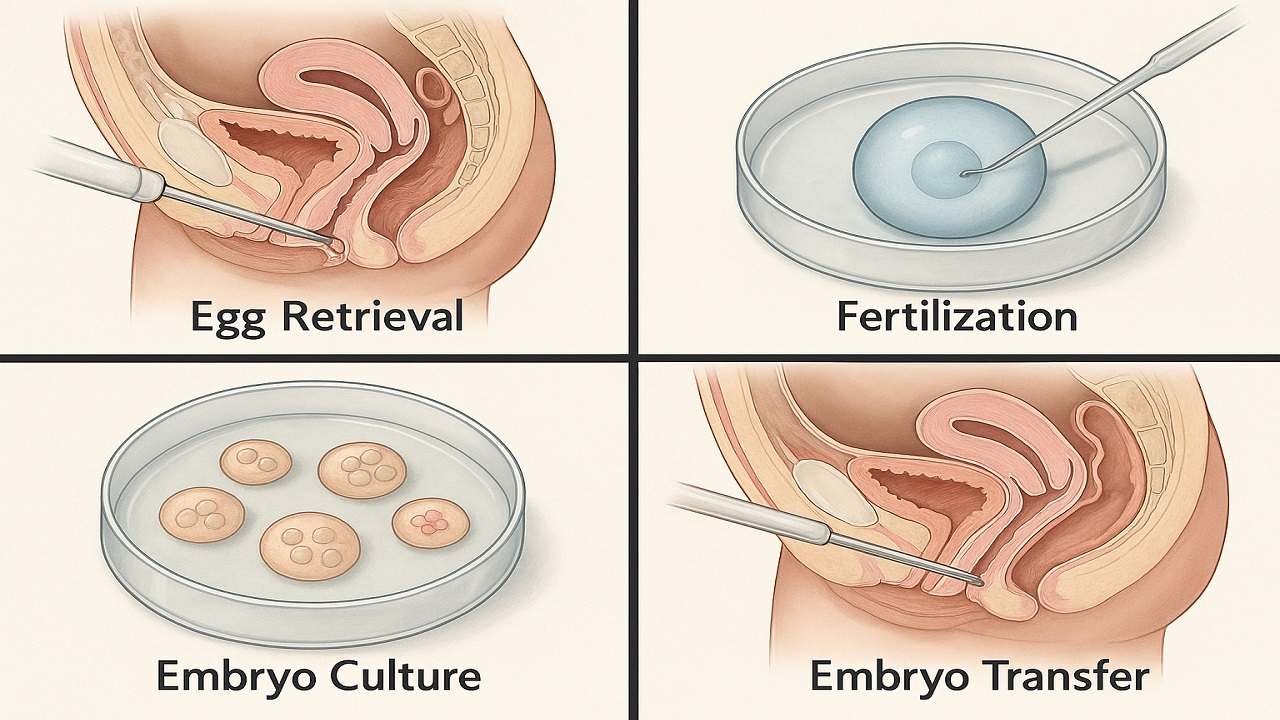
In Vitro Fertilization (IVF) process step by step, emphasising the importance of various stages such as ovarian stimulation, egg retrieval, fertilization, and embryo transfer in maximising the In Vitro Fertilization (IVF) Success Rate. It highlights how a thorough understanding of the procedure can prepare couples and individuals for their In Vitro Fertilization(IVF) journey, ultimately improving their chances of achieving a successful pregnancy.

Vitamin D Deficiency Affect IVF outcomes by influencing endometrial receptivity, embryo quality, and hormone balance. Clinical evidence, age-specific risks, and PCOS implications, while offering actionable strategies to optimize Vitamin D levels and improve IVF success rates and pregnancy outcomes in a structured, patient-focused approach.

Preimplantation Genetic Testing (PGT) revolutionizes IVF by screening embryos for chromosomal abnormalities and genetic disorders before transfer. This advanced technology increases pregnancy success rates, reduces miscarriage risk, prevents inherited diseases, and shortens time to pregnancy while providing diagnostic clarity and reducing emotional stress for couples.

Clinical evidence increasingly demonstrates that emotional stress or grief reduces the chances of IVF success through sophisticated biochemical pathways that directly influence reproductive physiology. This relationship extends far beyond simple correlations, revealing profound mechanistic connections between psychological distress and the delicate orchestration of hormonal events essential for successful conception.

IVF in 2025 is shifting from hype to evidence-based innovation. As precision, automation, AI, and genetic advances reshape fertility care, patients must distinguish proven breakthroughs from outdated add-ons. This guide examines five groundbreaking IVF technologies in 2025 to understand which advances genuinely improve outcomes

Managing Recurrent Implantation Failure (RIF) outlines evidence-based diagnostics and treatment pathways to improve IVF success rates, emphasizing clarity, cautious use of add-ons, and realistic patient expectations.